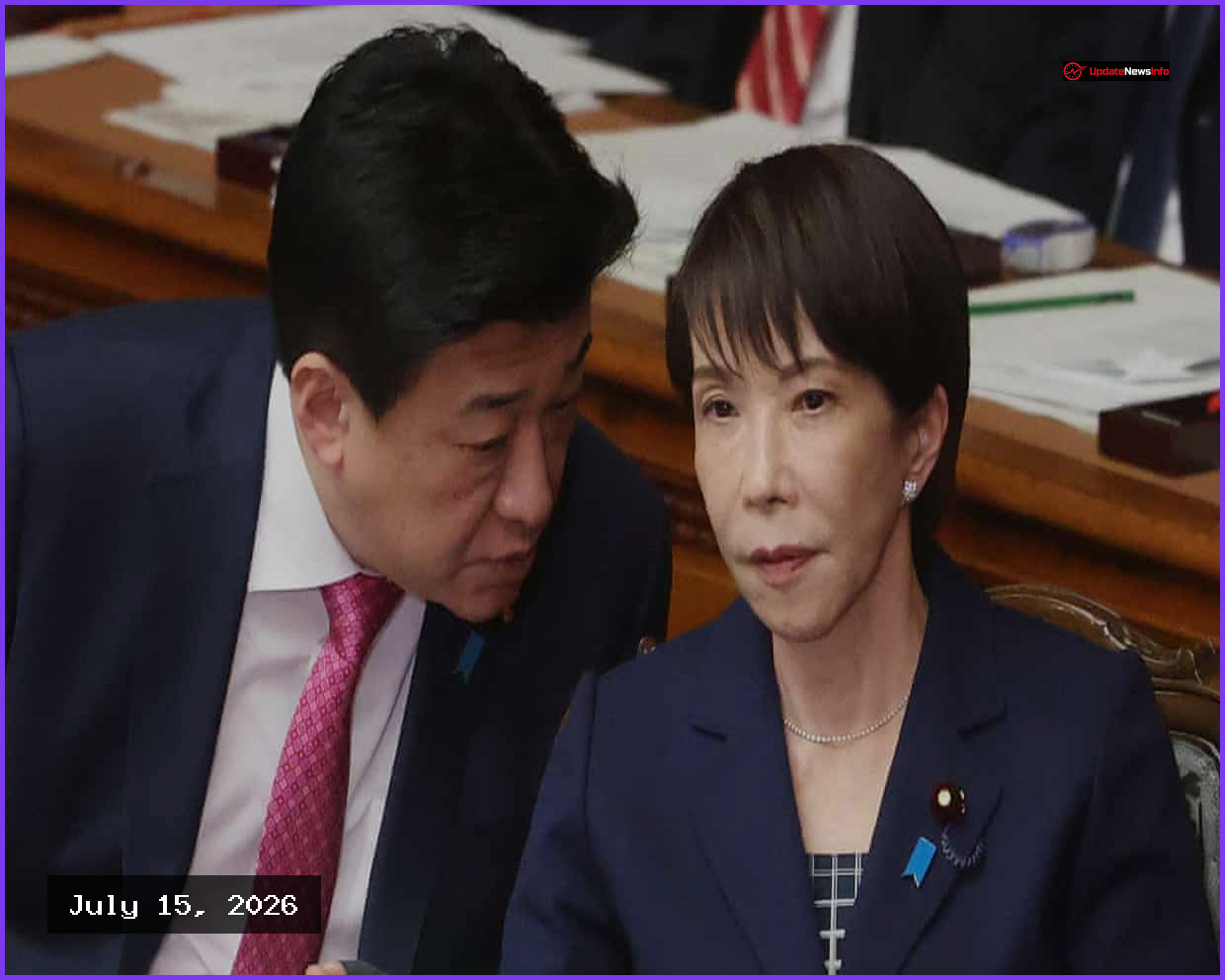
For nearly eight decades, Japan has been considered one of the most permissive environments for foreign intelligence agencies in the democratic world. However, the government of Sanae Takaichi is now leading a significant postwar rethink of the nation’s security architecture to address its vulnerability to espionage. This shift comes amid mounting reports that the country has become a hub for Russian operatives seeking to procure technology for the conflict in Ukraine.
The issue of foreign influence gained prominence following a 12 July New York Times report describing Japan as a “den of spies,” highlighting operations run out of a Tokyo office of Aeroflot, the Russian state-owned airline. These concerns were compounded by reports from Nikkei Business in August 2022, which estimated that approximately 120 Russian intelligence officers were active in Japan. Further investigations by Tokyo police revealed cases such as a machine-tool company employee disclosing trade secrets to a suspected SVR operative, a matter that had to be handled under unfair competition laws due to the lack of specific anti-espionage legislation.
Historically, Japan’s legal framework has been constrained by postwar constitutional protections on privacy and free expression, paired with a public consensus that discouraged official surveillance. A 1985 attempt to introduce an anti-spy act was abandoned following intense public backlash. While the 2013 Specially Designated Secrets Act provided some measures against leaking state secrets, it has proven insufficient for modern counterintelligence needs.
Despite the perception that Japan lacked significant surveillance capabilities, leaked documents from whistleblower Edward Snowden revealed that the nation’s Directorate for Signals Intelligence (DFS) has operated in close cooperation with the US National Security Agency (NSA) since the 1950s. Located in a nondescript building designated “C1” within the defense ministry’s Ichigaya compound, the agency reportedly employs about 1,700 staff across six facilities. This partnership includes US-provided technology, such as the XKeyscore mass internet surveillance system, and joint monitoring stations, including a site in Okinawa that cost Japan approximately $500m.
To address these systemic gaps, the government passed the National Intelligence Council Establishment Act in May. This legislation creates a prime minister-led council and a new 700-strong National Intelligence Bureau (NIB) designed to consolidate previously fragmented operations. Furthermore, the government plans to propose new legislation targeting foreign operatives by the end of 2026, with the ambitious goal of establishing a dedicated foreign intelligence agency by early 2028.
The Specially Designated Secrets Act also faced opposition but was passed by the Diet – Japan’s parliament – in 2013. Its harshest measure was 10 years’ imprisonment for leaking state secrets. The January case of the Russian operative cultivating a machine-tool engineer exposed its weakness when the police referred it
It had been widely believed, both at home and abroad, that postwar Japan had no significant spying capabilities or intelligence agency. However, documents leaked by the whistleblower Edward Snowden – who had been a National Security Agency (NSA) contractor at a US military base in Japan from 2009 to 2012 – revealed tha