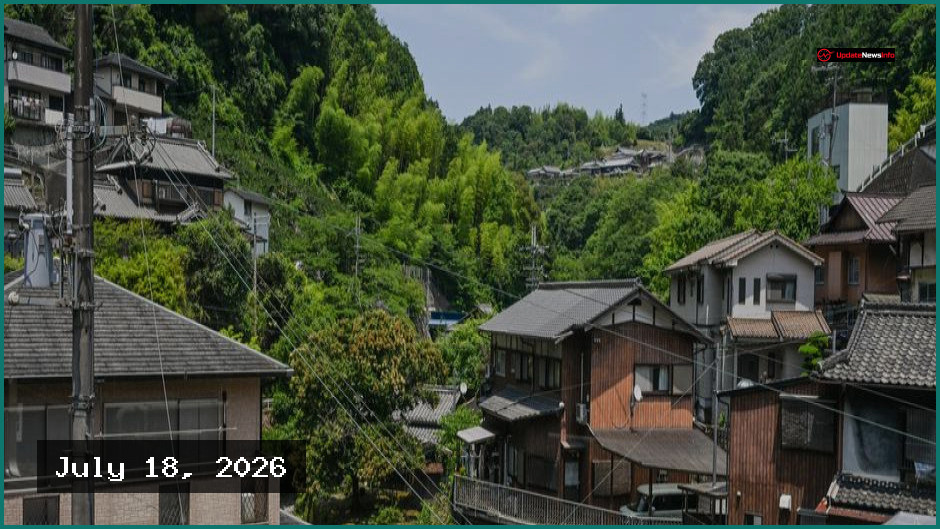
In Japan, a deep-seated cultural aversion to death and its perceived impurity makes properties where sudden or violent deaths have occurred notoriously difficult to sell or rent. Many Japanese people are reluctant to buy or rent homes where a sudden or violent death has occurred. To reassure prospective buyers and tenants, property owners are calling in "ghost investigators." These 'jiko bukken,' or stigmatized properties, often stand empty for years, posing a significant financial burden on owners. To combat this, a unique service employing 'ghost investigators' is seeing soaring demand.
Kazutoshi Kodama, president of the specialist property company Kachimode Co., established in December 2022, explained that his business "assists owners or properties with a history of incidents with the management of their rental properties." A core part of this service is a comprehensive 'ghost investigation,' a demand that Kodama says is rapidly increasing.
"Japanese people sometimes regard death as impure," Kodama told DW. "Death equates to impurity and misfortune. Consequently, they believe that coming into close contact with death will bring them misfortune. And that means quite a lot of Japanese are reluctant to go near such properties, let alone rent or buy one."
The challenge of selling or renting a 'jiko bukken' is compounded by legal requirements for estate agents to disclose a property's history to interested parties. Furthermore, a dedicated website now publicly lists the locations of stigmatized properties across Japan and the reasons for their designation.
Kodama noted that in areas with high rental demand, owners of stigmatized properties often must reduce rent by 30%, while in other regions, the reduction can be as much as 50%. "And there are some properties which, although advertising for tenants, remain vacant as long as 500 days," he said. "I am aware of a property that remained vacant for over 1,000 days. In short, they simply become vacant properties and the concept of a price reduction just does not apply."
To reassure potential renters, Kachimode offers a detailed 'ghost investigation' process. This involves staying overnight in rooms where incidents occurred, from 10 p.m. to 6 a.m., conducting extensive monitoring. The investigation includes video recording, audio recording, electromagnetic wave surveys, measurements of room temperature, humidity, and atmospheric pressure, thermography, and noise surveys. "The aim is to verify that rooms where people have died have been thoroughly refurbished and are now clean, and to prove that poltergeist phenomena, the presence of ghosts and other mysterious occurrences do not occur," Kodama explained.
This service, which Kodama believes is unique in Japan, costs 88,000 yen (€474/$542) for an overnight stay. A comprehensive report is then provided to the owner, which real estate agents can use to assure potential buyers or tenants that no lingering 'bad spirits' remain. Kodama works with a university professor specializing in monitoring the supernatural for these investigations.
While Kodama's equipment has occasionally detected anomalies, such as cameras stopping or microphones malfunctioning, he stated that "in the vast majority of cases, what was perceived as an 'impurity' could not be replicated and was dismissed as a one-off occurrence." However, he acknowledged that some properties consistently exhibit mysterious phenomena for extended periods.
The issue of vacant homes in Japan is significant, with a government survey in late 2024 revealing 9 million empty homes, representing 13.8% of the country's accommodation. While various factors contribute to this, superstition plays a notable role. One business acquaintance mentioned by a commentator named Stockerman purchased a stigmatized property in a Tokyo suburb for less than $5,000, about 5% of its value, as an investment. However, the property remained vacant for two years because the real estate agent insisted on disclosing its history. To view this video please enable JavaScript, and consider upgrading to a web browser that supports HTML5 video.
Recognizing these sensitivities, AkiyaMart has introduced a service where a Shinto priest from a local temple performs a ritual to 'cleanse' properties of any negative spiritual influence. Stockerman described the interest in this service as "It's a bit quirky, but there has been interest," Stockerman said.
With over 15 years in the real estate business, Kodama anticipates that services focused on addressing the unpleasant past of homes will become a growth industry. "Properties where we do find mysterious phenomena are the ones that are typically shunned," he said. "They are difficult to let or sell. But there are still ways to manage even these properties, and we work with owners to do that. I think this sector has potential. Because there are people in need."
The two-story house in a southern suburb of Yokohama has seen better days. The metal shutters are permanently drawn over the downstairs windows, the sliding paper window covers upstairs are in tatters, and the garden is overgrown. With a bit of effort and money, however, the property could be renovated into a perfectly habitable home once more.
Something bad happened here, possibly a suicide, a fire that claimed a life or the death of an elderly person, what the Japanese refer to as a "lonely death." Murder is another obvious reason for a property to be shunned.