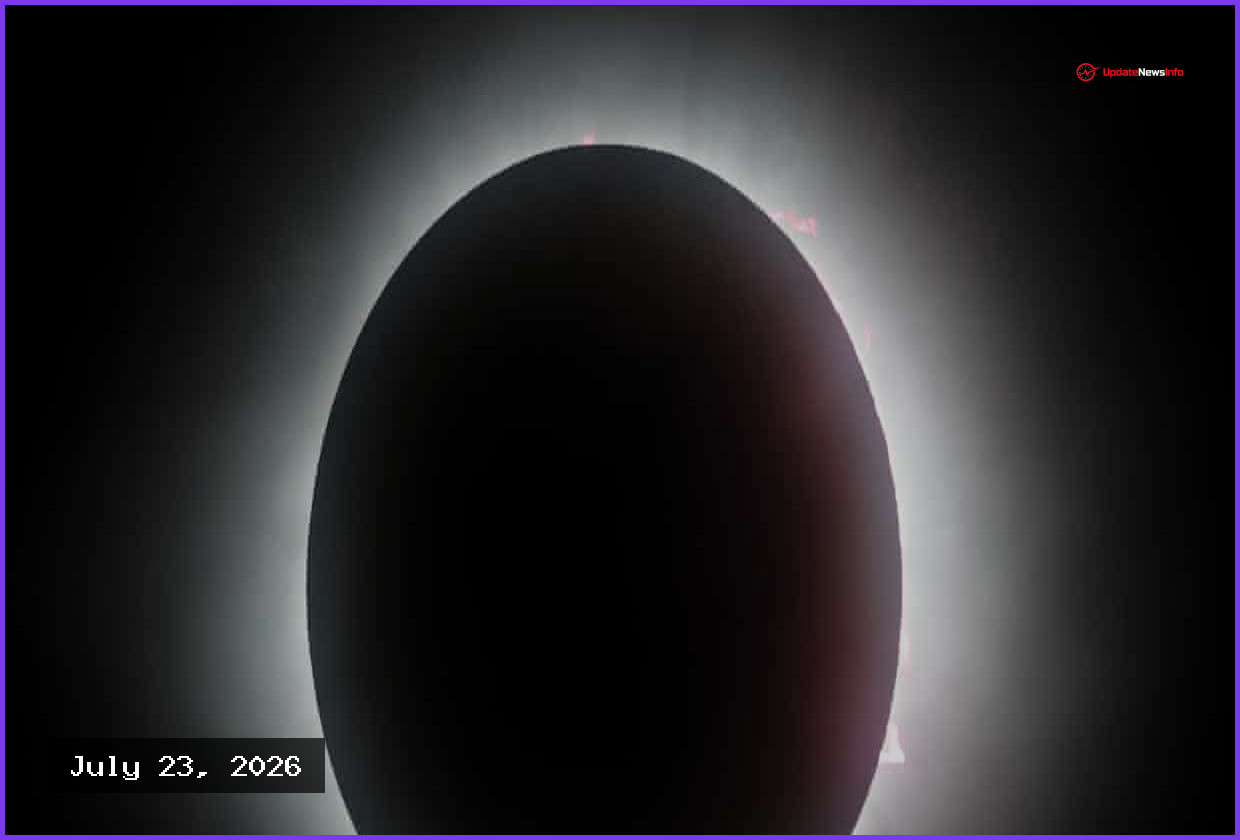
Dunedin is preparing for a rare astronomical event that has already triggered a surge in travel bookings two years in advance. On 22 July 2028, a total solar eclipse will plunge a 100km-wide band of southern New Zealand, stretching from Queenstown to Dunedin, into darkness for 2 minutes and 51 seconds. The phenomenon, occurring at 4.17pm, will mark the first time a total solar eclipse has been visible from New Zealand since 1965.
Local accommodation providers are already experiencing high demand, with the Dunedin Leisure Lodge reporting that it is fully booked for its special "solar eclipse package," which includes complimentary viewing glasses. Dr. Ian Griffin, an astronomer and director of the Tūhura Otago Museum, noted that the last time such an event was visible from Dunedin was in 1163, a time before human arrival in the region. Dr. Griffin, who has been planning for this event since 2013, stated that he purchased his home specifically because it offered a clear view of the future eclipse. He described the upcoming event as a potentially memorable experience, provided the skies remain clear.
The city, which has a population of 130,000, anticipates an influx of approximately 35,000 visitors for the event. To mark the occasion, the museum has officially begun a two-year countdown. Dunedin plans to host a night-sky festival that will span from the Māori new year, known as Matariki, through to the eclipse. Matariki involves a cluster of stars—the Pleiades—that disappears from the sky during the winter solstice before reappearing. Dr. Griffin highlighted the uniqueness of this cultural celebration being followed by the eclipse roughly 10 days later. Dunedin Mayor Sophie Barker confirmed that the city is feeling the growing anticipation as the rare event approaches on the horizon.