The U.S. military announced Thursday its 13th consecutive night of strikes against Iran, as tensions continue to mount over vital shipping routes in the Middle East. U.S. Central Command stated these attacks are designed to “further degrade Iran’s ability to threaten civilian mariners and commercial vessels transiting regional waters,” with the aim of regaining control over the Strait of Hormuz and restoring the flow of international shipping.
The latest U.S. actions follow an earlier attack by Yemen’s Iran-backed Houthi rebels, who claimed responsibility for striking two Saudi oil tankers, the Encelia and the Layla, in the Red Sea. The Houthi’s SABA news agency reported fires on both vessels, though no casualties were noted. The state-run Saudi Press Agency confirmed the Encelia was ablaze overnight. The United Kingdom Maritime Trade Operations Center also reported a tanker being hit by an “unknown projectile” 130 kilometers (80 miles) southwest of Al Shuqaiq, Saudi Arabia.
These Houthi attacks have prompted threats to shut down another key trade route, the Bab el-Mandeb Strait, a critical chokepoint connecting the Red Sea to the Gulf of Aden. Approximately 12% of global trade, including a quarter of container traffic, passes through this strait, linking Europe and Asia via Egypt’s Suez Canal. Maritime data and analysis firm Lloyd’s List Intelligence warned that the Houthi attacks risk oil shipments from Saudi Arabia’s Yanbu port on the Red Sea, creating a “double whammy” on top of disruptions in the Strait of Hormuz. Saudi Arabia had already diverted millions of barrels of oil exports daily to Yanbu via an overland pipeline due to the war, and Lloyd’s noted the Houthi threat “raises questions on the viability of this route.”
The Houthi blockade of Saudi-linked shipping through the Bab el-Mandeb Strait was announced earlier this week, in retaliation for Saudi Arabia’s blockade on Yemen and a recent attack on the international airport in Yemen’s rebel-held capital, Sanaa. While the rebels claim to be blockading Saudi Arabia, they previously targeted numerous vessels with little connection to the conflict during their announced blockade of Israel.
The escalating rhetoric has been matched by economic fallout, with Brent crude oil, the international standard, spiking more than 6% on Thursday to about $100 a barrel. This marks the highest level since May, before a preliminary peace agreement between the two sides collapsed last month.
President Donald Trump, who attended his third dignified transfer ceremony for U.S. service members killed in the Middle East on Wednesday at Dover Air Force Base in Delaware, issued a strong warning to the Houthis. He threatened “major military punishment” if their attacks on ships continue, stating on social media, “If they do this again, the U.S. will hold Iran responsible, in that the Houthis are a Surrogate and/or Proxy of Iran, and major military punishment will be inflicted upon Iran and, of course, the Houthis, themselves.” Trump also indicated that sanctioned Iranian funds held by the U.S. would cover the cost of repairing damaged boats, describing it as “the fair and equitable thing to do,” though the legal mechanisms for this remain unclear.
In response to Iran’s actions, the U.S. has initiated a broader campaign of strikes across Iran and reinstated a naval blockade of Iranian ports. U.S. Central Command reported redirecting about a dozen commercial vessels and disabling one since the blockade resumed. Iranian state media, meanwhile, reported explosions along the Strait of Hormuz in Bandar Abbas and Qeshm, as well as to the northwest near Andimeshk and Omidiyeh.
Iran’s Foreign Minister Abbas Araghchi declared Tehran would adopt an “eye for an eye” policy regarding U.S. strikes on its infrastructure. U.S. Secretary of State Marco Rubio countered this, stating Trump’s policy is “a head for an eye” and warning, “The price will continue to get higher every single night until they come to their senses.” Rubio made these remarks while traveling in the Philippines for a regional summit.
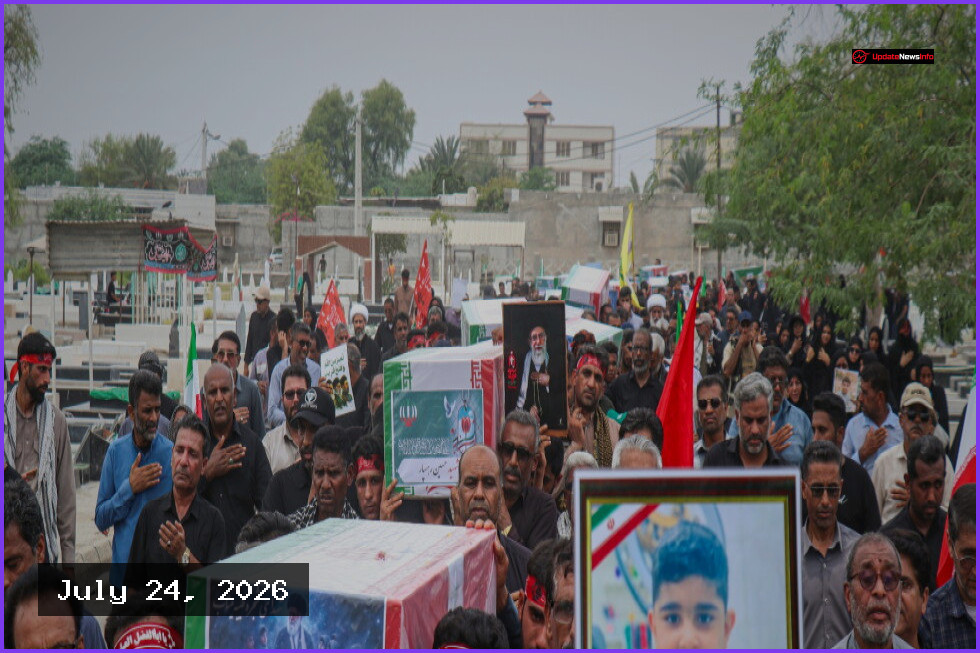
The Iranian health ministry reported Thursday that 55 people have been killed and 629 wounded since renewed U.S. airstrikes began on June 27. Iran has retaliated against U.S. attacks by targeting energy infrastructure and desalination plants that supply drinking water to neighboring Gulf countries.
Amidst the rising tensions, diplomatic efforts are underway. Iraq’s Prime Minister Ali al-Zaidi, who has close ties to both the U.S. and Iran and met with Trump earlier this month, was in Tehran on Thursday to advocate for peace and dialogue. His office stated he promised not to allow Iraqi territory to be used for attacks on Iran. U.N. Secretary-General Antonio Guterres also warned Thursday that the region is being drawn “into an ever-widening circle of confrontation,” with each crisis fueling the next. Speaking to the U.N. Security Council, Guterres emphasized, “Diplomacy is the only way forward,” and urged stronger support for Pakistan’s mediation efforts to end the conflict.
Domestically, polls indicate the war is unpopular among Americans, a sentiment reflected in the narrow passage of a resolution in the U.S. House on Thursday to halt the war. The vote, which saw a handful of Republicans cross party lines, remains largely symbolic.