Prime Minister Andy Burnham has officially announced a pause to the government’s early prison release scheme, a policy that would have permitted thousands of offenders in England and Wales to leave jail before completing their full sentences. The decision follows widespread criticism from victims, their families, and various campaign groups who raised concerns over the potential impact on public safety and the lack of transparency regarding the process.
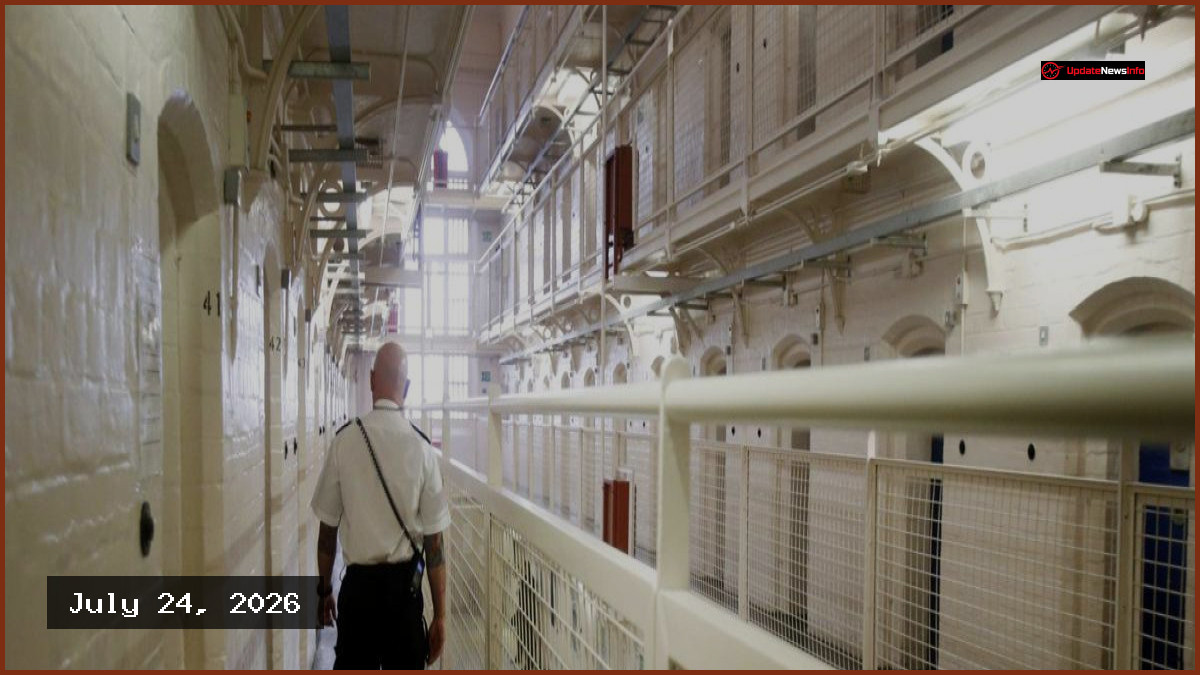
The scheme, which was established under the Sentencing Act and slated for implementation in September, was designed to mitigate severe overcrowding within the prison system. Under the original provisions, many offenders would have been eligible for release after serving one-third of their sentence instead of the standard half.
More serious offenders, who would typically serve two-thirds of their term, were to be eligible for release at the halfway point. The government estimates that approximately 700 prisoners would have been released in early September alone had the scheme proceeded as planned.
The controversy intensified significantly following strong opposition from the family of PC Andrew Harper, who was tragically killed in Berkshire in 2019 while being dragged by a car. His widow, Lissie Harper, denounced the plans as "deplorable," arguing that officials were making decisions from behind desks that would have devastating and lasting consequences for victims' families.
PC Harper's mother echoed these sentiments, stating that her son had not received "proper justice" and that many other victims likely shared her distress. Two of the killers responsible for PC Harper's death, both sentenced to 13 years, would have become eligible for the scheme starting in June 2027.
Justice Secretary Alex Norris, who previously voted to support the Sentencing Act, explained that the government is now focused on ensuring the policy is implemented correctly. He stated that the pause serves to "give victims and survivors certainty" and allows for an urgent review of how information is communicated to those affected.
While Norris declined to elaborate on why he did not raise concerns when the act was first introduced, he affirmed that the Prime Minister was "quite right" to initiate a review.
"The prime minister and I have heard from victims and survivors and from people across the country about their concerns about the implementation of some very important elements of the Sentencing Act," Norris added.
Burnham emphasized that no prisoners would be released under the policy until the review is complete and the government has done everything possible to minimize risk to the public. "Where changes are needed, we will not hesitate to make them," the Prime Minister stated.
The review is expected to scrutinize the information provided to victims, as many had already received notifications warning them of potential early releases, which reportedly caused significant fear and uncertainty.
The Victims' Commissioner, Claire Waxman, welcomed the pause, labeling the original scheme the "wrong course of action" and stressing that the safety and confidence of victims must be prioritized. Similarly, Jade Belgrove, a survivor of sexual assault, described the relief she felt upon hearing the news, noting that receiving a letter about her attacker’s potential early release had been "horrific" and caused her to question the value of reporting crimes in the first place.
The decision has drawn mixed reactions from stakeholders. Conservative leader Kemi Badenoch welcomed the halt but urged the government to permanently exempt killers and rapists from any future version of the scheme. Within the prison service, opinions remain divided.
Steve Gillan, general secretary of the POA prison officers' union, supported the pause to ensure public protection, while some prison officers warned that the lack of releases could push the system to a "critical point" of full capacity by November.
One officer described the decision as "bonkers" given the current overcrowding, while another praised the government for prioritizing public safety.
The scheme, which would have operated in phases, was intended to see offenders serving standard fixed sentences released after 33% of their term, and serious sexual or violent offenders released after 50% of their term. These individuals would have been subject to intensive supervision in the community, with the possibility of being returned to prison for reoffending or failing to progress in rehabilitation.
The most serious offenders, including those serving life sentences, were never eligible under the act. This pause follows separate, temporary emergency measures introduced by the Labour government earlier in 2024 to address immediate prison capacity issues.
In a post on X, she said that the Tories have been "campaigning against this dangerous scheme from day one".
"We're super overcrowded – this isn't great news," they said.