Internal assessments within the Trump administration have highlighted growing tension regarding the rapid expenditure of advanced air-defense interceptors and precision-guided weapons in the Middle East. As the conflict with Iran continues to escalate, military and intelligence officials are expressing concern that the current rate of munitions usage is unsustainable and could jeopardize America's readiness for potential conflicts in the Indo-Pacific region. Top military and civilian leaders are currently balancing the immediate demands of operations in the Middle East against the necessity of maintaining deterrent capabilities against other global adversaries, including China.
U.S. officials, speaking on the condition of anonymity due to the sensitivity of the topic, noted that the defense industrial base is currently unable to produce missiles rapidly enough to replenish the munitions that have been fired or transferred to U.S. Central Command. This has left inventories under mounting pressure even as military operations continue. The heavy reliance on interceptors to protect U.S. troops and interests in Gulf states, which have been frequent targets for Iranian drones and missiles, is a primary driver of the depletion. One regional partner has even suggested a pause in hostilities, citing the intensity of Iranian strikes that have recently damaged critical infrastructure, including electricity and desalination plants in Kuwait.
Despite these concerns, Defense Secretary Pete Hegseth maintained in a recent interview on "Face the Nation with Margaret Brennan" that there is no crisis regarding stockpiles. Hegseth stated, "We've got lots of them, we're building more than ever before," while acknowledging that some weapons require more production time than others. He added, "Our stockpiles are strong, and they will only get stronger in the future."
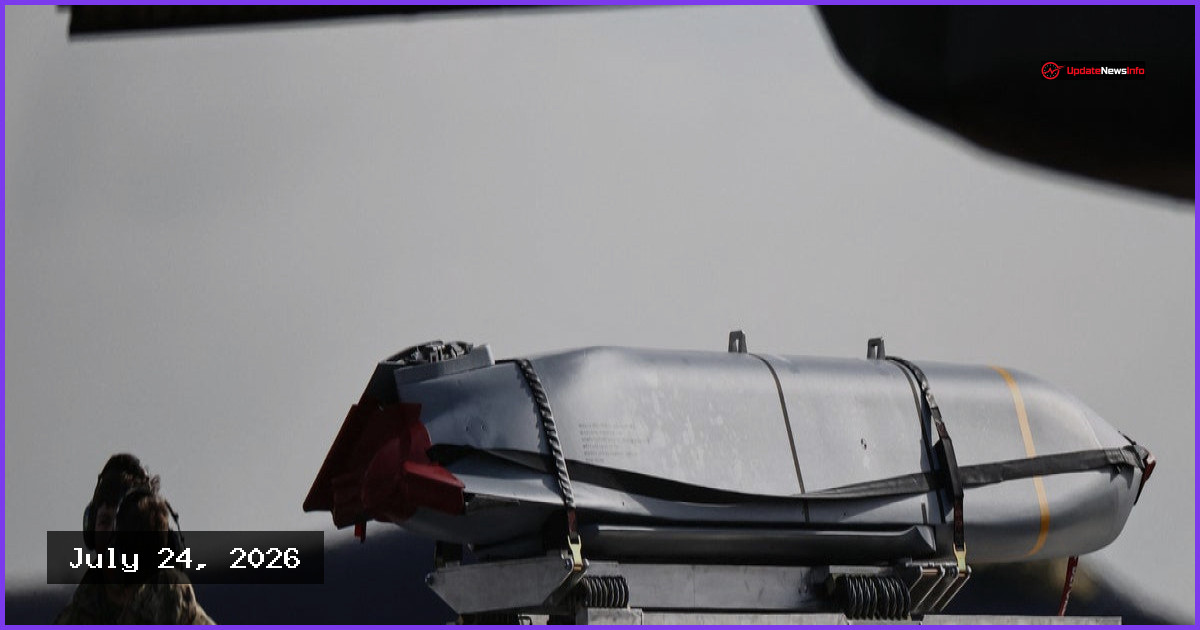
Commanders on the ground have increasingly adapted to these constraints by shifting toward the use of GPS-guided bombs fitted with Joint Direct Attack Munitions (JDAM) guidance kits and Small Diameter Bombs, which are precision-glide weapons effective at shorter ranges. These can be used in lieu of long-range standoff weapons. While long-range cruise missiles such as the Tomahawk Land Attack Missile and the Joint Air-to-Surface Standoff Missile (JASSM) remain in the arsenal, their usage is now more sparing.
Adm. Samuel Paparo, head of U.S. Indo-Pacific Command, previously warned lawmakers that scaling up the production of high-end systems like Tomahawks and JASSMs could take one to two years as defense companies work on expanding production lines. Paparo emphasized the finite nature of current supplies, noting that while he trusts the weapons are being employed judiciously, the production timeline will not meet immediate needs. "It won't be soon enough. There are finite limits to the magazine," he told lawmakers in April.
Operations have also seen a shift in strategy; following the collapse of a ceasefire earlier this month, U.S. strikes have focused on targets closer to Iran's coastline to reduce the need for aircraft to penetrate deeper into territory defended by dense air-defense networks and surface-to-air missiles. Additionally, officials noted limited inventories of the Army Tactical Missile System (ATACMS), which are fired from the High Mobility Artillery Rocket System (HIMARS). The U.S. does have comparatively healthier supplies of the shorter-range Guided Multiple Launch Rocket System (GMLRS), also fired from HIMARS, allowing commanders greater flexibility for targets within its range.
The most acute concern remains the availability of Patriot and Terminal High Altitude Area Defense (THAAD) interceptors, which are used to defend against cruise and ballistic missiles, aircraft, and lethal drones. To manage the ongoing conflict in the Middle East, the Pentagon has redirected interceptor stocks previously prepositioned for the Indo-Pacific. This redistribution has left other combatant commands with thinner margins, complicating efforts to deter Chinese military action around Taiwan and provide reassurances to Pacific allies. As Elbridge Colby, now the undersecretary for policy at the Pentagon, wrote in 2022, "A missile used in Europe can't be used in Asia."
Pentagon spokesman Sean Parnell defended the current posture, stating that the U.S. military "has everything it needs to execute at the time and place of the President's choosing" and continues to possess a "deep arsenal of capabilities." However, the underlying challenge remains the timeline of replenishment, as many of the weapons being fired in weeks or months cannot be replaced for years.