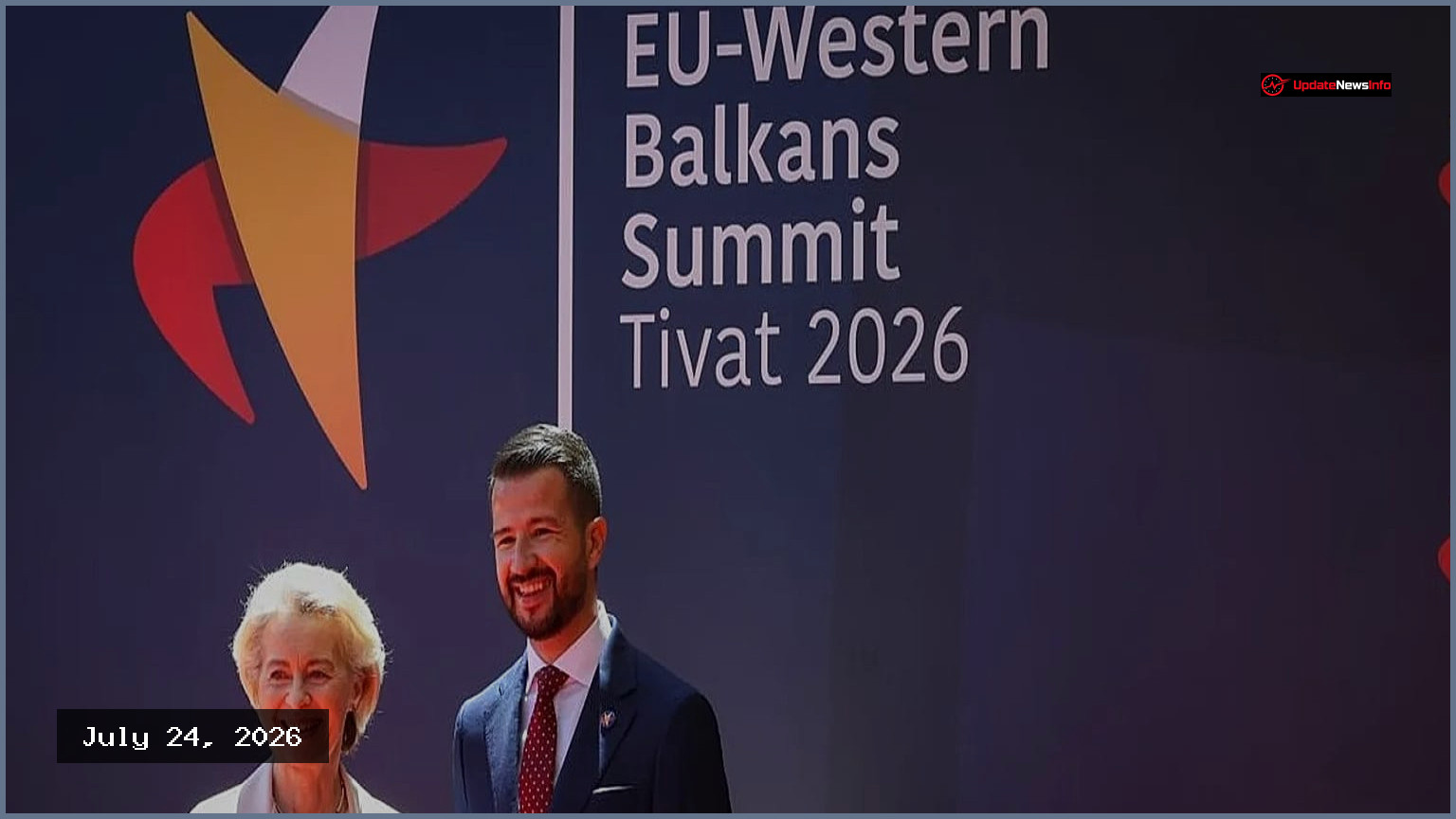
Montenegro, which is the most advanced candidate country in the accession process, aims to become the 28th EU member state by 2028. Its bid, however, faces potential complications from a series of proposals to overhaul the enlargement methodology.
A key driver for these proposed changes comes from five of the six EU founding members, who have called for stronger safeguards against democratic rollback after accession, drawing lessons from the experience with Viktor Orbán's Hungary.
Ambassador Marković noted that Podgorica already surpasses some current EU member states in its rule of law reforms, as indicated by the European Commission's periodic reviews. He stated, "Montenegro has an interest in introducing guarantees meant to maintain EU standards. But the potential breaches would have to be assessed on a case-by-case basis against objective criteria to prove systematic backsliding."
Marković acknowledged that a significant incentive for Montenegro to accept these new safeguards is their potential to streamline the ratification process. This could provide additional reassurance, particularly as the political landscape in some founding member states shifts rightward, leading to increased skepticism about enlargement.
Welcoming the renewed focus on enlargement as a top political priority in European capitals, Marković remarked, "For far too long, there has not been a real discussion on the enlargement methodology."
However, he argued that after 14 years of intensive work in the accession process, it would be unjust to change the rules at such a late stage. Montenegro was the first country to accept the current methodology and is the most advanced candidate approaching the finishing line under its existing framework.
"This is not about what we deserve. This is a rational choice. Discussions on a new methodology should focus on the candidate countries for which the current methodology has not worked. For Montenegro, it clearly has," Marković added.
He concluded by highlighting the strategic importance of the moment for the EU, stating, "Strategically, the stakes could not be higher. The EU has a real chance to reverse the Brexit effect and return to expanding again."