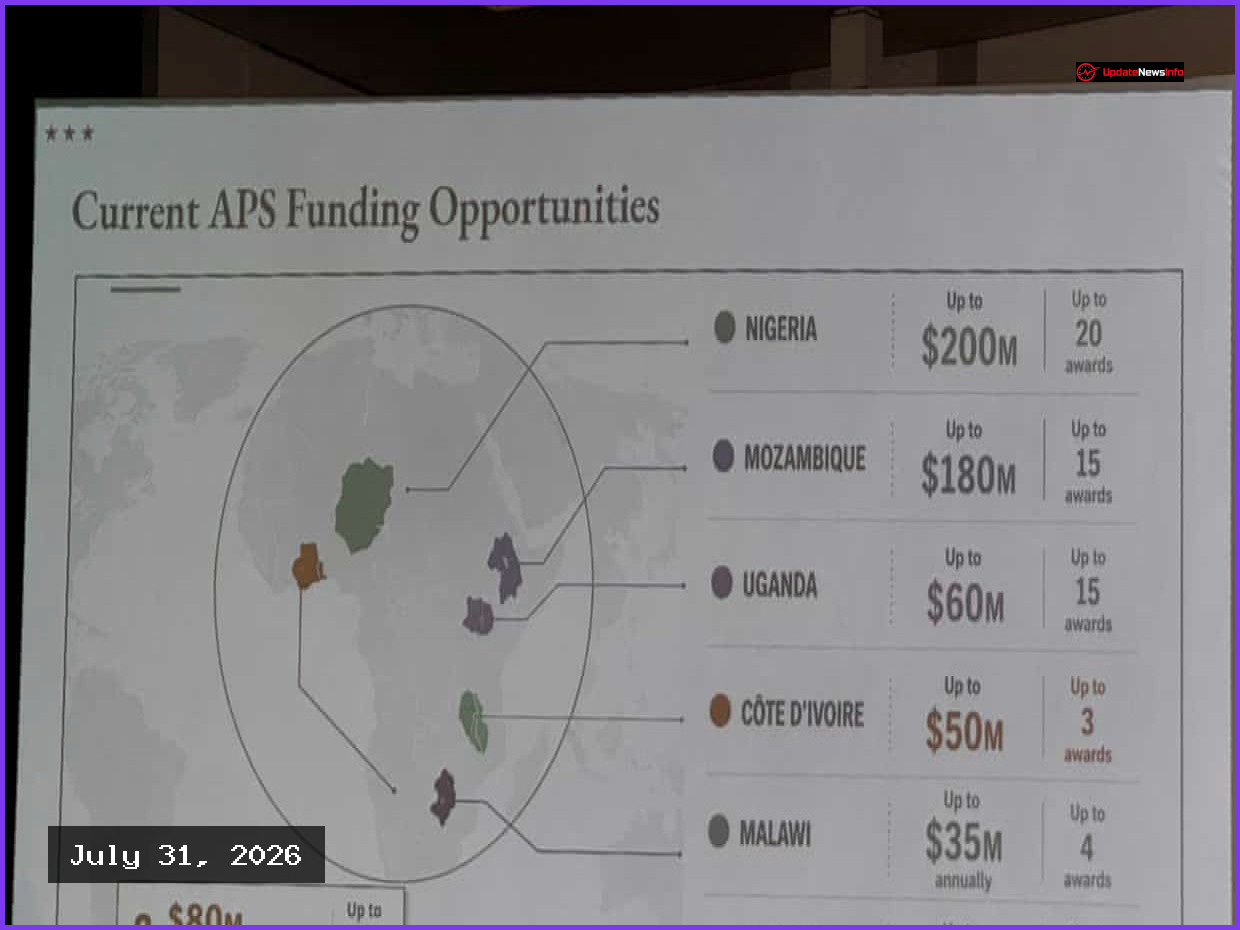
A presentation delivered by the US State Department at an AIDS conference in Rio de Janeiro, Brazil, this week has drawn significant criticism after it featured a map that mislabeled every single country on the African continent. The error occurred during a session regarding new health agreements, with attendees promptly capturing screenshots of the slide and sharing them across social media platforms.
Video footage of the event verified that the map was displayed midway through the presentation led by Jeff Graham, the top US health envoy responsible for the President’s Emergency Plan for Aids Relief (Pepfar). Graham did not respond to requests for comment regarding the incident. Analysis of the slide by Reuters revealed an artificial intelligence watermark, suggesting the image was generated using OpenAI tools; the company stated it is currently investigating the report.
The map contained numerous geographical inaccuracies, including the depiction of Nigeria—where the US currently has several hundred troops deployed—as a landlocked nation within the Sahara desert. Furthermore, Mozambique was erroneously placed in the Horn of Africa, while Côte d’Ivoire was relocated to the opposite side of the continent. The images gained traction after being featured in a Substack post by AIDS expert Emily Bass and subsequently shared on LinkedIn, where one post reached approximately 40,000 views.
Matt Petit, an expert on AI and geopolitics at the Atlantic Council, criticized the oversight in a post, writing, “Whoever created and approved this slide did not know where countries in Africa are and did not care to check their work.” In response, the State Department issued a statement acknowledging the error and stating that it takes “full responsibility for the confusion and misrepresentation it caused for attendees, including our African partners.” The department explained that the chart had been produced by a team member who made last-minute changes to the presentation deck.
Despite the incident, the State Department maintained that the conference discussions were “substantive and constructive.” The agency emphasized its continued commitment to fighting AIDS, noting that core Pepfar operations, such as the delivery of life-saving medication, have largely resumed following a period of funding disruption caused by the Trump administration’s review of aid programs last year. However, the US is currently scaling back other areas of spending, including prevention and surveillance, and intends to fully phase out the program in South Africa.
Reuters viewed a video of the presentation given at the Aids 2026 conference in Rio de Janeiro, which shows the errant map displayed halfway during a presentation about the state department’s new health agreements.