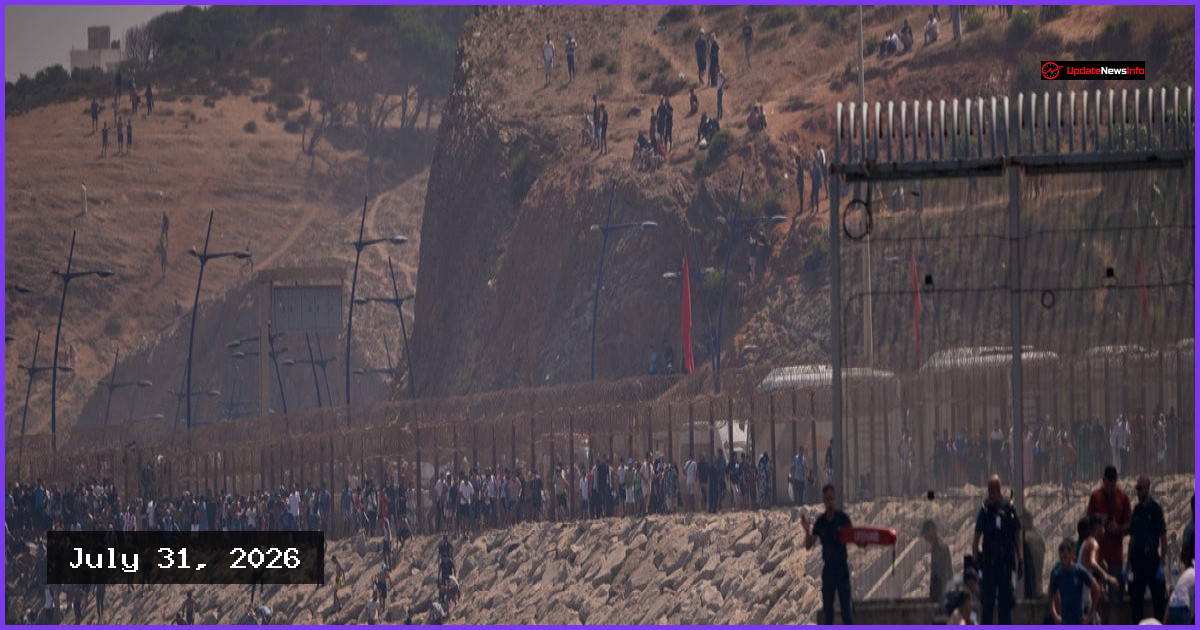
The Spanish government is deploying its military to restore order at its border with Morocco in the tiny Spanish territory of Ceuta. This decision follows a massive surge of migrants that saw thousands of people stream into the territory, with at least nine individuals dying during the attempt. The deployment comes after local authorities in Ceuta requested reinforcements from the central government in Madrid to manage a border crisis that had been building before boiling over on Thursday, when large crowds breached the border fence.
Spain’s government announced Thursday evening that it would send the Armed Forces to assist the Civil Guard in maintaining security within the city of Ceuta. Additionally, Prime Minister Pedro Sánchez and Interior Minister Fernando Grande-Marlaska are scheduled to visit the territory on Friday. Despite requests from local officials to declare a national emergency, the Interior Ministry stated that current legislation does not consider migration flows a risk to national security. The ministry emphasized that government agencies are coordinating to respond to the situation with speed and efficacy.
The situation on the ground has been described as "absolute chaos" by Rachid Sbihi, head of the association representing the Civil Guard officers who police the border. Sbihi noted that while precise numbers are difficult to confirm, the border has "totally collapsed" under the pressure of thousands of migrants. Achraf Maimouni, a member of the Moroccan Association for Human Rights, described the event as "exceptional," noting that the Tarajal border was opened under unusual circumstances on Thursday morning.
Video footage from the scene showed crowds, primarily Moroccans, walking around the breakwaters at Tarajal beach onto local roads. While the majority appeared to be young men, the groups also included families with women and small children. Some were heard shouting "Viva España!" to a freelance photographer. The Spanish government delegation in Ceuta confirmed at least nine deaths during the chaos, though it did not provide specific details on the circumstances; bodies were observed floating in the water. Local authorities noted that dozens of people have died this year while attempting to reach the territory.
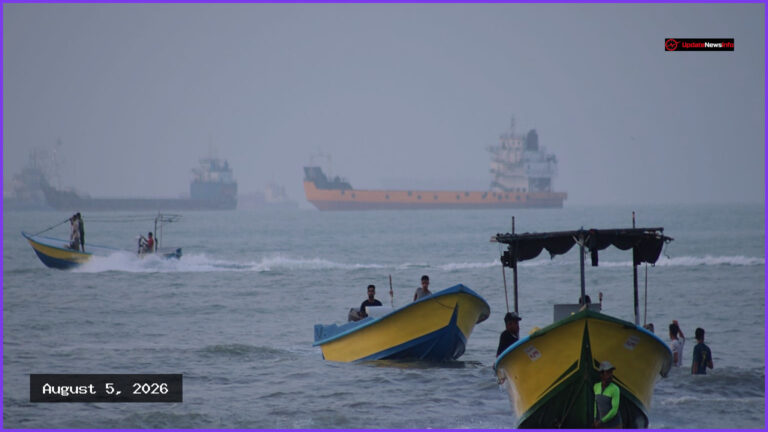
Spain’s Interior Ministry reported that the Moroccan government is "closely cooperating" to handle the situation, with Moroccan police stopping numerous people attempting to cross. Both nations have agreed to work together for the return of all individuals who entered Ceuta illegally. While Moroccan authorities have not publicly commented, the escalation follows a surge in attempts to reach the exclave, often by swimming from the Moroccan town of Fnideq—a distance of about 3.1 miles—or from the nearby town of Belyounech.
Ceuta authorities previously linked the spike to a Spanish Supreme Court decision from earlier this month, which ruled that migrants arriving by sea cannot be immediately pushed back without due process, unlike those who cross by land. However, some activists in Morocco have expressed doubt that this ruling was the primary driver, arguing that most migrants would be unaware of such legal developments. The current scenes recall the May 2021 crisis, when more than 8,000 migrants entered Ceuta in two days amid a diplomatic rift between Rabat and Madrid over the Polisario Front leader Brahim Ghali.
Juan Jesús Vivas, the head of Ceuta's regional government, had warned Wednesday that reception centers were overwhelmed, with hundreds of people sleeping on the streets after more than 1,500 migrants entered the territory in the past week. As of July 15, nearly 3,000 migrants had entered Ceuta by land or sea this year. Ceuta, a Spanish possession since 1580, remains a primary arrival point for migrants seeking economic opportunities or an escape from violence.