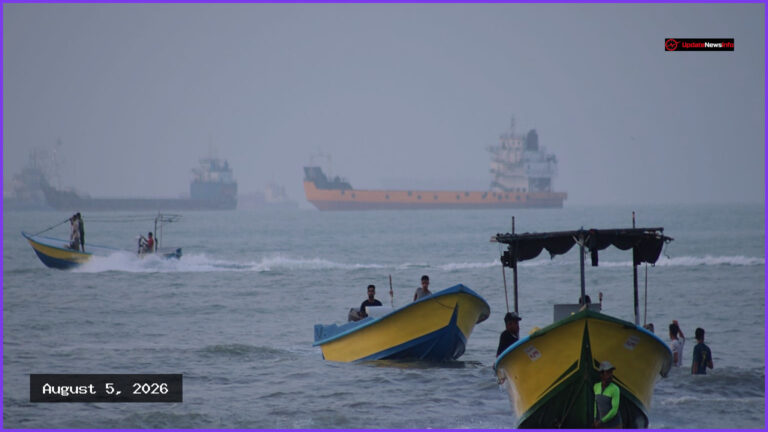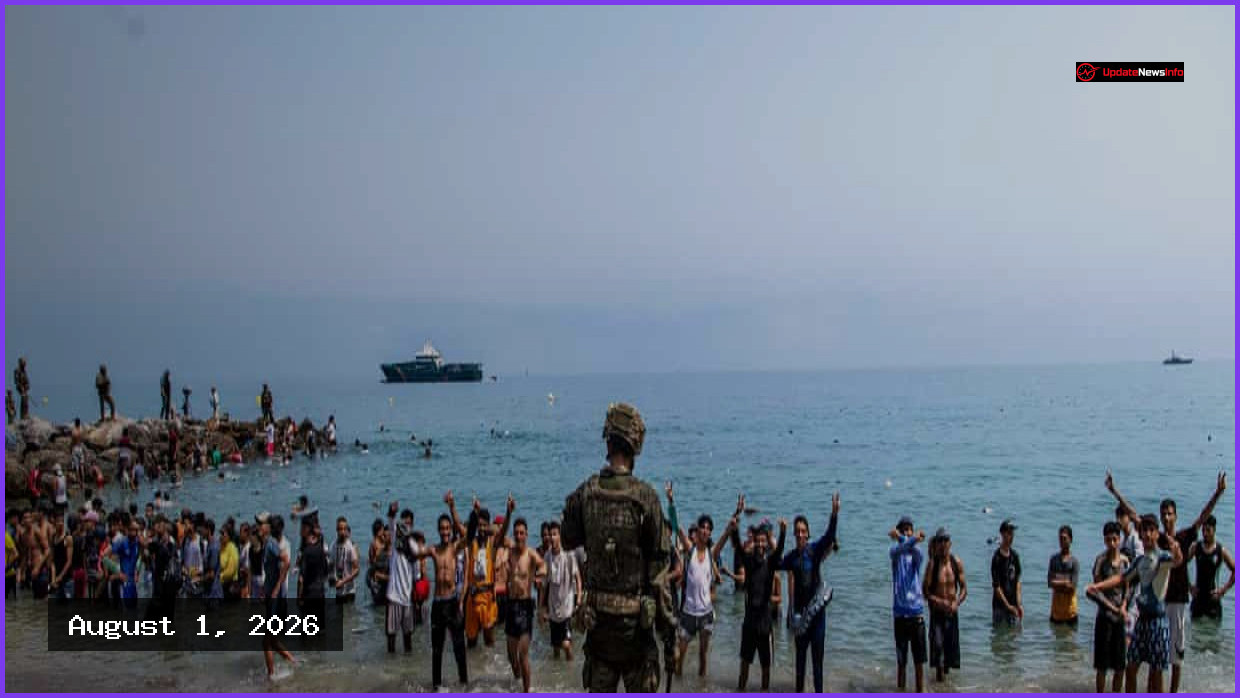
A humanitarian crisis has unfolded in the Spanish enclave of Ceuta after as many as 50,000 to 60,000 migrants crossed the border from Morocco within a 24-hour period. At least 57 people have died, with authorities reporting that many victims drowned, while others were killed in a crush at the breakwater fence located at Tarajal beach. Rachid Sbihi, who leads a local workers’ association representing officers of the Spanish Guardia Civil—which patrols Spain’s borders—described the situation as a “serious humanitarian crisis.” He noted that without shelter, thousands of people, including unaccompanied children, were left sleeping in parks and on pavements, while others roamed the streets aimlessly, calling the situation “chaotic.”
Spanish Prime Minister Pedro Sánchez, who visited the territory on Friday morning, condemned the mass crossing as a “violation of Spain’s territorial integrity.” He attributed the surge to “human trafficking mafias” that he claimed were exploiting a recent Spanish supreme court ruling. The court had previously determined that migrants intercepted at sea while attempting to reach Ceuta or Melilla could not be summarily returned under special regulations. Sánchez stated that this legal development “spread like wildfire during these last few hours through the networks of mafias that traffic in human beings and has produced an avalanche of the characteristics and dimension that we experienced yesterday.”
In response, the Spanish government has announced plans to establish a temporary reception center for the documentation, registration, triage, and “expedited” expulsion of those without legal claims to remain. Additionally, authorities will erect a visible barrier—a line of buoys—near the breakwater at Tarajal beach to clearly demarcate the border and legally comply with the court’s ruling. Spain’s interior ministry has deployed additional police and military personnel, and by 6 p.m. on Friday, over 48,300 people had voluntarily returned to Morocco.
The incident has strained diplomatic relations and sparked a broader political confrontation within the European Union. The Irish presidency of the EU has convened a meeting of member states on Saturday, under the Integrated Political Crisis Response mechanism, to discuss the movements into Ceuta, the numbers of people who have returned to Morocco, the supports being provided by the EU to Spain, and diplomatic engagement with Morocco. A further meeting of EU ambassadors has been called in Brussels on Monday. Italy’s government suggested suspending Spain from the Schengen free-movement zone, a proposal that drew sharp criticism from Spanish Foreign Minister José Manuel Albares, who labeled the comments as “unbecoming” and accused Italy of “partisan demagoguery.” Italy announced on Friday evening that it would be suspending its Schengen arrangements with Spain, though the practical impact remained unclear and the European Commission noted that Italy had not yet formally notified its EU partners of the decision.
The surge occurred against a backdrop of ongoing diplomatic tensions between Madrid and Rabat, linked to Spain’s previous decision to allow the leader of the Polisario Front to be treated for Covid-19 in Spain. That diplomatic crisis ended in 2022 when Madrid reversed its neutrality and backed Morocco’s plan for Western Sahara. Sánchez visited Algiers on 20 July—the first such visit by a Spanish head of government in four years—marking a thaw in relations with Algeria. Moroccan government sources told the Europa Press news agency that the surge was the work of “criminal organisations” and insisted that Rabat’s cooperation with Spain remained “exemplary.” Morocco’s ambassador to Spain, Karima Benyaich, stated that “we have always prioritized legal, orderly and safe migration for all.”
European Commission officials noted that Ceuta and Melilla are subject to unique Schengen rules that prevent onward movement, and migration commissioner Magnus Brunner described the situation as “unacceptable.” In Spain, the opposition People’s party (PP) called on Sánchez to take a tougher response, with leader Alberto Núñez Feijóo describing the city as “occupied.” The far-right Vox party labeled the incident “an invasion.” On Friday evening, hundreds attended an anti-migrant rally outside the Moroccan embassy in Madrid, where some protesters were seen performing Nazi salutes.