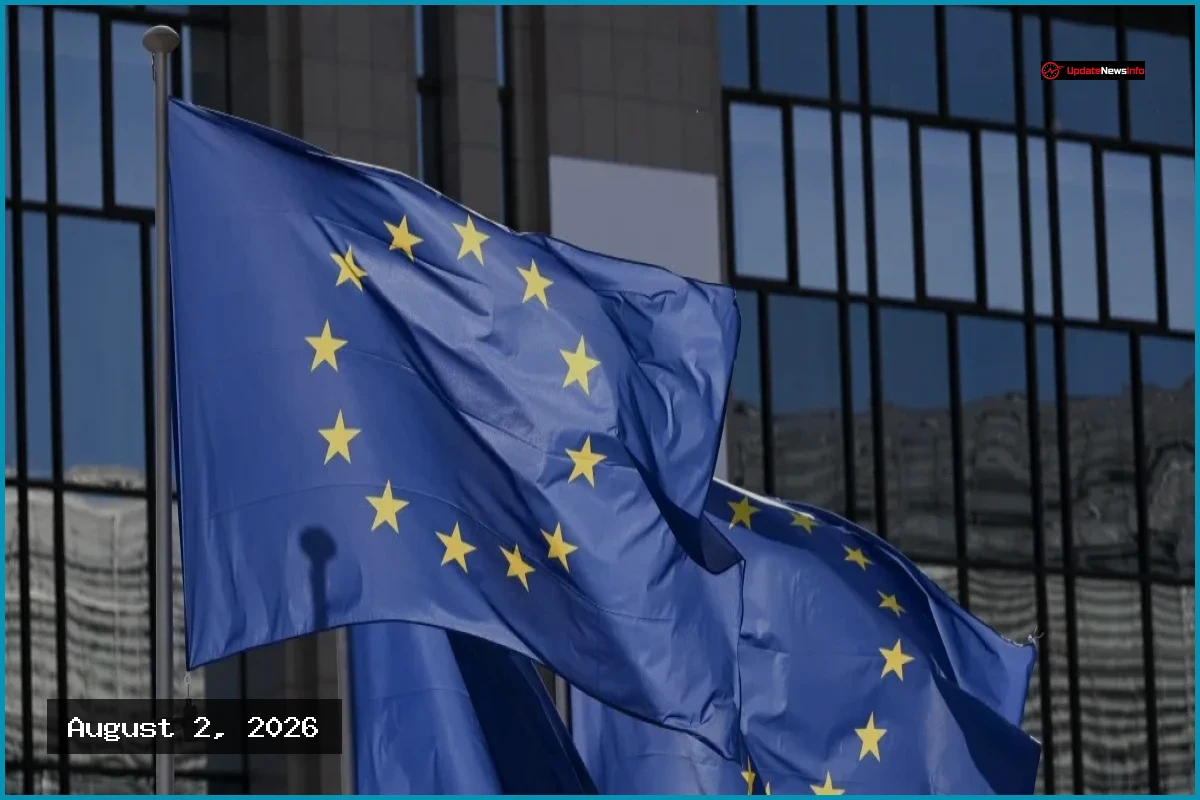
Beginning this Sunday, the European Union will officially possess the authority to enforce its landmark artificial intelligence regulations, marking a significant step in the bloc's efforts to govern digital technology. The EU, which already maintains the world's most comprehensive digital rulebook for search engines, online retailers, and social media, is now moving into the next stage of its "AI Act," a sweeping law adopted in 2024 that is being implemented in phases.
Central to this new enforcement regime is the AI Office, a regulatory body attached to the EU executive. Comprised of dozens of economists, lawyers, and tech experts, this office will have the power to oversee the most advanced general-purpose AI models. Regulators will be able to test sophisticated systems, such as chatbots, to ensure they adhere to the law. In certain circumstances, an EU official noted that companies may be required to provide access to their models before they are even placed on the market. Furthermore, if a provider fails to address concerns, the EU maintains the authority to restrict the deployment of that model within the bloc. This capability is intended to prevent issues like those encountered earlier this year, when the EU struggled to gain access to the Mythos model from American developer Anthropic.
The legislation utilizes a risk-based approach, where the obligations of firms increase in proportion to the potential risk their technology poses to health or fundamental rights. The law explicitly prohibits AI used for emotion recognition in schools or workplaces, predictive policing, and systems that manipulate human behavior. Starting Sunday, AI-generated content, including deepfakes, must be labeled, and firms must ensure that users are aware when they are interacting with AI systems like chatbots. While existing systems have until December 2 to adapt to these requirements, the rules provide exemptions for satirical, artistic, fictional, or creative work.
National authorities will handle the enforcement of rules regarding smaller AI systems, while the EU retains the power to force companies to remedy breaches. If firms fail to comply, they face significant financial penalties. The most severe fines are reserved for businesses that allow banned practices, reaching up to seven percent of a company's annual worldwide turnover or €35 million, whichever is higher. For other violations, or for failing to cooperate with EU probes, companies could be fined up to three percent of their global annual revenue or €15 million.
The regulatory framework will continue to evolve, with additional rules enforceable later this year. A ban on sexualized deepfakes is scheduled for December, a measure introduced following global outrage over non-consensual imagery produced by Elon Musk's Grok chatbot. Additionally, the EU has delayed the implementation of some high-risk AI rules to provide companies more time to prepare; these will apply to stand-alone high-risk systems from December 2027 and to AI tools embedded in other products starting in August 2028.