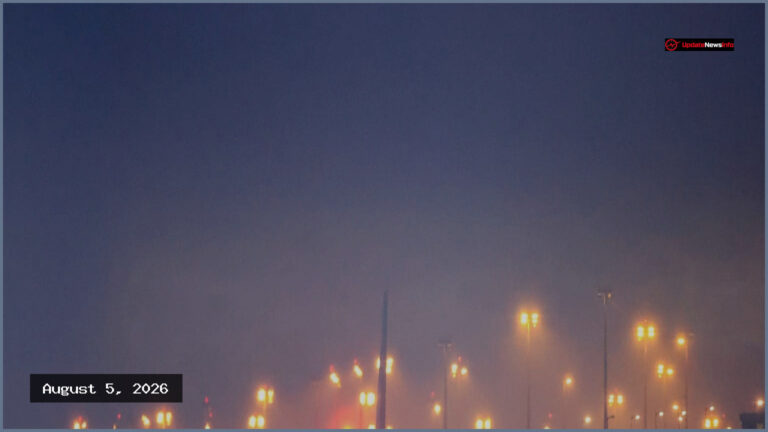
The wildfire emergency that has gripped Western Europe is showing signs of improvement, though the crisis has shifted its focus to Greece. On Saturday, gale-force winds in Greece drove flames through a seaside resort area, forcing hundreds of residents and visitors to flee by sea.
The situation is particularly concerning for the region, as it carries grim resonance with the 2018 wildfire in the seaside community of Mati near Athens, which claimed 104 lives and remains the deadliest wildfire in Europe this century.
The fire in Greece broke out Friday near the coastal village of Agios Vasileios. By Saturday, authorities had issued further evacuation orders as the blaze continued to spread. Theodore Giannaros, a wildfire meteorologist at the National Observatory of Athens, estimated that between 40 and 50 square kilometers (15 to 19 square miles) have been affected, though official burned-area figures have not yet been released.
Local resident and farmer Minas Tzortzanis, 60, described the devastation, stating, "A pristine forest, a paradise, was surrendered to the hands of the fire. There are no words to explain what has happened. Destruction. Total destruction."
Firefighting efforts in Greece are being hampered by extremely difficult conditions. Climate Crisis and Civil Protection Minister Evangelos Tournas noted that gale-force winds are causing extreme turbulence, which prevents some aircraft from collecting water or approaching the flames closely enough for effective drops.
The operation currently involves 19 water-dropping planes, 11 helicopters, and specialized forest-fire teams, including crews temporarily deployed from France and Romania.
Additional fires have also erupted elsewhere in the country, including a blaze east of Nafpaktos that triggered evacuation alerts for at least four villages.
Conversely, the situation in southwestern France has improved significantly. Interior Minister Laurent Nunez announced that the vast wildfire in the Gironde region is now under control, allowing approximately 198,000 people to return home following what may be the country's largest peacetime evacuation. The fire, which burned 420 square kilometers (162 square miles) of pine forest west of Bordeaux, remains contained but has not yet been declared "fixed." Lt.
Col. Eric Pitault explained that while the fire is not advancing, crews remain vigilant regarding buried hot spots that could flare up again, particularly on the forested Cap Ferret peninsula, where limited road access could trap returning residents.
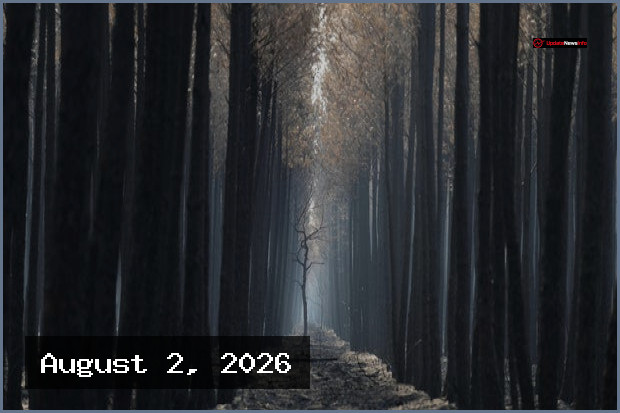
For some residents, the return home has been difficult. Matthieu Plessis, a 40-year-old mechanic in Le Porge, returned to find his family home of seven generations destroyed. He had to force open the property's gate because its key had burned, and he found only a chimney and twisted metal frames remaining.
"There are little details here and there that I recognize, but otherwise everything is unrecognizable," he said. "You don't even know what was here anymore, or who lived where."
In southeastern France, about 1,500 firefighters are still working to contain a blaze in the Var region. While defensive lines around the Gros Bessillon fire held overnight and no additional ground burned, Var Prefect Simon Babre noted that the blaze remains active, with 2,500 people still unable to return to their homes.
The fire had been declared fixed earlier in the week before mistral gusts revived embers on Friday, sending it through dry hills in temperatures approaching 42 C (108 F).
The sudden return of the fire "defies understanding," Babre said. Elsewhere in Europe, major fires in Spain are no longer advancing, and the primary blaze in Portugal is now under control.
According to the European Union’s Copernicus climate service, Europe is the fastest-warming continent on Earth, heating at more than twice the global average since the 1980s. This trend of rising temperatures and prolonged drought has left vegetation increasingly combustible, contributing to the intensity and speed of recent wildfires.
At the height of the crisis, fires in France and Spain alone drove a third of a million people from their homes and vacation sites, stretching emergency services across the region.
Crews used tactical burns overnight. Along 240 kilometers (149 miles) of fire edge, heat could remain hidden underground and erupt again.
Just over a week earlier, smoke had turned the afternoon almost to night as flames raced along both sides of the road. Now the 40-year-old mechanic drove through blackened forest and struggled to identify what had once stood there.