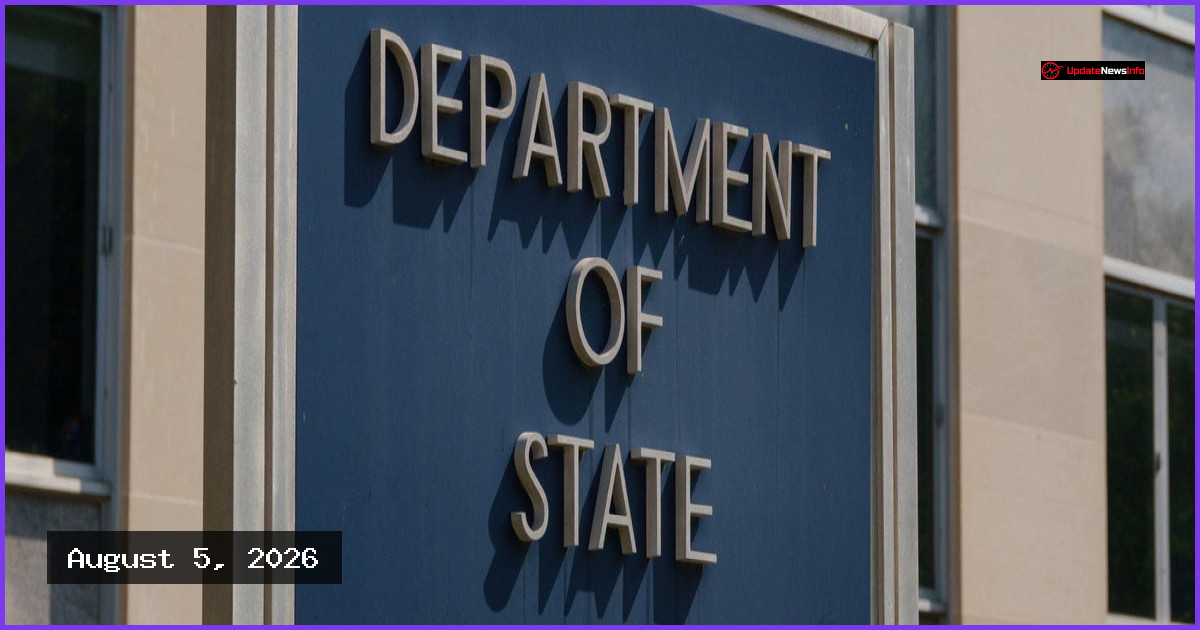
The U.S. State Department has revoked the visa held by Maria Luiza Ribeiro Viotti, Brazil's ambassador to the United States. According to an official, the visa will be reinstated immediately if Brazil grants formal diplomatic approval, known as agrément, for Daniel Perez, the nominee selected by President Trump to serve as the U.S. ambassador to Brazil. Currently, the Brazilian government has withheld this approval, which has prevented Perez, a Florida House of Representatives speaker and ally of Secretary of State Marco Rubio, from assuming his post.
An official stated that Brazil has not only delayed the approval process but has signaled that a decision may not occur until after their upcoming election. The official noted that this dispute is occurring within the context of several other diplomatic tensions that have developed over the past year. Washington maintains that the Brazilian government owes a prompt and positive response regarding the ambassadorial request.
The Brazilian government issued a statement condemning the move, characterizing the justifications provided by the State Department as false. Brazil further argued that the U.S. breached protocol by announcing its choice for ambassador before submitting a formal request to the Brazilian government, asserting that such names should remain private until consent is granted. The statement described the U.S. decision as part of a deliberate escalation of hostile measures driven by ideological motives that are incompatible with a bilateral partnership based on mutual respect.
This visa revocation follows a decision by Brazil in July to deny visas to two U.S. State Department officials. At that time, Brazil accused the officials of attempting to interfere in the October elections by questioning the integrity of the nation's voting system. The State Department rejected these allegations as baseless, maintaining that the visit by representatives from the Bureau of Democracy, Human Rights and Labor was a routine engagement.
The current tensions are further complicated by the political landscape in Brazil, where President Luiz Inácio Lula da Silva is seeking reelection against Sen. Flávio Bolsonaro, the son of former President Jair Bolsonaro. The former president, a known ally of Mr. Trump, is currently serving a 27-year prison sentence for his role in an attempted coup following the 2022 election. Additionally, the U.S. recently imposed 25% tariffs on Brazilian imports, citing unfair trade practices and rules governing U.S. tech platforms. President Lula has denied these allegations, arguing that the U.S. has maintained a significant trade surplus with Brazil for 15 years and suggesting the tariffs are politically motivated. Tensions were further exacerbated earlier this year when the Trump administration designated two Brazilian drug trafficking organizations as foreign terrorist organizations, a move that Lula publicly criticized, stating that Brazil would not accept being treated like a "banana republic."