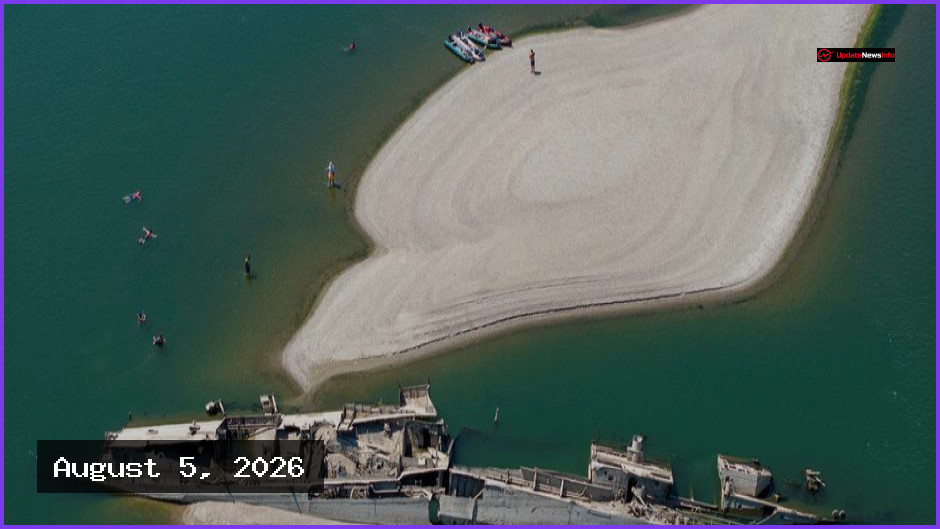
The Danube, Europe's second-longest river, has receded to such critical levels that dozens of sunken German warships from World War II are now emerging from the dried-out riverbed. Near the Serbian port of Prahovo, where the river serves as a natural border with Romania, the skeletal remains of rusty hulls and broken masts have become visible. These vessels were intentionally scuttled by Nazi forces during the conflict to prevent their capture by advancing Russian troops.
An estimated 200 Nazi-era ships currently rest on the floor of the Danube in this area. For years, the Serbian government has requested assistance from the European Union to facilitate the removal of these wrecks, some of which remain laden with hazardous explosives. Identifying the precise coordinates of these ships has proven difficult, as authorities are concerned that any recovery operation could accidentally trigger the volatile munitions still trapped onboard.
The current drought is causing widespread logistical and industrial disruptions. Beyond exposing historical wreckage, the low water levels have severely restricted ferry services, tourism boat operations, and commercial shipping across both the Danube and the Rhine rivers. The environmental impact has also reached energy production, with low water levels pushing power plants in parts of Central and Eastern Europe to the brink of operational shutdowns. Climate change has increasingly turned these low-water events into a recurring challenge for Europe's vital inland waterways.
Don't let the algorithm hide the news. If you rely on our team for trusted reporting, please take a moment to select us as your Preferred Source on Google by clicking here and hitting the "star" or "preferred" button, so you'll always see our verified news first.