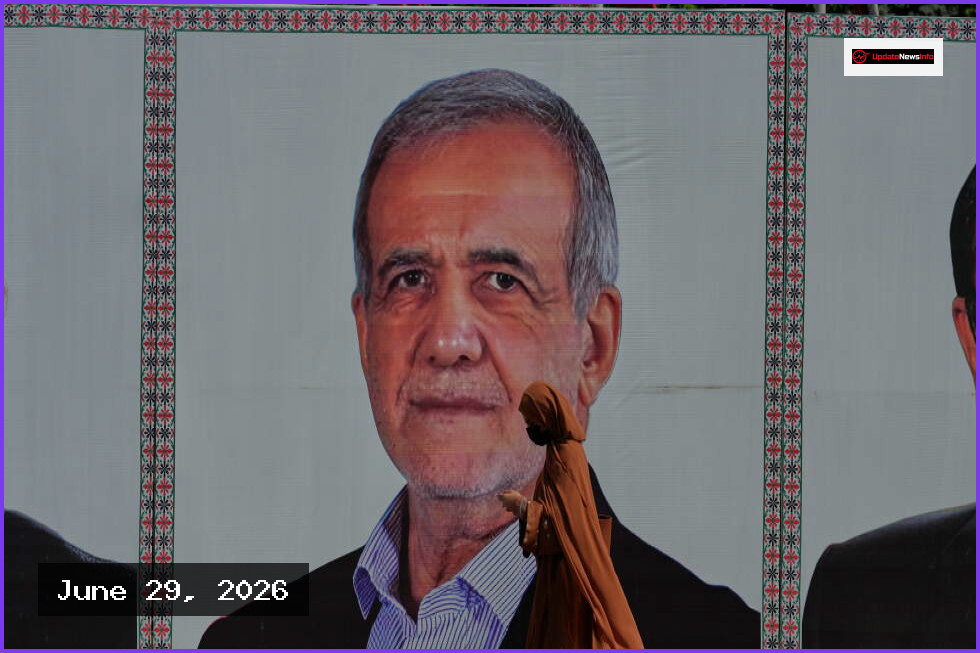
President Donald Trump stated on Monday that Iran had requested a meeting with U.S. counterparts, even as a senior negotiator from Tehran claimed no further discussions had been scheduled following a volatile weekend of attacks across the Persian Gulf. Although the U.S. president has attempted to maintain a fragile interim deal, hostilities escalated significantly in the Strait of Hormuz, a critical waterway through which one-fifth of the world’s oil was shipped prior to the conflict. Following four days of exchange in strikes, both sides appeared to pause their military actions on Monday.
Trump announced via social media that a meeting with Iran would be held Tuesday in Doha, Qatar. According to White House press secretary Karoline Leavitt, who spoke on Fox News’ “Fox & Friends,” U.S. special envoy Steve Witkoff and presidential son-in-law Jared Kushner are currently flying to Qatar for the meeting. Conversely, Kazem Gharibabadi, a senior Iranian negotiator, denied that any talks had been scheduled at all.
The nations had agreed to an interim deal earlier this month, requiring Tehran to dilute its stockpile of enriched uranium in return for a waiver on U.S.-backed sanctions and the opening of the Strait of Hormuz. The agreement provided a 60-day window for both sides to work toward broader accords. While oil prices dropped sharply following the signing of this deal, any sustained reversal could complicate President Trump’s claims to voters that inflation is cooling ahead of the November elections.
On Monday, Iranian President Masoud Pezeshkian remarked that $6 billion in frozen Iranian assets would be released by Qatar. Pezeshkian, a reformist within the Iranian theocracy, described the interim deal as a “great victory for the Iranian people,” noting that $6 billion out of a total of $12 billion of Iranian resources in Qatar would be returned to the country. However, U.S. officials maintain that no frozen assets have been released, and Qatar has not acknowledged such a transfer. Pezeshkian did not provide further elaboration on the status of these funds.
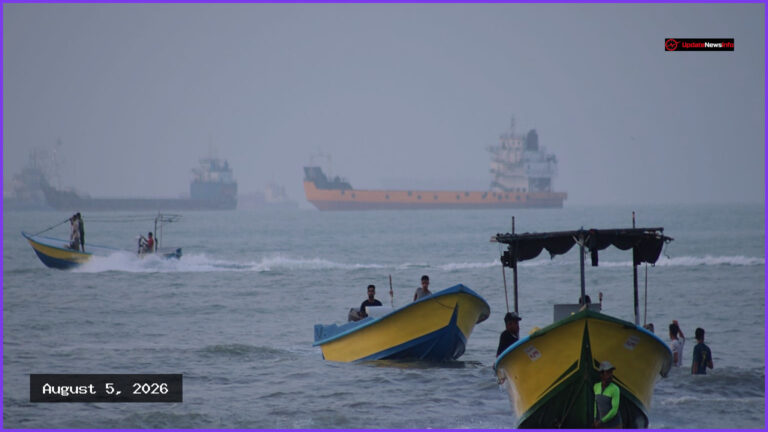
Since the war began on February 28, Iran’s military actions have frequently blocked cargo ships and tankers in the Strait of Hormuz, triggering a global energy crisis. In recent days, Iran twice attacked vessels in the strait, including a tanker carrying Qatari crude, following efforts to open Oman’s territorial waters to traffic. These attacks resulted in American retaliatory airstrikes and prompted concerns regarding the stability of the ongoing peace negotiations. Iran also launched drone and missile attacks targeting Bahrain and Kuwait on Sunday, while officials from Iran and Oman held a separate meeting concerning the strait on Monday.
Despite the lack of confirmation from Tehran, technical talks—involving lower-level diplomats working on specific details to bring top leaders back to the table—remain a focus. Trump touted on Monday morning that U.S. oil futures were trading at approximately $69 a barrel, a price drop he attributed to the interim deal. While the president has claimed oil prices are lower than before the war, data shows U.S. oil futures were trading between $65 and $66 per barrel before the late February conflict. Brent crude, which stood at about $72 a barrel before the war and spiked above $126 per barrel in April, was trading at roughly $73.25 a barrel on Monday.