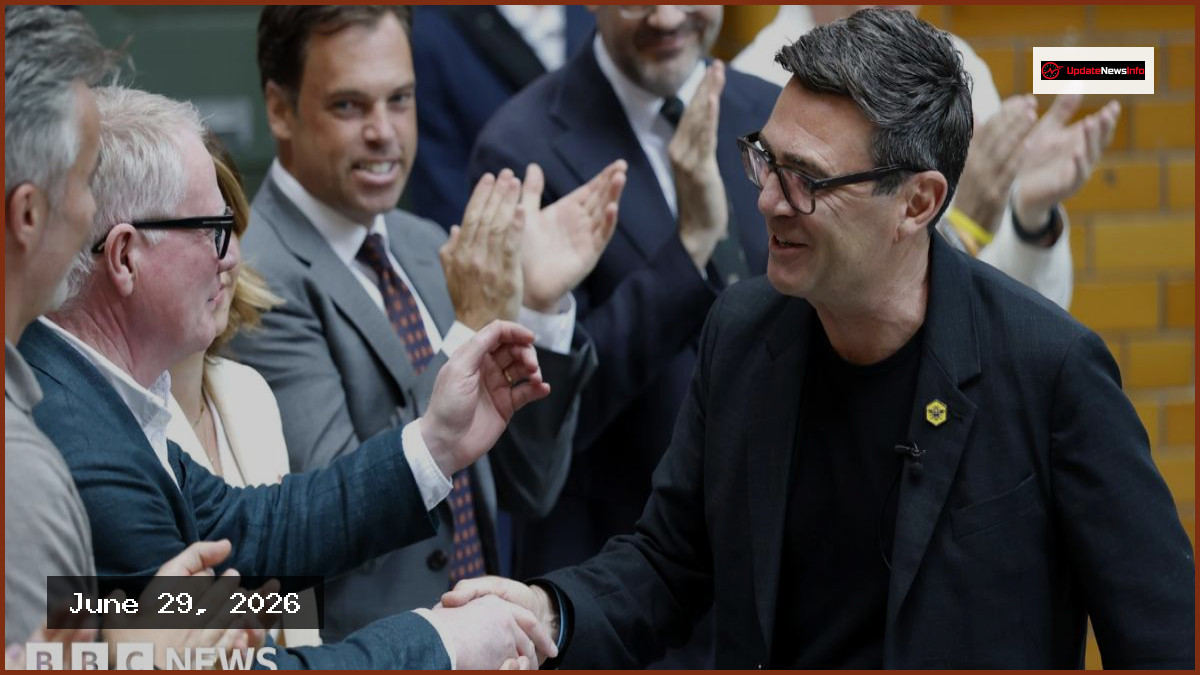
After failing to secure the prime minister position twice in the past, Andy Burnham is now only three weeks away from stepping into Downing Street. His successful decade-long tenure as mayor of Greater Manchester is what ultimately propelled him to this stage, leading him to return to Manchester for his inaugural speech as the presumptive prime minister.
Burnham’s governing vision relies heavily on the approach he honed while leading Greater Manchester, a model he is positioning as a blueprint for the entire nation. Central to this strategy is a significant shift in power away from Westminster to local authorities. A key highlight of his announcement was the creation of “Number 10 North,” a new prime ministerial office based in Manchester. While various government departments already operate outside of London, Burnham suggested this initiative would be more profound than a mere relocation of staff. He stated that the new office would oversee the largest council housebuilding program since the post-war era, hinting at a potential structural overhaul of government machinery.
Although specific details regarding how the office will function were not addressed, as Burnham declined to take media questions, he emphasized that this move is part of the largest rebalancing of power in political history. He committed to granting new authorities to locally elected leaders across the country, as well as those in Scotland, Wales, and Northern Ireland.
Economically, the speech included promises to boost living standards for all citizens and reform business rates to better support local establishments like pubs. However, the core theme remained the restructuring of political power. Burnham used the opportunity to critique the current “broken” Westminster system, labeling the prevalent “finger-pointing” as destructive to public trust. He advocated for a more collaborative political style, which may signal a willingness to pursue cross-party cooperation on sensitive issues like social care.
Burnham also took the opportunity to address concerns regarding his focus on the north, stressing his support for rural areas and coastal communities, while acknowledging London as a world-class capital. This served as a subtle response to Labour MPs from London and the south-east who have expressed unease about his strong regional ties. As he prepares for his new role, Burnham noted that Parliament appears to be a more difficult environment than it was during his previous stint as an MP, likely influenced by the pressures of social media, public scrutiny, and modern security concerns. Nevertheless, he enters the position with an ease that may offer a refreshing change of pace for a Labour Party looking for a new direction.