European airport leaders have issued a stern warning regarding the impact of the European Union's new border control measures, noting that they are significantly extending wait times for British nationals. The new Entry/Exit System (EES), which tracks entries and exits of non-EU short-term visitors to the Schengen area, has been linked to a tripling of average processing times in some locations. The system has been introduced in phases since October 12, 2025, and became fully operational on April 10, 2026. It records every entry and exit to the Schengen area for non-EU short-term visitors in an EU-wide database.
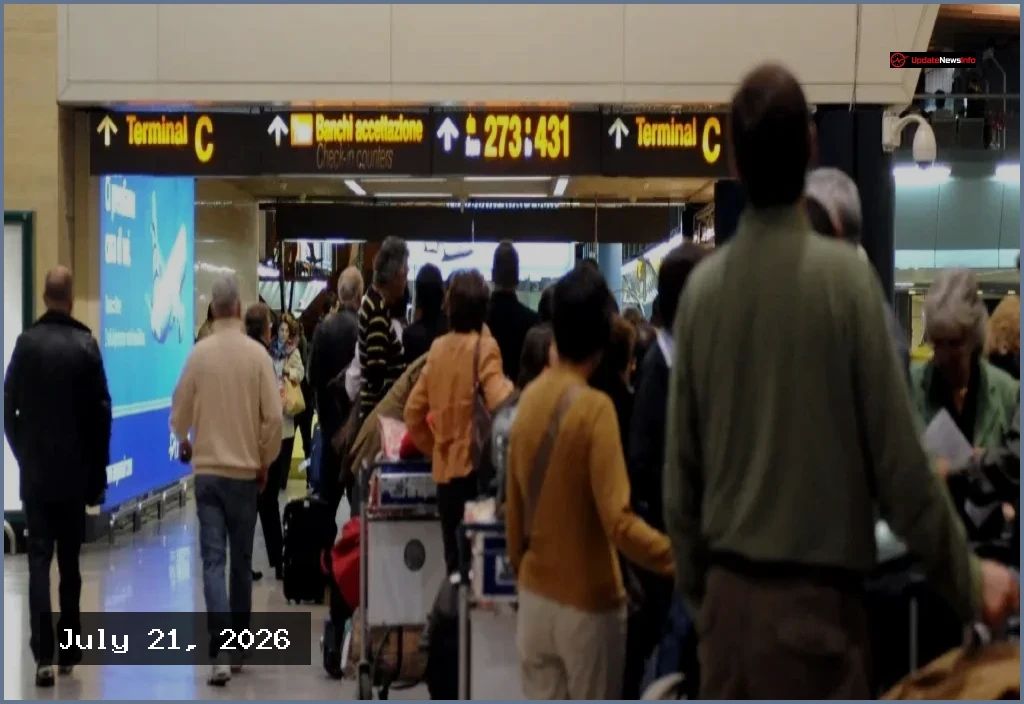
Ivan Bassato, chief aviation officer at Rome's Fiumicino airport, explained to the BBC that the average wait time for UK citizens navigating the new system has climbed from approximately seven minutes to 20 minutes. Bassato confirmed that the rollout has impacted service quality at the airport, noting, "We are not at the point where you have the same quality of the process before the EES." While he added that the introduction of self-service biometric kiosks, or e-gates, has "improved things significantly," he emphasized that urgent changes are still required, stating, "I think that we need to fix urgently certain aspects of the system."
The implementation has drawn sharp criticism from airlines, travel groups, and airport authorities, particularly concerning its effect on peak summer travel. In June, it was reported that Rome’s Fiumicino and Ciampino airports were considering plans to halt EES checks to avoid a "disaster" during the summer. Aeroporti di Roma CEO Marco Troncone told the Financial Times that his level of concern on a scale of one to ten was an "eight or nine," adding that the process is "incompatible with the peak volumes that we are going to face." He stated, "The only way is to open up the valve" and that there is no way to deliver 100 percent of the enrollment.
Similar delays have been reported elsewhere. Pedro Oliveira, head of border control at Faro airport in Portugal, told the BBC that average wait times there have also tripled in some cases, noting that a 10-minute queue now takes over 30 minutes. Delays have also been reported at various Spanish airports and the Port of Dover. The International Air Transport Association (IATA) has demanded the suspension of these new controls until next summer, citing fears of chaos in holiday hotspots.
Despite these warnings, European Commission officials have maintained that a full suspension of the EES is neither possible nor necessary, though they have admitted the system is "not perfect." Migration chief Magnus Brunner has pledged to resolve ongoing technical issues. Meanwhile, the French Interior Ministry has defended the system, stating it is serving its purpose. The ministry reported that more than 110 million entries and exits have been recorded, with over 44,000 people refused entry since the system's introduction in 2025, mostly due to overstaying visa or 90-day limits, or security concerns. This includes more than 1,100 individuals who posed a threat to internal security. The ministry asserted that these figures demonstrate that the EES effectively protects European citizens on a daily basis.
The EES system, designed to detect overstayers, replaced the manual stamping of passports by taking biometric data such as fingerprints and facial images that must be registered in front of a guard at the first crossing into the Schengen area. Travellers from non-EU countries, including the UK, must register this data the first time they cross an external Schengen border to enter any of the 29 Schengen countries. While the system was initially designed prior to Brexit and supported by the UK, British travellers now fall under its scope, and technological issues have hindered its implementation.
READ ALSO: EES: What to expect if you’re travelling to Italy this summer
READ ALSO: Europe's EES border checks won't be suspended, EU insists