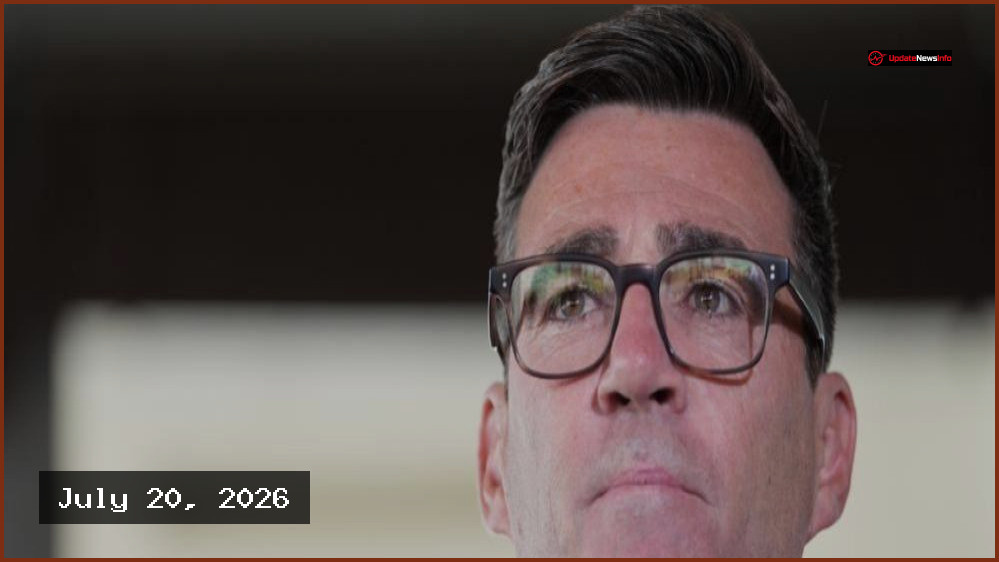
Andy Burnham is set to become the United Kingdom's fifth Prime Minister in just four years today, taking office amidst a period of significant political churn. He arrives in Downing Street with a stated determination to "buck the trend" of recent unpopular governments, a backdrop shaped by a national mood of impatience and fragmenting political support in the post-pandemic, post-Brexit 2020s.
The transition follows Sir Keir Starmer's departure, who will give a brief address before heading to see the King to formally stand down as prime minister. Sir Keir spent his final weekend in office at Chequers, the prime minister's country retreat in Buckinghamshire.
His team speaks with pride about achievements during his 746 days in office, including reducing immigration and NHS waiting lists in England, lifting children out of poverty, and introducing a social media ban for teenage children.
A modest gathering of staff and supporters is expected to see him off, with some overlap between his supporters and those of his successor.
Mr. Burnham is acutely conscious of the high turnover at the top of British politics, a sentiment his critics, both within and outside the Labour Party, might view with a wry smile, given their perception of his long-standing ambition for the role. He is determined to "hit the ground running" and aims to maintain the leadership style he cultivated as the mayor of Greater Manchester.
While the conventions of the House of Commons and meetings with the King will likely necessitate wearing a suit more frequently, other traditions may be intentionally discarded.
For instance, it is understood he may forgo a lectern for his first speech as prime minister outside 10 Downing Street on Monday. He is also reportedly keen on engaging with voters through "People's Question Time" sessions across the country.
The afternoon and evening will bring news of key cabinet appointments, including a new minister dedicated to artificial intelligence. Close attention will be paid to who secures prominent roles such as Chancellor, Home Secretary, and Foreign Secretary. Names like Shabana Mahmood, Wes Streeting, Ed Miliband, Angela Rayner, and Lucy Powell are among those being watched, as their appointments will offer insights into Mr.
Burnham's intended governance style. His immediate priorities are expected to include the cost of living and energy bills. Questions also remain regarding the extent to which the No 10 operation will be strengthened and the influence of No 10 North, Mr. Burnham's office in Manchester.
This rapid succession of prime ministers, with Boris Johnson's departure in summer 2022 followed by Liz Truss, Rishi Sunak, and Sir Keir Starmer, highlights a period of unprecedented political instability. While the frequent turnover may make such transitions seem less novel, the significance of Mr.
Burnham's arrival remains profound, with the decisions made in the coming hours expected to shape the country's governance for years to come.