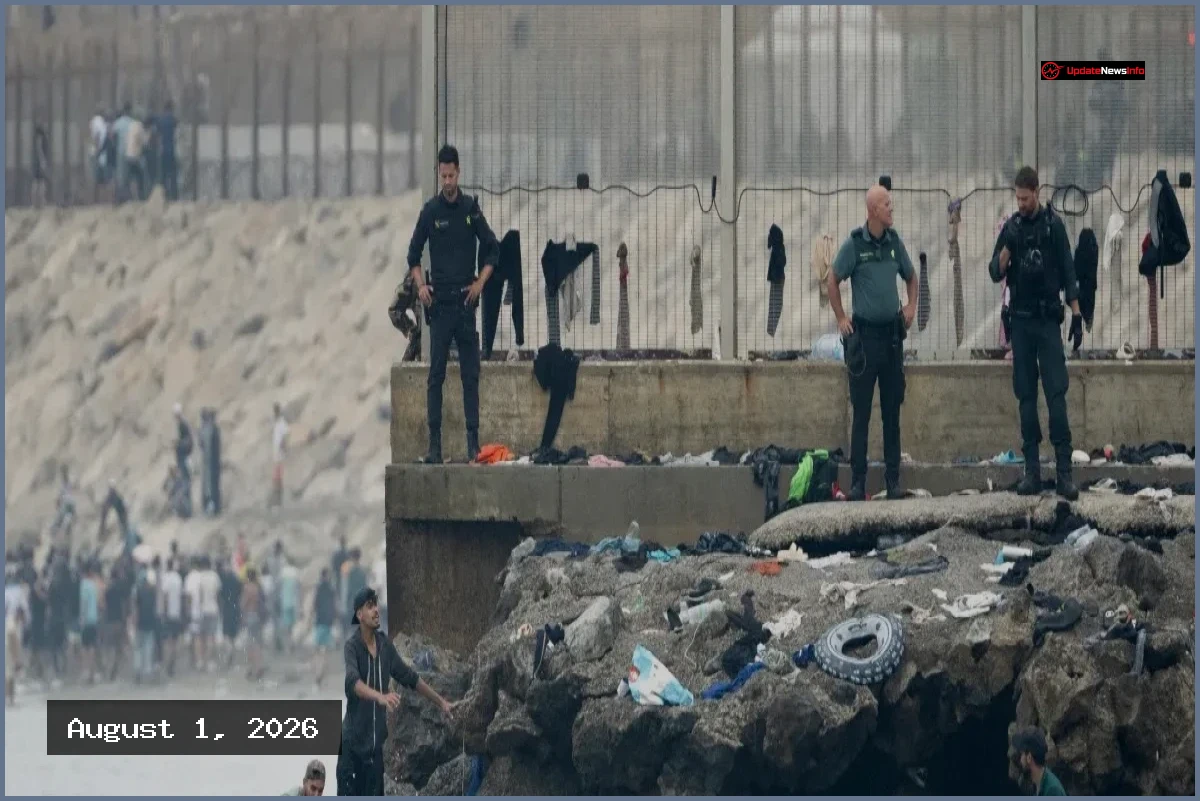
A recent surge in migrant arrivals at the Spanish enclave of Ceuta, located in Morocco, has sparked a heated debate regarding the future of the European Union's border-free travel area. Reports indicate that 60,000 migrants reached the territory this week, although 20,000 have since returned to Morocco. This sudden influx has prompted several European governments to call for Spain to be barred from the Schengen zone, the border-free travel area that stands as one of the European Union's most tangible achievements.
The Schengen zone was built up gradually starting in 1985, with border checks effectively abolished by 1995 between Belgium, France, Germany, Luxembourg, the Netherlands, Spain, and Portugal. It now encompasses 29 countries, including most EU members—with the notable exceptions of Cyprus and Ireland—as well as Iceland, Liechtenstein, Norway, and Switzerland. In practical terms, this allows EU citizens and nationals of non-EU countries to travel freely within the zone without being subject to border checks.
Italian Prime Minister Giorgia Meloni described the images of the arrivals in Ceuta as "shocking" and suggested on Thursday that Spain should be suspended from the Schengen area. This call for action gained momentum on Friday as Finland expressed support for the measure, and Denmark indicated that the EU should consider such a move. Danish Prime Minister Mette Frederiksen stated that the EU must immediately take all necessary measures and consider all options, including a suspension of Schengen cooperation.
Finnish Interior Minister Mari Rantanen added that countries failing to fulfill their obligations to protect the external border cannot be members of the zone.
Spain responded sharply to these proposals, criticizing the rhetoric as "demagoguery" and summoning the Italian ambassador to Madrid to lodge a formal protest. Meanwhile, the European Union has rejected the calls for expulsion. A European official, speaking anonymously, noted that while the bloc understands the concerns of member states, the primary focus remains on securing external borders.
Brussels also pointed out that the current crisis is localized to the African enclave of Ceuta, and there is no evidence of mass movement toward mainland Europe. The official noted, "It's not like they're landing in Spain and moving onto France."
Legal experts confirm that such an expulsion is not possible under the current framework. Marie-Laure Basilien-Gainche, a law professor at Lyon 3 University, stated that there is no provision in the Schengen framework for this type of action, noting that one state cannot unilaterally expel another. Although a country cannot be kicked out, the Schengen code does allow for the temporary reinstatement of internal border checks under exceptional circumstances, such as a serious threat to internal security or public order, including terrorism, organized crime, or public health emergencies like the Covid pandemic.
Member states can also reintroduce controls if there are sudden large-scale unauthorized movements of third-country nationals. France has already taken such steps by tightening checks on its border with Spain, though Basilien-Gainche noted there is no shared internal border between Italy and Spain, nor between Spain and Finland.
EU chief Ursula von der Leyen characterized the events in Ceuta as "unacceptable," confirming that her executive team is in active contact with both Spanish and Moroccan authorities to address the situation.
READ ALSO: What problems lie ahead for Europe's border-free Schengen zone?
A European official told AFP the EU understood "some governments are concerned" but stressed the priority was "securing our external borders".