The government of Chad has formally declared its intention to withdraw from the International Criminal Court (ICC), marking a significant shift in its international legal commitments. On Monday, the Chadian Foreign Ministry issued a statement confirming that it had notified the UN Secretary General of its decision to exit the Rome Statute, the foundational treaty of the ICC.
This move makes Chad the fourth francophone African nation with close military ties to take such a step in less than a year, following the coordinated exits of Burkina Faso, Mali, and Niger last September.
In its official statement, the Foreign Ministry explained that the decision followed an in-depth review of the court’s operations since it began functioning in 2002. The ministry characterized the ICC’s effectiveness as "limited and uneven" across different regions. Furthermore, the government alleged an "undeniable and egregious selectivity" in the court’s prosecution record.
The ministry pointed to data suggesting that nine out of 13 cases launched since the court's inception concerned African states, while only four applied to other global regions, with those cases reportedly lacking concrete progress.
Additionally, the statement noted that of seven individuals detained through ICC investigations, only one originated from outside the African continent. These figures, according to the ministry, demonstrate a lasting concentration of cases focused on the Global South and Africa in particular.
The announcement, signed by Foreign Ministry spokesperson Ibrahim Adam Mahamat, emphasized that the decision does not represent a renunciation of the moral imperative to provide justice to victims. Instead, the government stated it reflects a conviction that national judicial systems and African judicial mechanisms are fully capable of carrying out this mission with dignity. Chad also issued an appeal to other African Union members to follow its lead.
The ministry had previously raised the issue of the ICC last Thursday, noting that US officials had expressed concerns about the institution's functionality and requested that Chad re-examine its commitment to the Rome Statute. Chad indicated at the time that the request would be reviewed by responsible authorities.
The withdrawal coincides with a vote held last week to dismiss the ICC’s chief prosecutor, Karim Khan, amid allegations of sexual misconduct. While the United States never ratified the Rome Statute, past administrations had been broadly supportive of the court. This stance has shifted, particularly following the ICC’s issuance of arrest warrants against Israeli Prime Minister Benjamin Netanyahu and his former defense minister, a development occurring shortly after Donald Trump won a second term in November 2024.
The incoming Trump administration has frequently criticized both the independent ICC and the United Nations.
Chad’s political structure remains deeply intertwined with its military, with the same family holding power for over 35 years. Former President Idriss Deby, who seized power in a 1990 military coup, led the country for over three decades until his death in April 2021. According to official accounts, the general died on the front lines against an insurgency in the north, just one day after being declared the winner of a sixth consecutive term in an election marked by widespread arrests and protests.
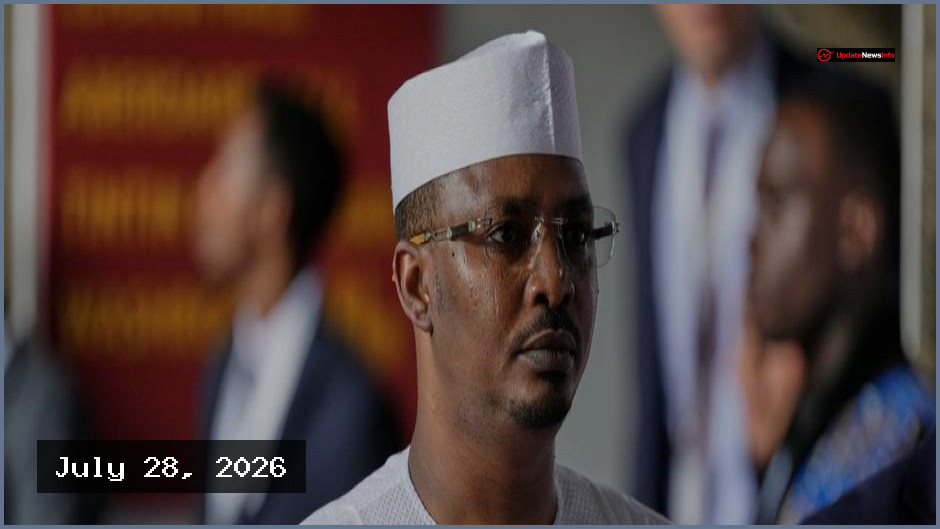
Following his death, his son, Mahamat Idriss Deby, was named head of a transitional military council.
In October 2022, Mahamat Deby extended his interim mandate, triggering public protests that were met with violent suppression, resulting in dozens of deaths and the banning of several opposition parties. By 2024, following a constitutional referendum, Mahamat Deby stood in presidential elections. His primary challenger was his own prime minister, Succes Masra, who had returned from exile in the US earlier that year. Although Deby won with 60.1% of the vote, the results were disputed by opposition groups.
Masra was subsequently arrested in May 2025 on charges of inciting hatred during violent clashes that the government labeled an "attempted coup," and he was sentenced to 20 years in prison last August. Beyond these internal political tensions, Chad continues to combat a decade-long insurgency in the north led by groups with bases in southern Libya, while also managing a significant influx of refugees from the civil war in neighboring Sudan.
To view this video please enable JavaScript, and consider upgrading to a web browser that supports HTML5 video
Don't let the algorithm hide the news. If you rely on our team for trusted reporting, please take a moment to select us as your Preferred Source on Google, so you'll always see our verified news first.