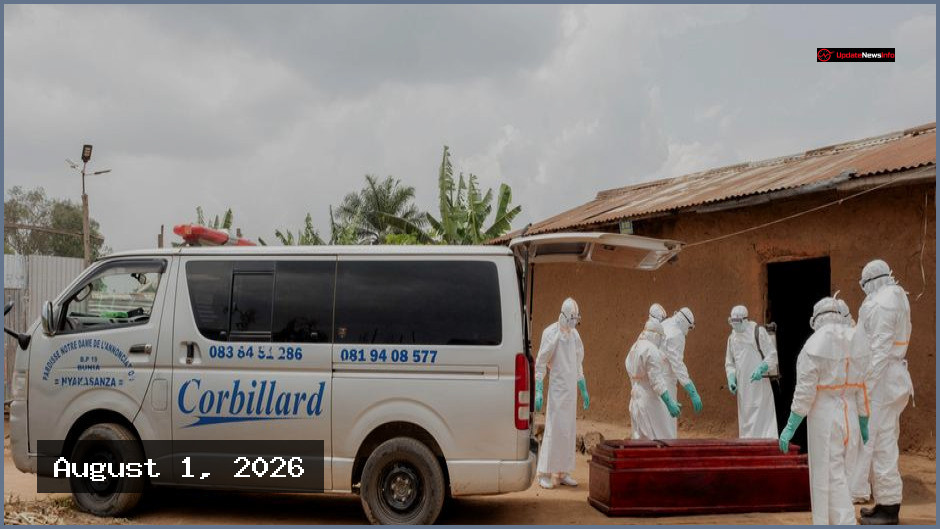
The ongoing Ebola outbreak in the Democratic Republic of Congo has now exceeded 3,500 confirmed cases, officially making it the second-largest epidemic of the virus ever recorded. According to government officials, there have been 3,532 confirmed cases and 1,556 deaths reported across five provinces. This total surpasses the country’s previous deadliest epidemic, which resulted in approximately 3,500 infections and nearly 2,300 deaths.
The Africa Centres for Disease Control and Prevention noted that the current outbreak has proven unusually lethal, claiming five times more lives in its first three months than observed at the same stage in previous epidemics. Carl Skau, acting executive director of the UN World Food Programme, described it as the fastest-spreading Ebola epidemic ever seen, urging the international community to pay closer attention to the crisis.
The virus is concentrated in the Ituri province, located in the northeastern region of the country near the borders of Uganda and South Sudan. However, the infection has since spread to four additional provinces, including North Kivu and South Kivu. These areas remain difficult to manage due to persistent instability and conflict involving the Rwanda-backed M23 rebel group, which continues to challenge peace efforts in the eastern region.
The outbreak is caused by the Bundibugyo strain, a variant for which there is currently no approved vaccine or treatment. While the true scale of the epidemic remains uncertain, the speed of transmission has been significant; confirmed infections rose from 2,000 to over 3,500 in just a few weeks. The World Health Organization (WHO) defines Ebola as a severe, often fatal disease transmitted through direct contact with infected bodily fluids or animals.
Research into potential vaccines is accelerating to combat the strain. The WHO has identified a candidate from Singapore-based Hilleman Laboratories as the most promising. Additionally, the University of Oxford is developing a separate Bundibugyo vaccine, with the first human volunteer receiving a dose during a clinical trial last week. The only larger Ebola epidemic in history remains the 2014-16 West Africa outbreak, which reported 28,616 cases across Guinea, Liberia, and Sierra Leone.
To view this video please enable JavaScript, and consider upgrading to a web browser that supports HTML5 video.
Don't let the algorithm hide the news. If you rely on our team for trusted reporting, please take a moment to select us as your Preferred Source on Google by clicking here and hitting the "star" or "preferred" button, so you'll always see our verified news first.