The landscape for France’s 2027 presidential election currently looks like the chaotic starting line of a major marathon. According to the website candidator.fr, the number of individuals declared, likely to declare, or considering a run has reached 47. While perhaps 30 are considered serious contenders, this field is significantly larger than in previous cycles, surpassing the 12 candidates in 2022 and the record of 16 set in 2002. In the very first presidential election of the Fifth Republic in 1965, there were only six candidates.
Many observers fear that this scattered field could inadvertently aid political extremes, potentially leading to a second-round run-off between Jordan Bardella of the Far Right and Jean-Luc Mélenchon of the Far Left. The reasoning suggests that if the Far Right secures around 30 percent in the first round, a crowded moderate field could drop the threshold for second place to between 17 and 20 percent, allowing Mélenchon to sneak into the final. However, this scenario may be misleading for several key reasons.
First, the final list will be much smaller. Candidates require 500 signatures from elected officials to appear on the ballot, a hurdle even Marine Le Pen found challenging in previous years. Furthermore, the race typically narrows to about four serious candidates in the final weeks. There is also a growing “stop-Mélenchon” sentiment among centrist and center-left voters, who may strategically consolidate behind the most viable moderate candidate, such as Edouard Philippe or Gabriel Attal, to avoid a run-off between two populist extremes.
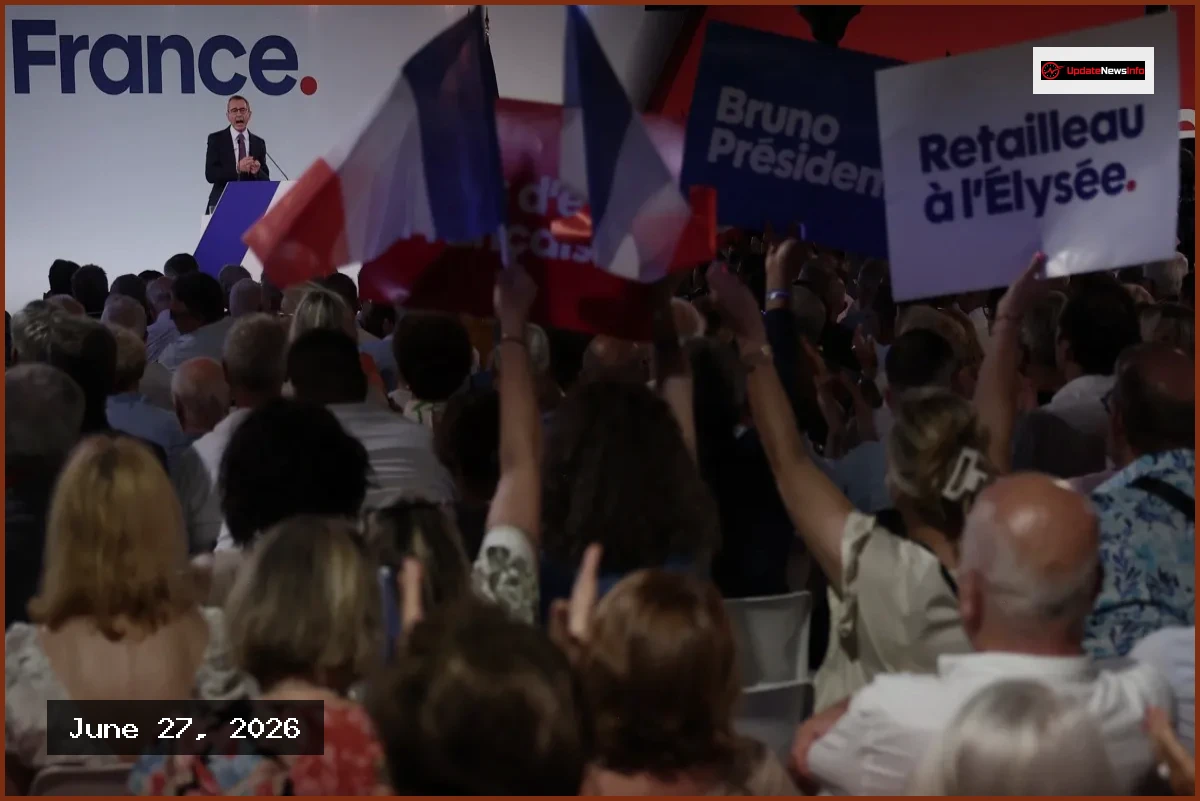
The moderate left remains particularly fragmented, with figures like Raphaël Glucksmann, Karim Bouamrane, and Jérôme Guedj already in the mix, alongside others like Olivier Faure, François Hollande, and Bernard Cazeneuve who are still weighing their options. Despite the lack of a formal primary, these candidates will likely face an “opinion poll primary” to determine who can gain momentum. Similarly, the center-right is navigating its own selection, with Philippe and Attal agreeing that the weaker candidate will step aside in the New Year, while Bruno Retailleau maintains his campaign for Les Républicains.
Relying on opinion polls to winnow the field is inherently risky, as these metrics can be ephemeral and lack the stability of strong party structures. Because France lacks robust political movements outside of the Rassemblement National and La France Insoumise, these unofficial poll-based primaries have become an unavoidable, albeit imperfect, mechanism. If these candidates remain stuck in a crowded, low-momentum field by the beginning of next year, the political situation in the country may become increasingly precarious.