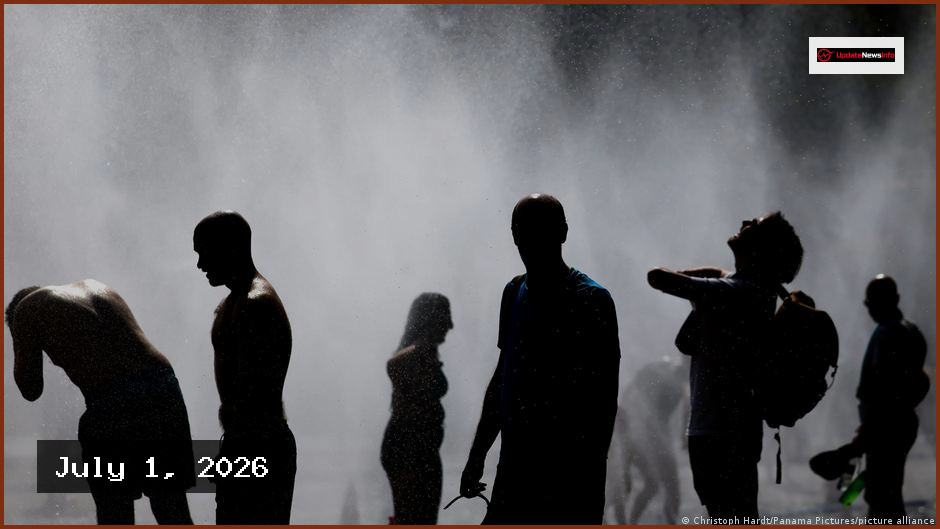
In the wake of a recent heat wave, critics are arguing that the German government must take more decisive action to adapt to a changing climate. The past weekend saw temperatures climb past 40 degrees Celsius (104 degrees Fahrenheit), creating life-threatening conditions for individuals in hospitals, retirement homes, and nursing facilities that largely lack air conditioning systems. A primary issue remains the absence of national heat protection regulations requiring cooling infrastructure in these types of buildings.
Public infrastructure also suffered during the spike, as road asphalt cracked and transport services, including trains and trams, struggled to function. Andreas Becker, a climate expert at the German Weather Service, noted on Deutschlandfunk Radio that rising temperatures are a steady trend that will persist in coming years. The Federal Environment Agency reported that between 2021 and 2024, approximately 50 hectares of land—or 70 soccer fields—were converted daily into residential, commercial, or transportation space. This soil sealing prevents water absorption and evaporation, exacerbating urban heat and increasing flood risks during heavy rain.
Addressing these concerns has become a point of political contention. Environment Minister Carsten Schneider of the SPD stated on ARD that federal government leadership on local climate adaptation is limited by the Basic Law, suggesting that responsibility lies with municipalities and federal states. While he proposed discussing potential amendments to the Basic Law to allow federal intervention, he noted that states have access to €100 billion from a €500 billion infrastructure program for climate projects.
Germany has set a goal to cut greenhouse gas emissions by 65% by 2030 relative to 1990 levels, having already met 48% of that target. However, experts remain skeptical about meeting the final goal. Meanwhile, the administration under Chancellor Friedrich Merz has moved to allow the installation of new oil and gas heating systems, drawing further criticism. Martin Kaiser of Greenpeace Germany argued that municipal debt makes the existing special funds insufficient for necessary long-term investments like planting trees or creating water-retaining green spaces.
Opposition figures have also voiced strong disapproval. Ines Schwerdtner of the Left Party urged more investment in public transport, while Green Party leader Felix Banaszak called for direct, bureaucrat-free support for vulnerable facilities. Banaszak also criticized the government’s silence during the heat crisis. Despite the severity of the weather, public concern for climate issues remains lower than other priorities like the economy and immigration, according to an infratest-Dimap survey conducted shortly before the record heat arrived.