Hamas has declared its readiness to transfer governing authority in Gaza after two decades of control, extending an invitation to a US-backed interim administration to assume leadership of the Palestinian territory. The announcement was made on Monday, though its immediate impact on the fragile ceasefire or the humanitarian crisis in the besieged coastal strip remains unclear.
While Hamas stated it was prepared to hand over security responsibilities as part of a transition, the group’s statement notably omitted any commitment to unilateral disarmament, a key demand from Israel and the United States. The proposed interim body, the National Committee for the Administration of Gaza (NCAG), has been prevented from entering Gaza by Israel since its formation in January as part of a US-brokered ceasefire, casting doubt on the timeline for any handover.
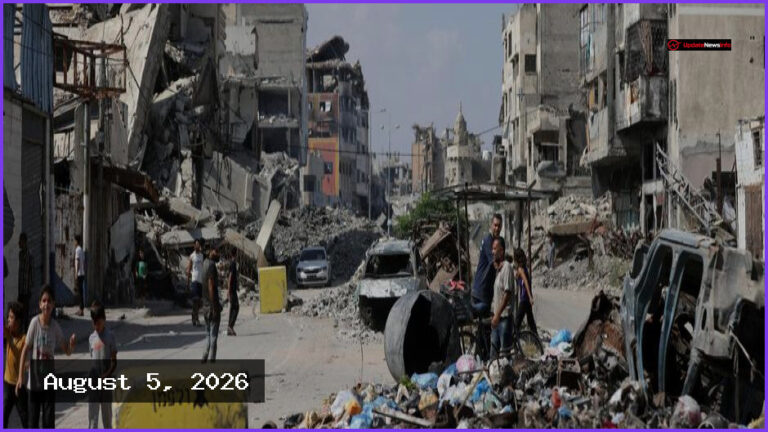
Analysts suggest Hamas’s announcement is largely a symbolic effort to revitalize a stalled peace process, which has impeded reconstruction and humanitarian aid for Gaza’s 2.1 million residents. The move is also seen as a response to Israeli-led proposals that would restrict relief, reconstruction, and NCAG governance to limited areas within Gaza, predominantly under Israeli army control.
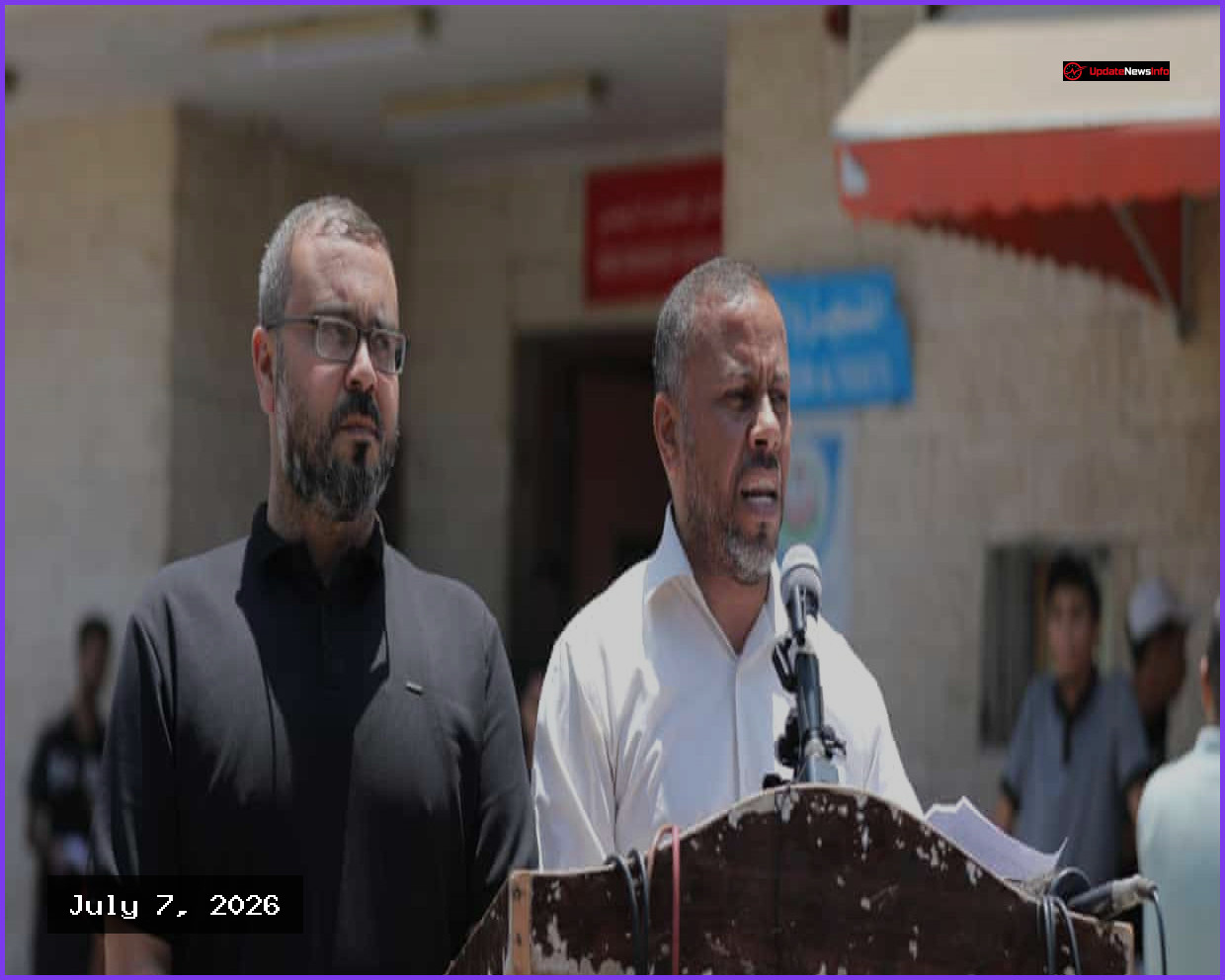
Mohammed al-Farra, head of the Hamas administration, announced his resignation and the transfer of power to the NCAG. He indicated that Hamas would immediately cease its political direction of Gaza’s governance, with civil servants expected to continue in their professional roles pending the NCAG’s arrival. Al-Farra stated, “After I have ensured that all necessary preparations have been completed for the handover of the governmental system in the Gaza Strip, I hereby tender my resignation from my positions as chairman of the governmental work follow-up committee in the Gaza Strip and chairman of the governmental emergency committee.”
A Hamas spokesperson, Hazem Qassem, told Agence France-Presse, “Hamas has taken a new step in that it will no longer be in charge of the Gaza Strip, in order to remove any pretexts for the occupation, which continues its aggression and war of extermination.”
The prospect of a political transition remains distant. The NCAG operates under the Board of Peace, established by Donald Trump as part of a ceasefire plan brokered in October. However, its 13 members, predominantly Palestinian professionals, have been barred from entering Gaza by the Israeli government and have been based in Cairo since January.
Ali Shaath, the NCAG chair, commented on social media that the committee was “fully prepared to assume its national responsibilities as soon as the necessary resources and capabilities are available.”
In a May report to the UN security council, the Trump-appointed high representative for Gaza, Nickolay Mladenov, attributed the impasse in the peace process to Hamas. Hamas has maintained it will not relinquish its arms while Israel maintains direct control over more than 60% of Gaza, violates ceasefire agreements, and supports Palestinian paramilitary groups within the territory.
The Board of Peace responded to Hamas’s declaration by stating it had “taken note” and that its assessment would be “guided by actions, not promises, to meet the critical needs of the people of Gaza.” The board reiterated, “The core principle remains one authority, one law and one weapon. This means the consolidation of all weapons under the control of the NCAG.”
Max Rodenbeck, Israel-Palestine project director at the International Crisis Group, commented that given Gaza’s dire conditions and the Board of Peace’s insistence on Hamas disarmament while overlooking Israeli actions, the group is seeking a way to break the stalemate. He added, “In the absence of any ‘political horizon’ for Palestinians it cannot just lay down its weapons, but it can at least signal its willingness to give up political power. This puts the onus back on the [Board of Peace] to show some flexibility.”
The Palestinian Authority, along with its Arab and European supporters, is working to influence US policy and encourage adherence to the Trump peace plan for comprehensive reconstruction and governance in Gaza, rather than the limited approach favored by Israel and supported by the United Arab Emirates.
Muhammad Shehada, a visiting fellow at the European Council on Foreign Relations, stated, “Hamas knows that if NCAG just moves into New Rafah, it would be delegitimised as the ruler of bantustans or a concentration camp.” He believes Hamas is attempting to regain initiative and bypass the obstacles presented by the “New Rafah” plan. Shehada also noted that Hamas anticipates that even if they disarm, Israeli Prime Minister Benjamin Netanyahu would not permit reconstruction in Gaza before upcoming elections, which are expected by late October.
Militant group’s statement makes no promise to disarm unilaterally as Israel and the US have demanded