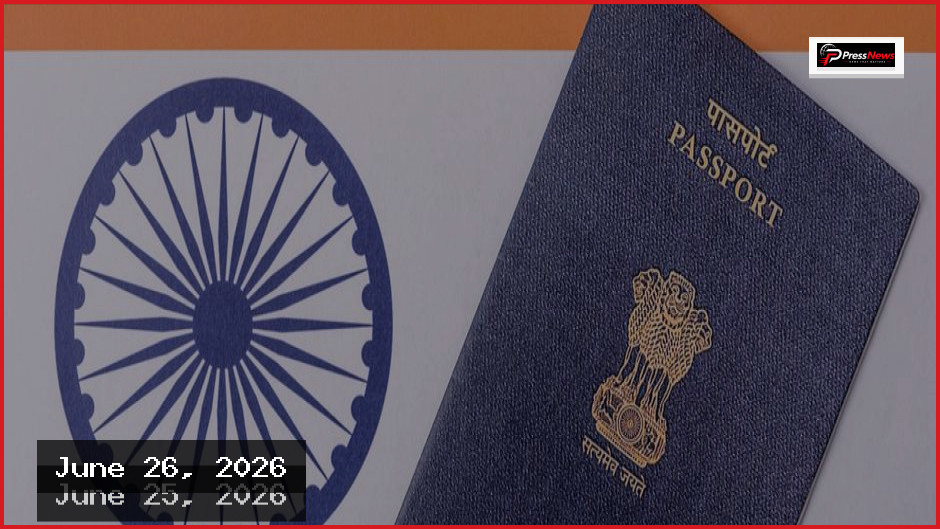
A senior official from India’s Ministry of External Affairs (MEA) has stated that the Indian passport should primarily be viewed as a travel document rather than definitive proof of citizenship. This clarification, which has prompted intense debate across social media platforms, was offered in response to a query during an event on Wednesday, June 24, 2026, marking the expansion of passport services in the country.
Addressing the legal status of the document, the official remarked to The Hindu daily that while a passport attests to nationality during international travel, it does not legally establish citizenship status. This assertion has left many citizens questioning the specific requirements for proving Indian citizenship, especially as the Election Commission of India is currently undertaking a controversial revision of electoral rolls, wherein voters are required to furnish documents to establish eligibility, including proof of citizenship.
The ministry’s stance immediately generated confusion online, with many users questioning the validity of their documents. Some individuals posted images of their passports, which explicitly state their nationality as “Indian,” and asked how such an official document could fail to serve as proof of their citizenship. The discourse was further complicated by the fact that the Supreme Court of India previously ruled last year that the Aadhaar biometric identity scheme is also not conclusive proof of citizenship. As one social media user noted, if neither the passport, Aadhaar, nor the Voter ID card constitutes proof, the public is left wondering what actually does.
Several public figures and politicians have criticized the government’s position. Veteran screenwriter, lyricist, and political activist Javed Akhtar described the ministry’s clarification as “absurd,” questioning why the government would issue travel documents if it were not entirely convinced of a recipient’s citizenship. Political leaders also weighed in, with Shiv Sena (UBT) representative Aaditya Thackeray questioning whether the statement would “create doubts in the minds of other countries” regarding the legitimacy of Indian passports. Furthermore, Trinamool Congress MP Mahua Moitra criticized the administration, suggesting that the current political climate makes it appear as though the only recognized proof of citizenship is alignment with the ruling Bharatiya Janata Party.
In related events occurring around the same time, the 12th India-EU Human Rights Dialogue was held in New Delhi on Wednesday. This session was co-chaired by Piyush Srivastava, Additional Secretary (Europe West) at India’s Ministry of External Affairs, and Herve Delphin, Ambassador of the European Union to India. During this dialogue, both sides discussed a wide range of topics including human rights, gender, LGBTQ+ rights, child rights, and the development of sustainable, human-centric AI. These diplomatic efforts continue alongside the ongoing national discourse regarding identity documentation in India.