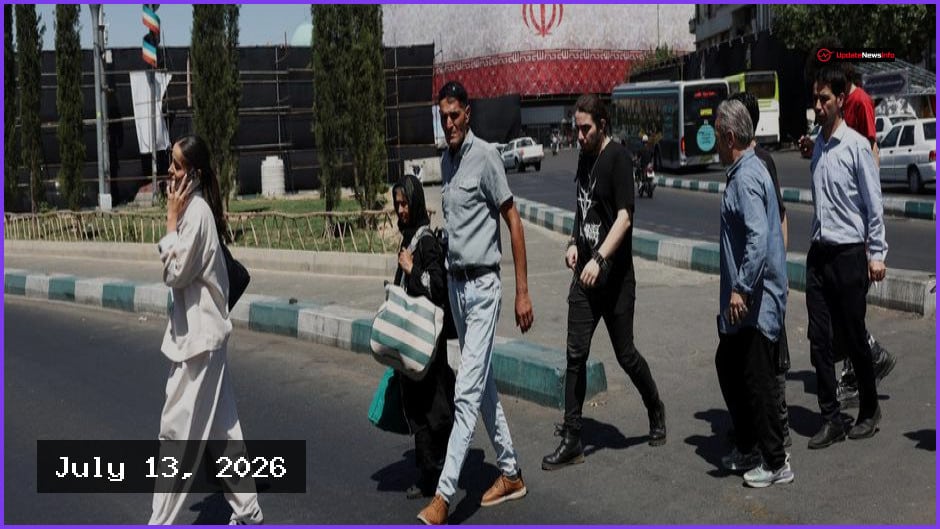
A pervasive sense of exhaustion, anger, and profound uncertainty has taken hold among many Iranians, fueled by persistent ceasefire violations, conflicting political messages, and ongoing emergency measures. Although a ceasefire between Iran, the United States, and Israel was announced, and Iranians have been repeatedly assured that the war is over, the reality on the ground tells a different story.
Attacks, threats, and diplomatic negotiations have continued concurrently. Iranian authorities often speak of progress, negotiations, and even sanctions relief one day, only to issue warnings of retaliation, further strikes, and threats to critical infrastructure the next. This relentless fluctuation between periods of perceived peace and the specter of conflict has left many citizens caught in a psychological limbo between hope and dread.
For a significant portion of the population, this prolonged uncertainty has become more psychologically damaging than the direct experience of war itself. The challenge extends beyond the immediate fear of violence to an inability to envision a stable future, impacting fundamental life decisions.
A lawyer in Tehran, who requested anonymity, described the most difficult aspect of the current situation as the unknown duration of the crisis. She stated, "The most important feature of this moment is that the end of the war is unknown. When you cannot plan how to endure hardship, it puts enormous pressure on you." She further revealed a personal loss of motivation for work or new endeavors, finding it difficult even to speak freely and experiencing a sense of estrangement from some people in her hometown.
This widespread paralysis transcends individual frustration, affecting basic choices related to work, family, and future planning. Coupled with economic instability and the constant apprehension of renewed violence, the result is a broader mood of fatigue and social stagnation across the country.
An Isfahan resident, also speaking anonymously, lamented, "We are completely hopeless. This instability between peace and war has turned our mental state into a game, and we have no clear outlook for our future, or for our psychological and financial security." This individual added that the entire experience has been deeply corrosive, leading to a collapse of trust in either side of the conflict or in the possibility of a lasting agreement.
The current state of uncertainty appears to weigh particularly heavily on younger Iranians, many of whom lack direct memory of the 1980-88 Iran-Iraq war or prolonged military threats. For this generation, it marks their first experience of living under the shadow of an open-ended regional conflict.
A nurse in western Iran, who also wished to remain anonymous, observed that when a society enters such a situation, trust in the future erodes, prompting people to postpone long-term decisions. She noted, "People start living as if the only goal is just to get through today." She explained that for a generation without direct experience of prolonged war, the situation is more disorienting, not due to weakness, but because they lack a mental framework for enduring such a period. The nurse emphasized that many are experiencing exhaustion from uncertainty more than fear of war in the narrow sense.
She highlighted visible changes in hospitals and clinics, where patients are increasingly angry, dissatisfied, and easily provoked. Even with good services, many remain upset, an anger she believes is inseparable from the broader social climate.
Referring to a survey conducted by Iran's Interior Ministry in May 2026, it was found that approximately 60% of the population felt hopeless about the future. More recent survey findings published by IranWire indicated anger in 64% of respondents, despair in about 50%, depression in 48%, and fear and anxiety in roughly 45%. These figures, according to Paivandi, represent a clear deterioration compared to the last available survey before the mass anti-government protests and subsequent harsh clampdown earlier this year.
Paivandi believes that anger, depression, and anxiety have each risen by approximately 10 to 12 percentage points, suggesting that the state crackdown, followed by the US and Israeli attack on Iran, has significantly impacted public sentiment regarding life, politics, and the future. He also pointed to another striking trend: around one-third of Iranians now express a desire to emigrate, with this figure being higher among younger and more educated demographics.
Against this backdrop, experts contend that Iran's current psychological crisis extends beyond ceasefires, diplomacy, and military escalation. While the external conflict is a significant factor, it has landed on a society already worn down by high inflation, repression, mistrust, and a long-standing sense of blocked opportunity. What makes the current moment particularly challenging is the absence of a clear and credible future horizon offered by any side. Instead, Iranians are confronted with contradictory messages daily, making uncertainty an inherent part of their daily lives. The longer this state of limbo persists, the more difficult it becomes to restore confidence or sustain the energy needed for people to imagine any future at all.
To view this video please enable JavaScript, and consider upgrading to a web browser that supports HTML5 video