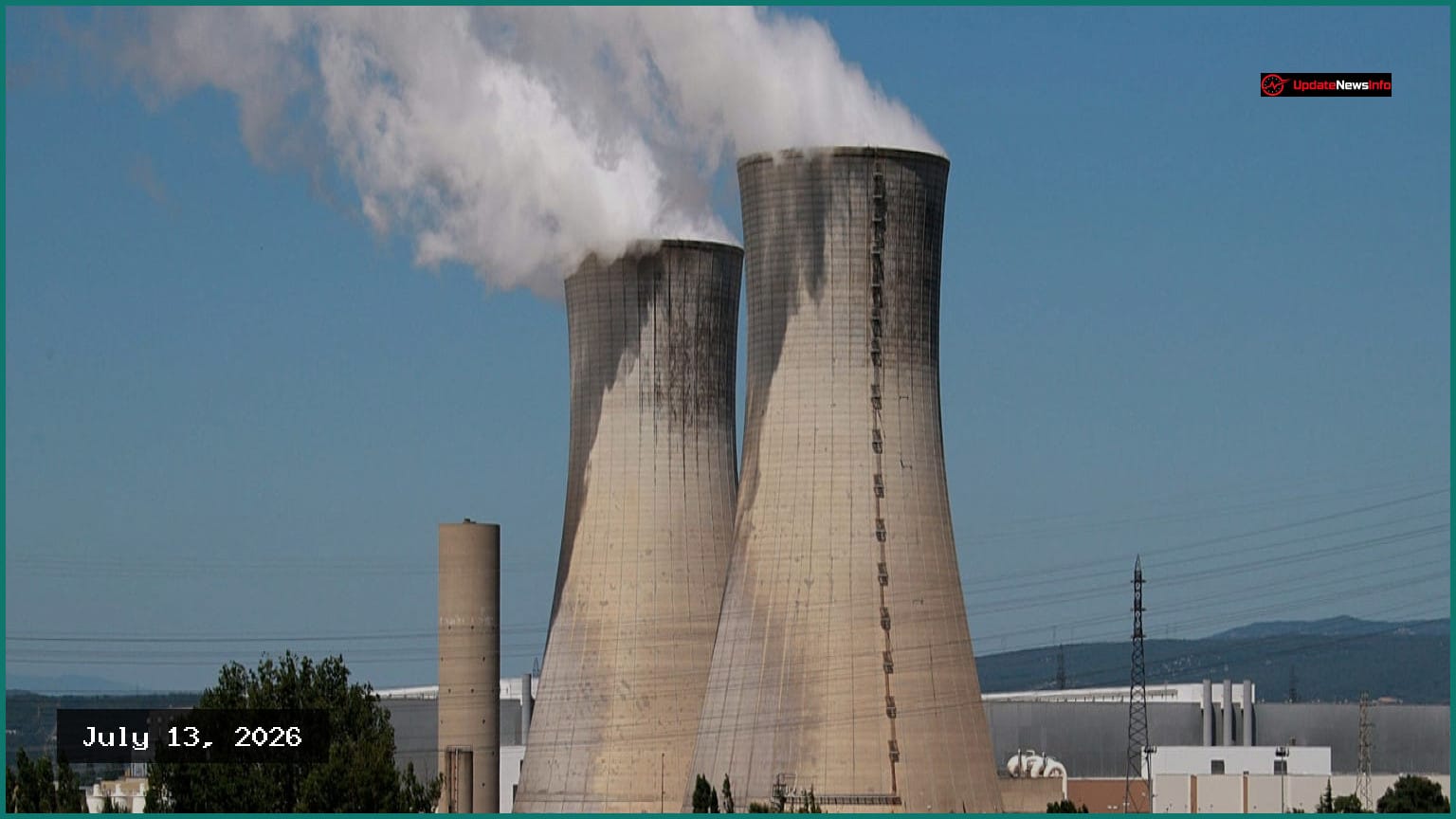
France’s state-owned energy group, EDF, has temporarily suspended operations at three of its nuclear reactors as a significant heatwave sweeps across the country. The shutdowns, which began on Sunday, serve as an environmental protection measure designed to prevent the discharge of excessively hot water into rivers that are already experiencing elevated temperatures due to the heat. Nuclear power plants rely on river water for cooling purposes before returning the warmed water to the source, and these operational limits are strictly enforced to safeguard aquatic flora and fauna.
The affected facilities include Unit 2 at Golfech, which has a capacity of 1,300 MW; Unit 3 at Bugey, rated at 900 MW; and Unit 2 at Chooz, with a capacity of 1,450 MW. Together, these three reactors represent 3.65GW of capacity, accounting for approximately 6% of the country's total installed nuclear fleet of roughly 61GW. A spokesperson for EDF emphasized that there is no risk to nuclear safety, noting that the reactors are technically capable of operating in high-temperature conditions, but that the current measures are regulatory requirements.
As the heatwave continues, EDF has warned that seven additional reactors may need to adjust their power output to remain within environmental limits. To help maintain grid stability, the economy ministry granted a temporary exemption on Saturday regarding thermal limits for the Rhône river near the Bugey plant, which remains valid until 20 July. This current heatwave marks the third such event in France since May, with more than one-third of the nation currently under the highest level of heat alert.
While these outages are the second instance in recent weeks, following a record-breaking heatwave in June, EDF maintains that the overall impact of such climate events on power generation remains limited. The company reported that since 2000, production losses linked to high river temperatures and low flows have averaged only 0.3% of annual electricity generation. Looking toward the future, EDF is implementing an adaptation plan announced in early 2026, estimated to cost €8.7 billion over 15 years. This strategy includes initiatives to improve thermal resilience at nuclear sites, such as cooling water discharged from blowdown processes—a system already utilized at the Civaux Nuclear Power Plant—as well as broader efforts to manage water resources and strengthen electricity infrastructure against extreme weather.