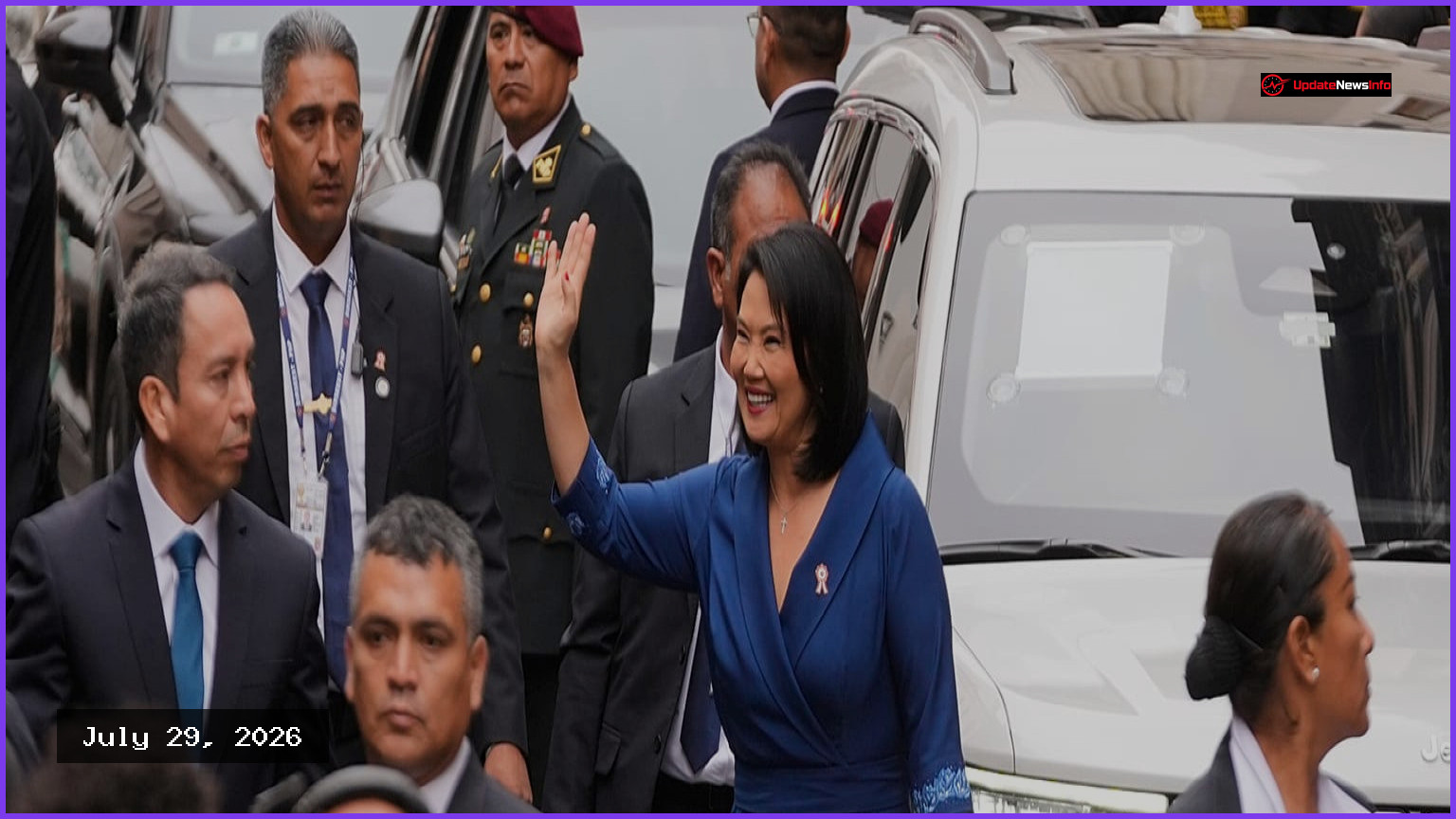
Conservative leader Keiko Fujimori was officially sworn in as the president of Peru on Tuesday, marking a historic milestone as the nation's first female head of state. Her inauguration follows a tight electoral race in June, which she secured by a margin of fewer than 50,000 votes.
As she begins her term, Fujimori faces the challenge of addressing a decade of instability. Central to her political platform is a firm commitment to public security, as the country struggles with an increase in organized crime and extortion. She has vowed to lead with an "iron fist," outlining specific security measures that include the construction of a high-security mega-prison modeled after the Cecot facility in El Salvador. Furthermore, she intends to implement policies that allow judges to maintain anonymity during criminal trials to protect them from potential threats.
Beyond security reforms, Fujimori has pledged to revitalize the nation's infrastructure through increased investment. Her strategy involves simplifying the processes by which government agencies form partnerships with private investors.
The incoming administration already faces pressure from political opponents, who have called on Fujimori to repeal legislation passed by the previous Congress. Critics of these existing laws argue that they have undermined national efforts to combat organized crime effectively.