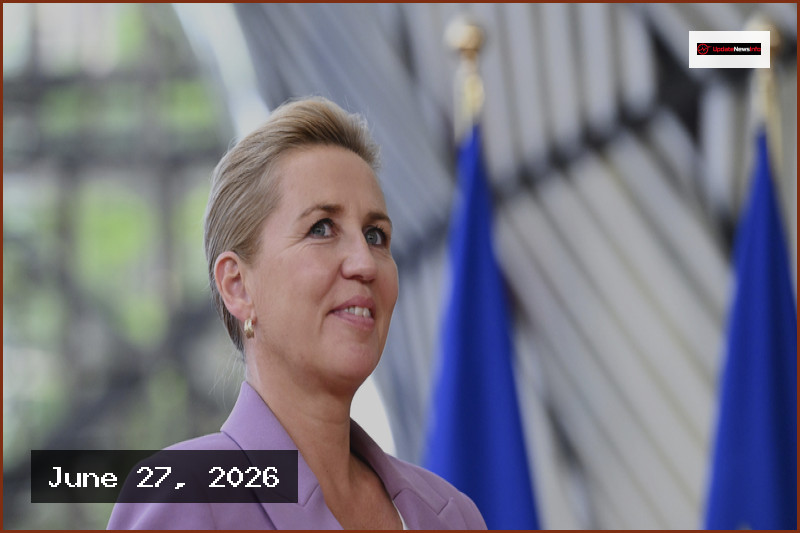
A recent profile of the Danish prime minister highlights her unique, effective approach to maintaining a liberal course for her nation. When Politico released its annual rankings of individuals expected to wield the greatest influence over European events this year, the results yielded a surprise. While Donald Trump held the top position, the runner-up was the prime minister of a nation with a population of only six million, an international weight that many observers would have previously discounted.
Politico’s editorial team credits 48-year-old Mette Frederiksen with possessing a highly effective recipe for modern governance, characterized by a combative, bulldog-like nature essential for today’s difficult political environment. Her influence extends beyond her responses to the ongoing war in Ukraine; she is also recognized for standing firm against the strongman political style of Donald Trump. Alongside German chancellor Friedrich Merz, she has emerged as a primary force behind initiatives enabling Europe to hold its ground in the new geopolitical reality.
The story of the politician known at home simply as “Mette” began in Aalborg, Denmark’s fourth-largest city, once famed as the “city of smoking chimneys” due to its 19th and 20th-century heavy industry. Born to a typesetter and a teacher with deep ties to trade unions and the Social Democratic party, Mette stood out for her early zeal for public affairs. While her brother, Per Frederiksen, was playing football, the young Mette was often inside debating current events with her father and grandfather.
Per Frederiksen recalled in an interview with the daily newspaper Politiken that his sister declared her intention to become a politician by the age of seven. Her activism blossomed early; she organized petitions against animal testing and raised funds for the World Wide Fund for Nature. By 1989, she turned her focus to the South African anti-apartheid fighter Nelson Mandela, joining the international youth wing of his African National Congress at age twelve. At eighteen, she spent a year in Kenya, and at 19, she moved to Copenhagen to pursue her ambitions in earnest.
Her brother, who describes the two of them as “fire and water,” noted that Mette was consistently the most stubborn and persistent family member. While her combativeness has sometimes led critics to accuse her of being “magtgal”—or power-mad—political commentator Elisabet Svane argues that these labels miss her deep popularity. When visiting her native Aalborg, the prime minister is often mobbed by citizens who simply call her by her first name, showing a connection that transcends formal titles.
By age 24, Frederiksen secured a seat in the Danish parliament as one of its youngest members ever. She later joined the cabinet of Prime Minister Helle Thorning-Schmidt, serving as minister of labour and subsequently minister of justice. It was during these tenures that she navigated a dramatic shift in her position on migration policy, a pivot that complicated her trajectory as a traditionally left-wing politician. As she continues to shape European policy, her career remains an unconventional blend of working-class roots and bold, modern decision-making.