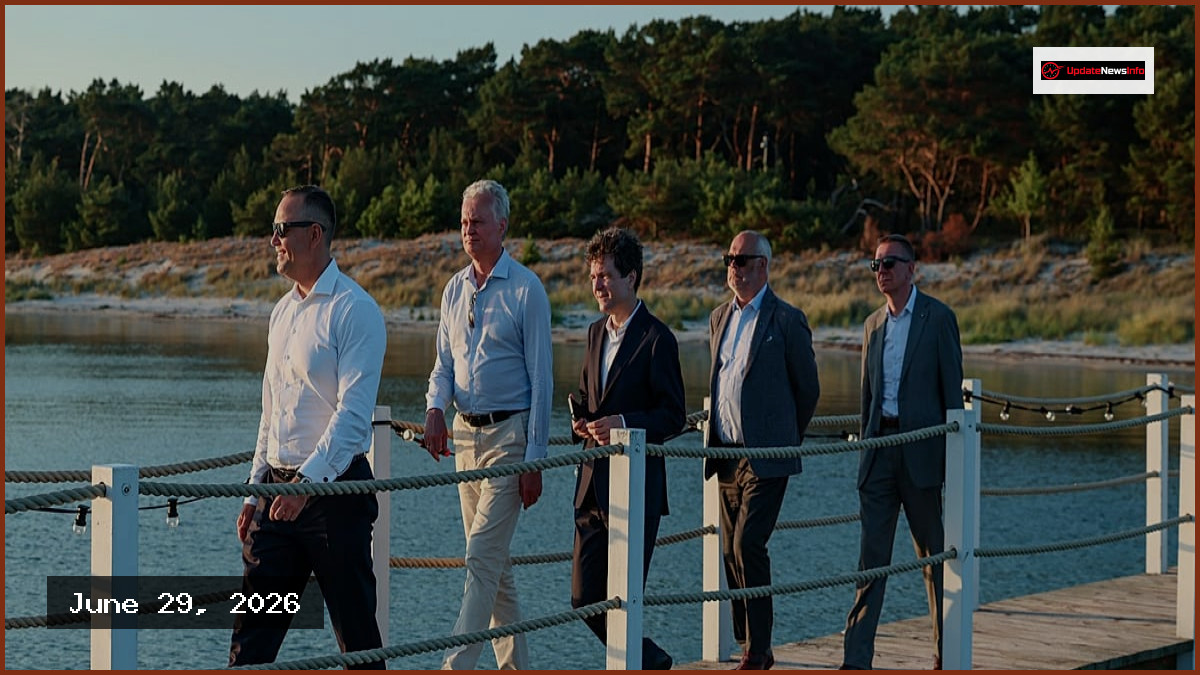
Polish President Karol Nawrocki hosted an informal summit at his residence in Jurata, welcoming the presidents of Lithuania, Latvia, Estonia, and Romania for high-level discussions. This gathering took place ahead of the scheduled NATO summit in Ankara, Turkey.
According to the Presidential Chancellery, the discussions focused on establishing joint positions for the upcoming NATO talks. The leaders prioritized regional cooperation, the security of the Baltic and Black Sea regions, and key transatlantic relations. Further topics included strengthening the alliance’s eastern flank, enhancing European defense capabilities, and activities related to the Three Seas Initiative and the Bucharest Nine. The participants also touched upon regional energy and transport infrastructure, as well as the future trajectory and primary challenges facing the European Union. Prior to the formal proceedings, the leaders visited the Naval Port in Gdynia.
A significant portion of the meeting addressed the cooling relationship between Warsaw and Kyiv. Lithuanian President Gitanas Nausėda, who had previously offered to mediate, stated his intention to discuss the issue informally, noting its importance. He expressed a desire to understand President Nawrocki’s perspective on the conflict’s origins and potential resolutions. Nausėda emphasized that while the past remains relevant, the current context of Russia’s ongoing war against Ukraine holds greater significance.
Diplomatic tensions between the two nations heightened recently following President Volodymyr Zelenskyy’s decision to designate a military unit as “Heroes of the UPA.” This action drew immediate rebuke from Polish officials, including Prime Minister Donald Tusk, as well as Deputy Prime Ministers Władysław Kosiniak-Kamysz and Radosław Sikorski. In a retaliatory measure, President Nawrocki revoked Zelenskyy’s Order of the White Eagle, the nation’s highest honor, prompting the Ukrainian leader to return the decoration via courier.
At the center of this dispute is the historical interpretation of the Organisation of Ukrainian Nationalists (OUN) and the Ukrainian Insurgent Army (UPA). These groups are held responsible for the ethnic cleansing of the Polish population in Volh Polish population in Volhynia and Eastern Lesser Poland between 1943 and 1945.