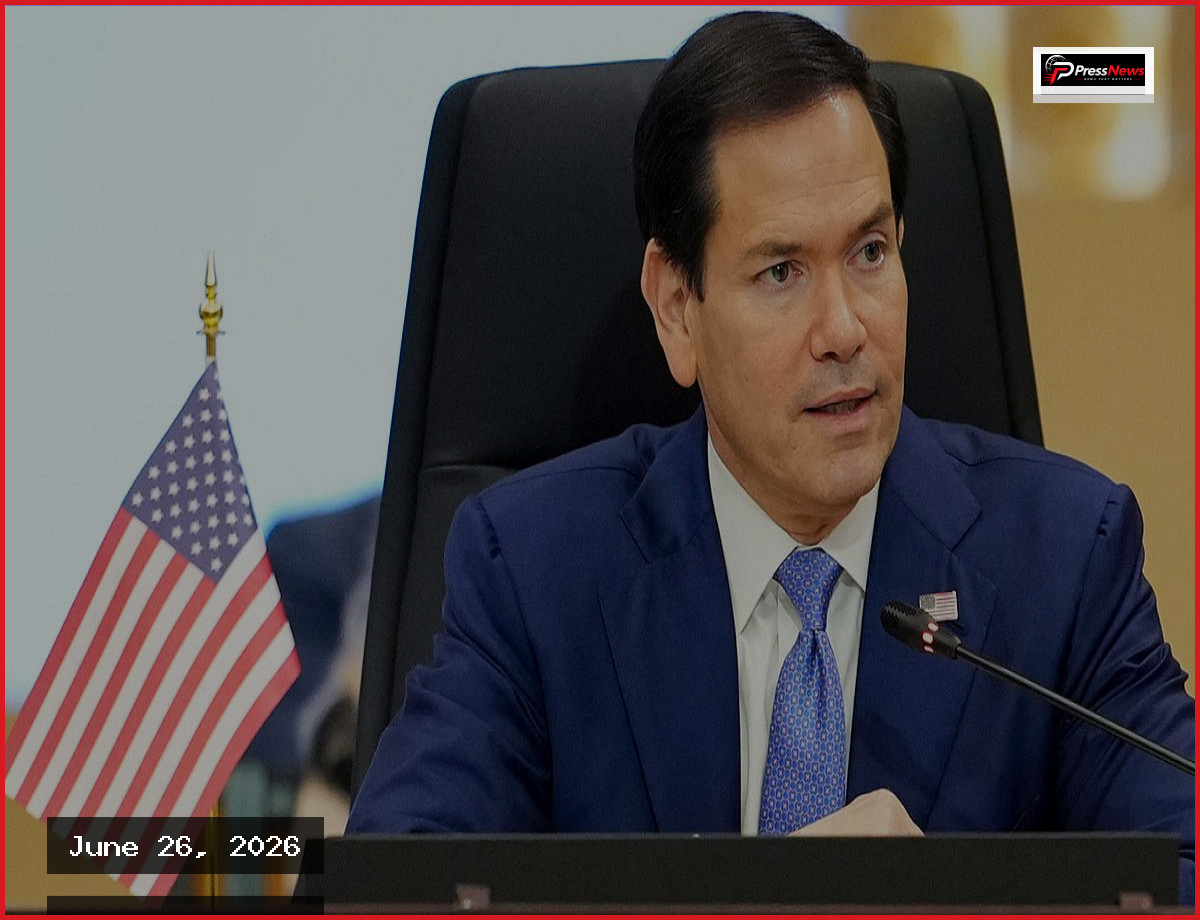
US Secretary of State Marco Rubio warned on Thursday that any attempt by Iran to impose tolls on ships traversing the Strait of Hormuz would risk creating “total chaos.” Speaking at a Gulf Cooperation Council meeting in Manama, Bahrain, Rubio emphasized that international waterways do not belong to any single nation. He cautioned that if one country were allowed to charge for passage simply due to proximity to their territorial space, the practice would spread globally like a contagion.
Rubio’s remarks come as part of a regional tour aimed at reassuring Gulf allies that Washington remains committed to their interests while pursuing a lasting settlement with Tehran. He affirmed that the United States would not sideline its regional partners, stating that he held frank and important discussions in Kuwait, the United Arab Emirates, and Bahrain to thank them for their support during the recent conflict.
Regarding the ongoing negotiations, Rubio reiterated that the US is open to an agreement with Iran but will not seek a deal at any price. He confirmed that technical discussions concerning Iran’s nuclear program—the primary obstacle to a ceasefire—will continue in the coming days. The Secretary of State specifically stressed that no tolls or fees for navigating the Strait of Hormuz will be permitted, echoing the administration’s stance that the waterway must remain free and open to international shipping.
The stabilization of the region has begun to reflect in global energy markets. Following the recent ceasefire, Brent crude prices fell below their pre-war levels, dropping to approximately $72.44 a barrel on Thursday. Analysts expect the reopening of shipping lanes through the Strait of Hormuz to ease pressure on energy and freight costs, potentially offering relief on fuel and imported goods for residents in the region over the coming months. Despite these positive indicators, the Iranian Revolutionary Guard Navy has publicly dismissed a newly established shipping route, warning that vessels navigating outside of Tehran-approved corridors could face intervention.