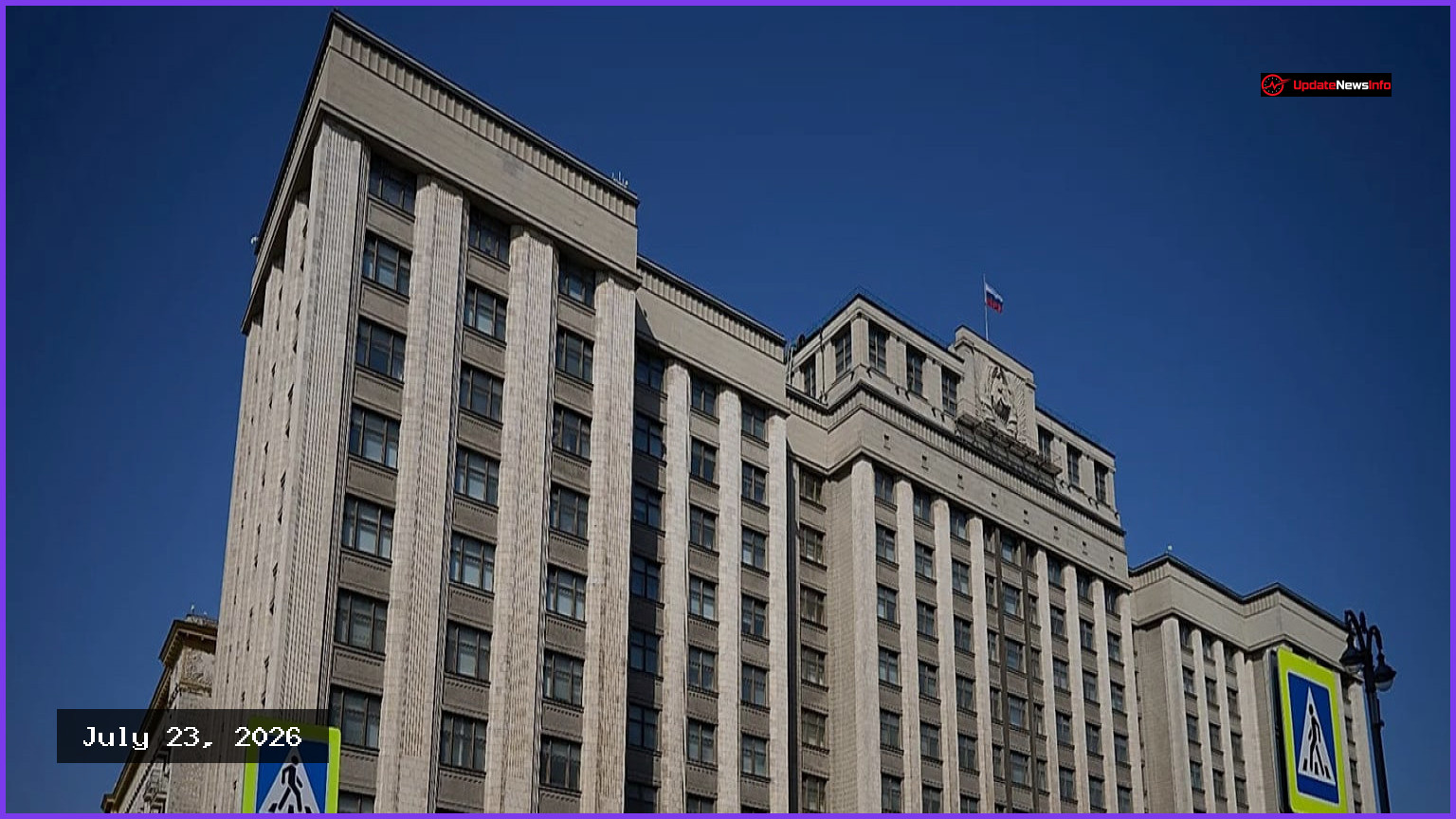
The Russian State Duma passed a sweeping new law on Wednesday that effectively strips citizens living abroad of their fundamental rights if they face political prosecution at home. The legislation, which was approved in its second and third readings simultaneously, will take effect immediately upon publication without any transition period.
State Duma Speaker Vyacheslav Volodin described the measure as a tool to target those who harm the country. He explicitly characterized the intended targets as extremists and traitors who justify Nazism, insult military personnel, and attempt to destroy the state while hiding from punishment in foreign countries.
Under the new rules, Russians living abroad who are evading criminal prosecution will face severe restrictions. These measures include the freezing of bank accounts, a ban on the sale of property and vehicles, and the suspension of various licenses and accreditations. Furthermore, affected individuals will be blocked from accessing banking apps and will be refused state and consular services, including the ability to obtain international passports or certify legal documents such as wills and powers of attorney.
The law also extends to individuals sanctioned administratively under Russia’s foreign agents law. This includes those accused of calling for sanctions against Russia, violating the country's territorial integrity, discrediting the armed forces, or participating in organizations labeled as undesirable by the Kremlin.
Legal experts from the First Department, a community of human rights defenders, characterized the cumulative impact of these measures as a de facto revocation of citizenship. They noted that an individual who has left the country for political reasons and is classified as evading prosecution essentially becomes an internally canceled citizen, with their own property and business interests being turned against them.
The independent human rights project OVD-Info warned that the law poses the greatest risk to political activists, journalists, lawyers, and those associated with groups designated as extremist or terrorist. By late 2025, at least 1,299 people had faced criminal prosecution for opposing the war, with 373 remaining in prison. Between the start of the full-scale invasion in 2022 and September 2025, at least 692 individuals were prosecuted specifically under laws criminalizing the spread of false information about the armed forces and the discreditation of the military.
These developments build upon a series of restrictive policies introduced since 2022. During the first week of the invasion, the State Duma criminalized the spread of information the state deems false regarding the armed forces, as well as the act of discrediting the army. These measures were accompanied by a regulatory order for media outlets to avoid terms like war or invasion, leading to the collapse of most independent media in Russia. The foreign agents law, originally enacted in 2012, has also been significantly expanded to target individuals, further restricting their public life, banking, and travel capabilities. Estimates suggest that between 500,000 and over 1 million Russians fled the country in the year following the invasion, and this latest law is designed to extend state control over that displaced population.