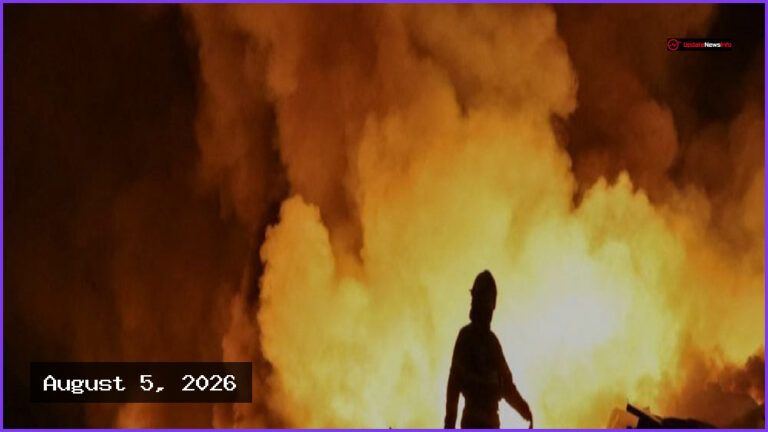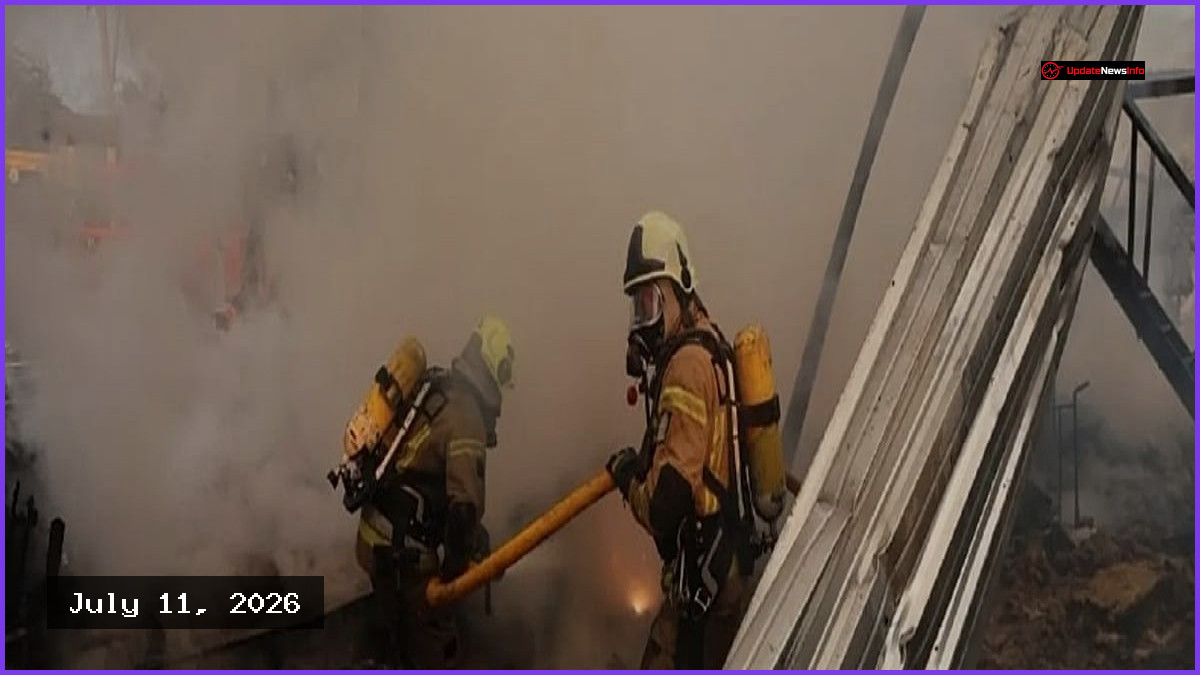
Russian forces launched an overnight aerial assault on Kyiv, resulting in at least 10 injuries, including one child, and causing multiple fires across the city. According to the State Emergency Service of Ukraine, the attacks prompted urgent responses from emergency crews throughout the capital.
Kyiv Mayor Vitali Klitschko provided updates via Telegram, instructing residents to seek safety in bomb shelters as the city faced ballistic missile threats. Klitschko detailed that the strikes impacted several areas: a non-residential building was hit in the Sviatoshynskyi district, a fire erupted at a transformer substation in the Darnytskyi district, and a three-story office building caught fire in the Solomianskyi district.
Preliminary data from the Ukrainian air force indicates that Russia deployed a massive array of weaponry, including six Iskander ballistic missiles, four Kh-59/69 cruise missiles, two Kh-31 anti-radiation missiles, and 121 attack drones. Ukrainian air defenses successfully intercepted 111 of the drones and two of the Kh-59/69 missiles.
This latest aggression follows a major barrage last week, which Klitschko described as Russia’s “most massive attack” on the capital, resulting in at least 30 deaths and damage to over 20 sites. During that broader campaign, the air force reported that Russian forces utilized 570 air attack assets, including four Zircon missiles, 24 Iskander ballistic missiles, and 496 Shahed-type drones. Separately, local authorities reported that Russian strikes on the eastern Donetsk region on Friday killed seven people and left 21 others injured.
In an ongoing effort to disrupt the Russian economy, Kyiv has intensified strikes on Moscow’s energy infrastructure, targeting refineries, depots, and terminals. President Volodymyr Zelenskyy confirmed that Ukrainian forces struck an oil refinery in Omsk, alongside facilities in the Saratov, Rostov, Tver, Stavropol, and Krasnodar regions this week. These operations have contributed to a fuel crisis within Russia, leading to long queues at petrol stations and a government-imposed ban on diesel exports.
Despite these strategic efforts, the commander-in-chief of Ukraine’s armed forces cautioned that a definitive turning point in the war remains distant. He noted that Russian forces continue to pursue the occupation of the Luhansk and Donetsk regions, while simultaneously seeking to expand offensive operations into the Dnipropetrovsk and Zaporizhzhia regions and establish a buffer zone in northern Ukraine.