The United States and Saudi Arabia have finalized a landmark nuclear cooperation agreement, establishing the legal framework for a multi-billion-dollar, decades-long partnership. According to an official statement, the deal is intended to advance various strategic and economic objectives, with a stated commitment to nuclear nonproliferation. US Secretary of Energy Chris Wright stated that the agreements uphold the highest standards of nuclear safety and nonproliferation, utilizing American technology and scientists.
The agreement represents a significant financial opportunity for US companies, which could participate in constructing facilities to produce enriched uranium. While this material is necessary for fueling power plants, it also serves as a potential pathway for the development of nuclear weapons. This specific inclusion of an enrichment provision distinguishes the new deal from a 2009 agreement the US reached with the United Arab Emirates, which prohibits the UAE from producing its own fuel and mandates other restrictions.
The announcement has drawn criticism from nuclear experts and former officials in Israel, who argue the plan could eventually enable Saudi Arabia to develop nuclear weaponry. Critics contend that allowing a nation to enrich uranium on its own soil significantly increases the risk of proliferation. Massachusetts Democratic Senator Edward Markey issued a statement condemning the move, describing the actions of the administration as reckless and hypocritical. He argued that the deal allows an authoritarian nation to develop nuclear weapons technologies while simultaneously engaging in a conflict with Iran under the guise of preventing an Iranian nuclear bomb.
US Secretary of State Marco Rubio defended the agreement against these concerns while traveling in the Philippines. He asserted that the United States would not enter into any agreement that leads to the risk of proliferation. Supporters of the deal note that the path to nuclear capability is a multi-decade process that would likely trigger significant pushback from the international community.
The announcement arrives amid escalating regional tensions involving the United States, Iran, and Saudi Arabia. Saudi Arabia, a long-term US ally, hosts several US military bases that have been targeted by Iranian attacks. The deal also follows a declaration two days prior by the Houthi movement in Yemen, an ally of Iran, regarding a maritime blockade against the kingdom. The nuclear issue has been a central point in the months-long conflict between the US, Israel, and Iran, with the US and Israel stating that their February attacks on Iran were intended to prevent the country from developing a nuclear weapon, a claim Tehran denies.
Saudi Arabia's de facto ruler, Crown Prince Mohammed bin Salman, told CBS News in 2018 that while his nation was not planning to acquire a nuclear weapon, he noted that if Iran developed a nuclear bomb, his country would follow suit as soon as possible. The agreement is now set to be submitted to the US Congress for review.
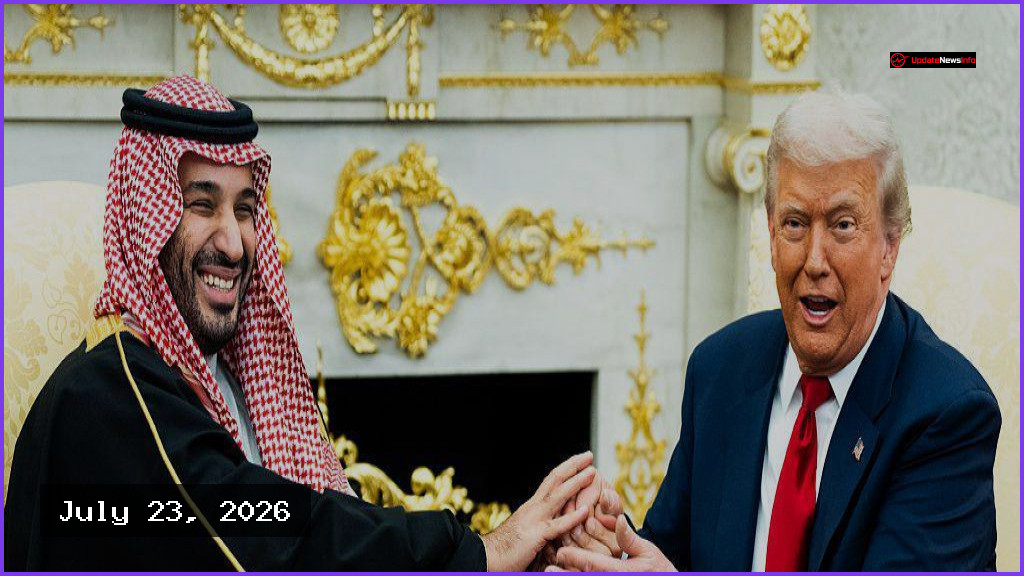
Trump has worked to cultivate a closer relationship with Saudi Arabia during his time in the White House.