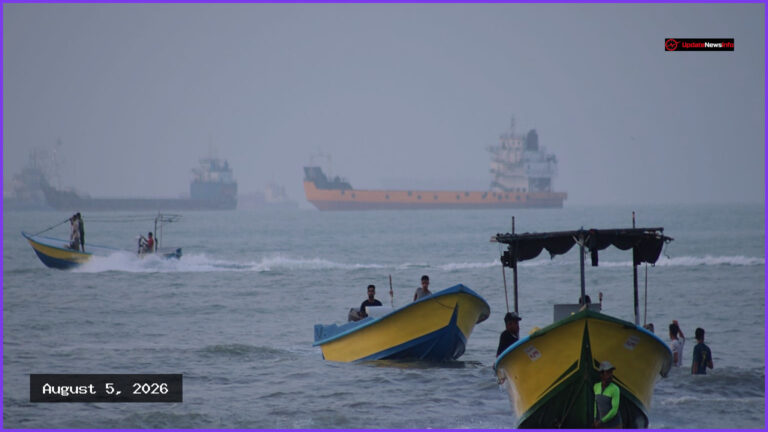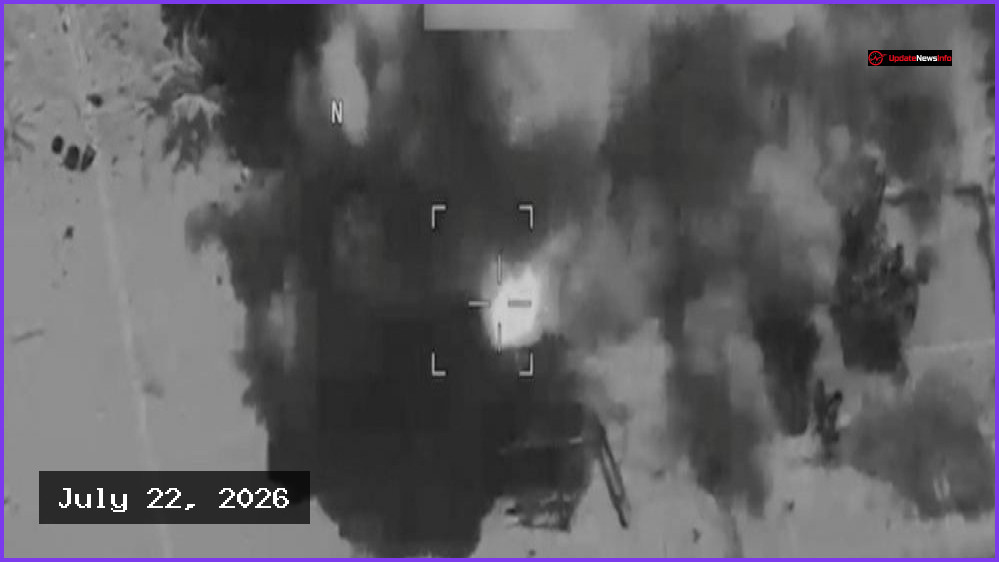
The United States military launched a new wave of strikes against Iran late on Tuesday, marking the 11th consecutive night of military operations in the region. According to US Central Command (Centcom), the campaign is designed to continue degrading Iran's ability to threaten commercial shipping within the Strait of Hormuz. US forces have targeted a range of Iranian military infrastructure, including logistics centers, maritime capabilities, aircraft hangars, drone storage facilities, and military operations centers. Centcom accused Iran of endangering hundreds of mariners by attacking more than 30 commercial vessels over the past three months, though it noted the waterway remains open for transit.
Iranian state media reported that air defense systems were activated in Tehran to counter the strikes. Explosions were also reported in Tabriz, Chabahar, Konarak, and Bushehr, the latter of which houses Iran's only nuclear power plant. The conflict has increasingly drawn in regional neighbors; Kuwait’s army reported early Wednesday that its air defenses were engaging with incoming drone attacks, while officials in Bahrain and Jordan confirmed they had also intercepted various drone and missile strikes.
Military pressure has intensified following comments from President Donald Trump, who identified a complex known as Pickaxe Mountain as a potential future target. The site is an underground nuclear facility where Iran is suspected of constructing an undeclared enrichment plant. During a White House meeting with Lebanese President Joseph Aoun, Trump told reporters, "We'll be hitting that area pretty soon, and very heavily." He added that while he would not normally disclose military targets, he believed there was nothing Iran could do to prevent the strike. In response, Iran's Khatam Al-Anbiya military command stated that such an action would be viewed as an expansion of the war, threatening to strike "all the interests of America, the allies and supporters" in the region.
The regional instability has been further complicated by the Iran-backed Houthi rebels in Yemen, who have threatened to blockade Saudi ports. A Houthi media official announced the closure of the Bab al-Mandab Strait to Saudi vessels. British maritime risk management firm Vanguard reported that two tankers, which had loaded Saudi crude at the Red Sea port of Yanbu bound for China and India, performed U-turns on Tuesday and headed toward the Suez Canal instead. These threats have caused significant fluctuations in global fuel prices.
Diplomatic efforts to stabilize the region have largely stalled. Although the US and Iran signed a Memorandum of Understanding in June to halt military operations and reopen the Strait of Hormuz, President Trump declared the ceasefire "over" just three weeks later following renewed Iranian attacks on shipping. Defense Secretary Pete Hegseth reported to the Senate Appropriations Committee on Tuesday that the war has cost the US $37.5bn, an increase of nearly $8bn since May. Hegseth warned that military training will need to be curtailed unless Congress approves an urgent funding boost.
Iran and the US signed a Memorandum of Understanding (MoU) in June to halt military operations and reopen the Strait of Hormuz, as well as to reach an agreement to end the war over the following 60 days.
The war with Iran has cost the US some $37.5bn (£28bn) so far – a rise of nearly $8bn since the last estimate in May, Defense Secretary Pete Hegseth said on Tuesday.