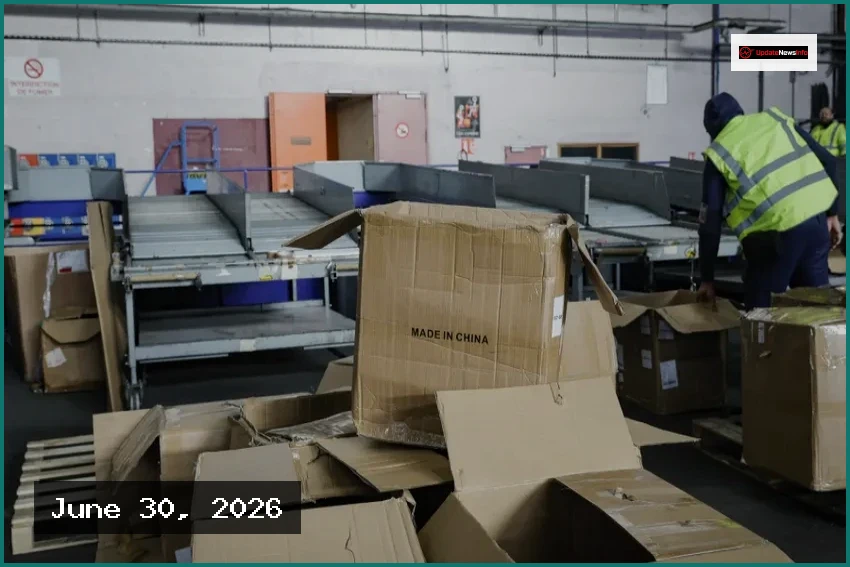
Starting this Wednesday, the European Union will begin enforcing a three-euro duty on low-value parcels entering the 27-nation bloc. This measure is designed to address the dramatic rise in imported packages, which primarily originate from China via popular digital platforms such as Temu and Shein. European Commission officials stated that the policy seeks to alleviate the strain on customs resources while simultaneously improving safety oversight for goods entering the European market.
Statistics highlight the rapid expansion of this trade, with the number of small retail packages arriving from overseas jumping to nearly six billion last year, compared to 4.6 billion in 2024. Under the new rules, the EU is removing the previous duty exemption for parcels valued under €150 and replacing it with a temporary three-euro levy per item type. It is important to note that this charge is applied per category of goods rather than per individual product; for instance, if an importer receives five T-shirts, they pay a single three-euro fee, but purchasing a T-shirt and a watch results in a six-euro charge because the item types differ.
While some EU member states had already implemented their own local duties, a senior official confirmed that all national levies must now be replaced by this uniform bloc-wide charge. This flat fee is scheduled to remain in effect until July 1, 2028, after which customs duties will revert to standard classifications based on the specific type of goods. Similar exemptions have recently been removed in the United States, with Britain planning a comparable shift.
Brussels maintains that the policy is intended to create a level playing field rather than target any specific nation. Officials emphasize that the duty is technically paid by the importer, not the individual consumer, though they acknowledge that e-commerce platforms may choose to pass these costs on to buyers. The move also comes in response to safety concerns; targeted 2025 inspections revealed that over 60 percent of imported items—including electronics, cosmetics, and toys—failed to meet EU standards due to missing paperwork, absent labels, or the presence of banned ingredients.
Looking ahead, the EU is implementing further measures to manage the influx of goods. From November 1, 2026, it will become mandatory to provide detailed reference information for all products, and a new handling fee—the amount of which is yet to be determined—will be introduced to help customs authorities cover rising administrative costs.