In the summer of 2019, I had a “fun” idea for an article where I traveled around Paris during its then-hottest day on record to test various cooling strategies. I found that they did not help. Last week, Paris endured its worst period of catastrophic heat ever recorded, exceeding the 2019 event and the 2003 heatwave that killed nearly 15,000 people. I now live in Seine-Saint-Denis, the poorest département in mainland France and one of the areas most exposed to extreme heat. To make matters more complicated, I am seven months pregnant.
My primary anxiety regarding my pregnancy was giving birth in summer, as many French hospitals lack air conditioning and aren’t built for such conditions. I planned to attend an information session on the city’s extreme heat plan, but it was cancelled. A friend who is further along in her pregnancy checked into an air-conditioned hotel with her husband because the heat in their apartment was inducing contractions. She noted the hotel was full of other pregnant women, though it is not an affordable option for most. We all shared the same priority: avoid giving birth this week if possible. I rented a portable air conditioner, hoping it would sustain me through the weekend.
On the morning of my healthcare office visit, it was already 30C (86F) at 9:30am. Although they initially forced people to queue outside, I was allowed inside due to my condition. While there, a woman collapsed from apparent heatstroke, prompting staff to call for water. A friend offered me her desk in an air-conditioned office, which was a lifesaver. Nearby, a childcare center used reflective recovery blankets over windows and sprayed toddlers with a hose, while a man set up a mattress under a shaded archway to survive the heat. My office was in a trendy converted factory; staff there looked horrified as I moved through the building during fashion week.
My rented air conditioner finally arrived shortly after midnight, but it proved ineffective because I had to crack a window to vent the exhaust, which let in too much heat. It was only when my partner returned in the evening to fix the window kit that the temperature finally dropped, allowing me to work. On social media, reports were grim: a new father in Bordeaux shared a video from a maternity unit where it was 36 degrees inside, and a healthcare worker had collapsed. Paris saw 25 heart attacks in just 24 hours.
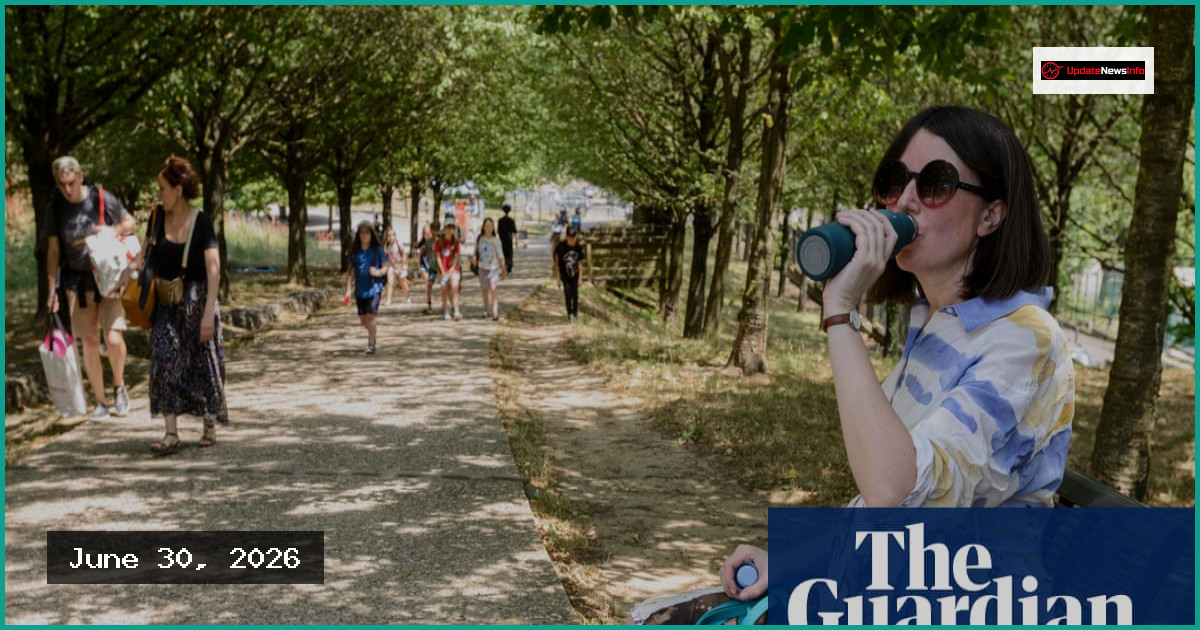
While I spent my mornings with shutters down, the afternoons were spent in the office or park. At 38C (100F), there was no breeze. Media reports showed apocalyptic scenes, including a bus driver in the west of the city who succumbed to the heat and crashed his bus into a tree. Emergency services reported 109 deaths in 24 hours, compared to the usual seven. My own body was failing, with constant aches and cramping legs. My new neighborhood lacks the “refreshment rooms” found in central Paris government buildings, so I sought shelter in movie theaters.
By the end of the week, authorities announced 1,000 deaths in France over three days. The toll included four toddlers who died in hot cars and 74 drowning deaths. My previous anxiety from 2019 has turned into pure fury. TotalEnergies reported a profit of €5.8bn (£5bn) in the first quarter of 2026, while the AI lobby pressures the EU to prioritize datacenters over climate goals. French president Emmanuel Macron stated on Thursday that we cannot adapt to a heatwave with no historical equivalent in Europe. Forecasters are already predicting another wave of extreme heat for next week.