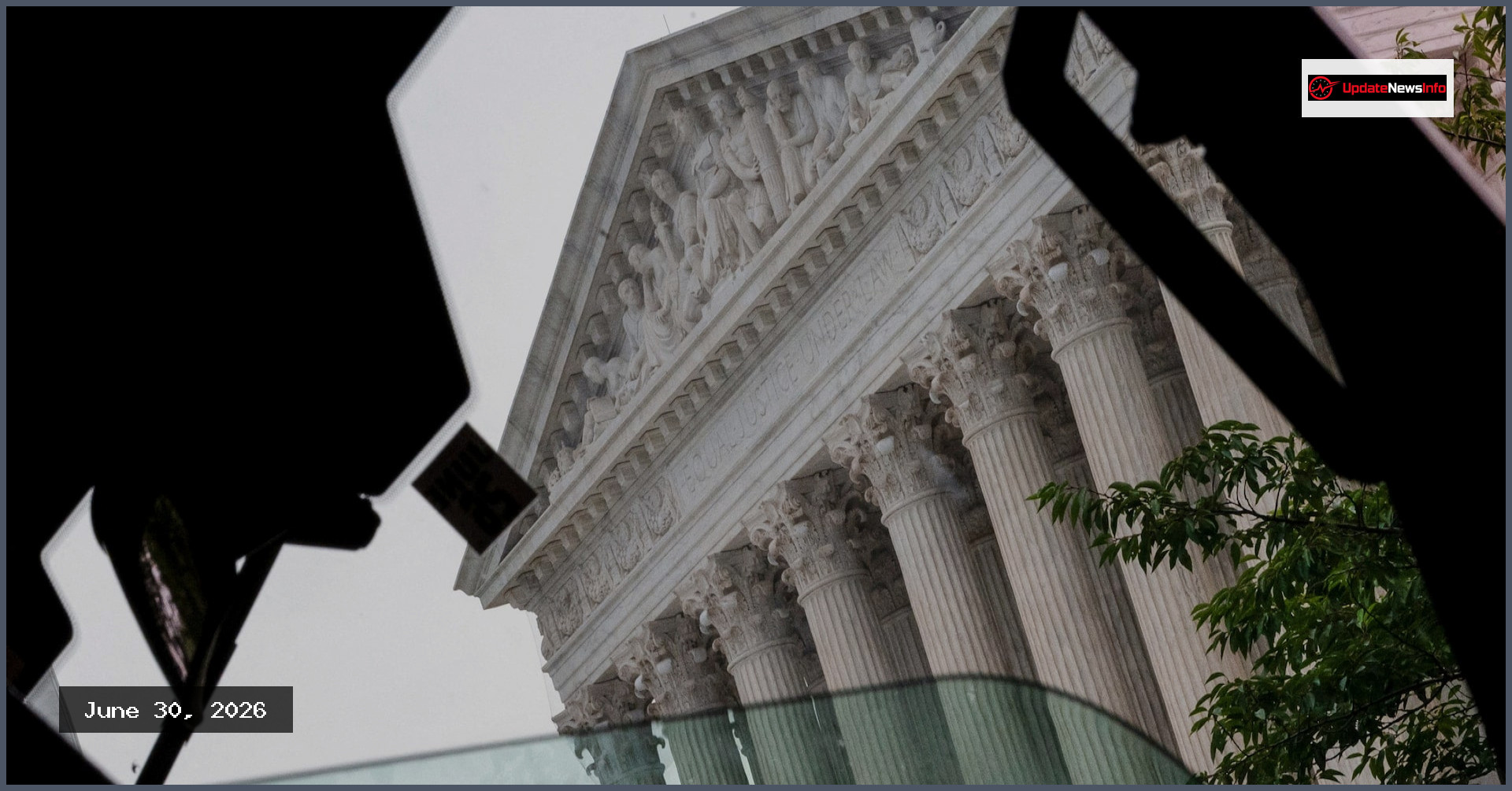
WASHINGTON, June 30 — The U.S. Supreme Court issued a landmark ruling on Monday, granting President Donald Trump broad authority to dismiss heads of regulatory agencies. The 6-3 decision, driven by the court’s conservative majority, effectively marks the culmination of a multi-decade effort by conservative legal advocates to tighten presidential control over the executive branch’s key administrative functions.
The court’s ruling specifically upheld the firing of Democratic Federal Trade Commission (FTC) member Rebecca Slaughter, despite federal laws intended to protect such officials from being removed by the president without specific cause. While the decision expands executive reach, the justices clarified that it does not apply to the Federal Reserve. In a separate action the same day, the court refused to allow the firing of Federal Reserve Governor Lisa Cook, citing the central bank’s unique historical tradition and independence.
Legal scholars suggest the decision represents a crippling blow to the “administrative state,” a collection of federal agencies responsible for regulating critical sectors of American life—including finance, labor relations, and aviation—that had previously operated with significant insulation from direct presidential oversight. This ruling is widely viewed as a major victory for the “unitary executive” theory, a legal doctrine that posits the president holds absolute authority over the entire executive branch, including the power to replace agency leaders at will.
Michael Gerhardt, a professor at the University of North Carolina School of Law, characterized the FTC ruling as the most significant expansion of presidential power in decades. According to Gerhardt, the decision serves as the ultimate realization of long-term planning by conservative legal circles to diminish the influence of independent federal agencies. John Yoo, a professor at the University of California, Berkeley School of Law, noted that the ruling, Trump v. Slaughter, shifts significant constitutional power into the hands of the president, effectively ending the era of a truly independent administrative state.
The controversy stems from President Trump’s move in March 2025 to fire Slaughter, who was serving a term set to expire in 2029. Slaughter had challenged her removal by citing a 1914 law that permitted the removal of FTC commissioners only for specific reasons, such as neglect of duty or malfeasance, rather than policy disagreements. Similar protections have historically covered officials across more than two dozen independent agencies, including the National Labor Relations Board.
Previously, lower courts had relied on the 1935 Supreme Court precedent of Humphrey’s Executor v. United States to uphold these protections. In that case, the court ruled that Congress could legally shield regulatory leaders from at-will removal because their work involved functions that were more legislative or judicial than executive. On Monday, however, the Supreme Court overruled Humphrey’s Executor, agreeing with the Trump administration’s argument that modern regulatory agencies now wield enough executive power to necessitate presidential control. The court’s three liberal justices dissented from the decision.
Experts like Christine Chabot of Marquette University Law School described the overruling of the 1935 precedent as a major triumph for the unitary executive theory. Meanwhile, others expressed concern regarding the future of federal oversight. Erwin Chemerinsky, dean of the University of California, Berkeley Law School, warned that the ruling could lead to the total politicization of regulatory agencies. Similarly, Steve Schwinn, a professor at the University of Illinois Chicago, cautioned that the change will likely result in a “hyper-politicization” of agencies that were once designed to function as nonpartisan entities, potentially leading to sharp, unpredictable swings in regulatory policy whenever power shifts between political administrations.