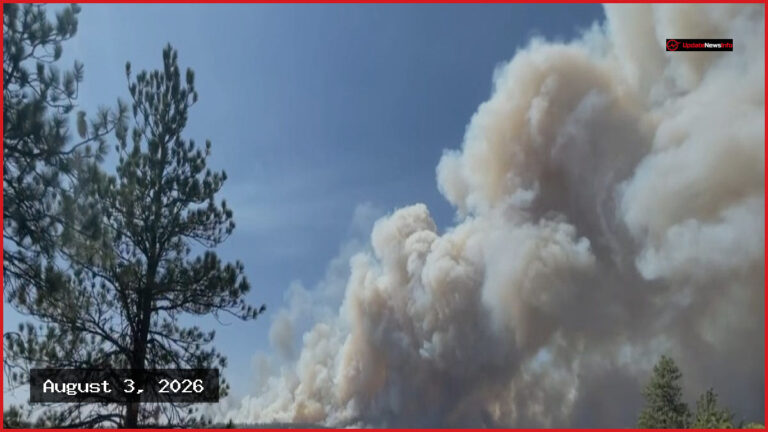
Western Europe experienced its hottest June on record in 2026, with global temperatures also reaching near-record highs last month, a new report from the Copernicus Climate Change Service (C3S) has found. The extreme heat contributed to widespread wildfires and, in some instances, proved deadly across Europe and the United States.
The C3S report further indicated that June 2026 was the second-hottest June ever recorded worldwide. Much of Western Europe endured a significant heatwave during the latter half of the month, shattering both monthly and all-time temperature records in multiple countries.
This period of intense heat followed an initial spell of extreme warmth in May and preceded another that began forming in July. “The succession of heatwaves illustrates the growing challenge posed by increasingly frequent and intense heat extremes across Europe and the globe,” the report stated.
Samantha Burgess, a climate expert at the European Centre for Medium-Range Weather Forecasts, commented that June’s conditions “underscored how profoundly the climate is changing.” She noted that the record land temperatures coincided with marine heatwaves affecting parts of the Mediterranean and Atlantic coasts. “Together, these records reflect a climate system continuing to accumulate heat,” Burgess added. “The result is increasingly intense heatwaves, a persistently warm ocean, and growing risks for people, ecosystems and infrastructure across Europe and beyond.”
The June heat was accompanied by drought conditions, which exacerbated massive wildfires in southern France. By Monday, these fires had consumed over 11,000 acres and led to the evacuation of approximately 10,000 people, according to French Interior Minister Laurent Nuñez. Earlier, French Prime Minister Sébastien Lecornu reported that dozens of people had died from drowning in France within a single week in June as they sought relief from scorching triple-digit temperatures by swimming.
France’s national weather service confirmed that the country repeatedly broke its own temperature records throughout June, a trend mirrored by the United Kingdom’s Met Office for the UK. Continent-wide, Europe recorded its second-highest June temperature ever, with temperatures approximately 3.2 degrees Fahrenheit above the 1991-2020 average. The disparity was even more pronounced in Western Europe, where June temperatures were nearly 5.5 degrees above average.
Sea surface temperatures remained at “exceptionally high” levels in parts of the tropical Pacific Ocean, the origin of El Niño. This weather pattern, the warmer phase of the El Niño Southern Oscillation cycle, is characterized by unusually warm waters that influence global weather. Forecasters, including the World Meteorological Organization, have suggested the current El Niño could be particularly intense, potentially raising global temperatures and increasing the risk of extreme weather events in the coming months.
The National Oceanic and Atmospheric Administration noted that El Niño could lead to frequent and widespread flooding along both the U.S. West and East Coasts, even without storm activity. In Europe, the European Union’s Joint Research Centre anticipates El Niño could contribute to warmer-than-normal autumn temperatures, with this warmth potentially extending into spring 2027.
The World Health Organization highlighted that people across Europe have been exposed to severe heat with increasing frequency in recent years, a phenomenon widely recognized by scientists as a consequence of human-caused climate change. The organization estimates that between 2000 and 2016, the number of people exposed to heat waves increased by about 125 million. Such extreme conditions can strain health infrastructure, water, energy, and transportation systems, and threaten food and economic stability.