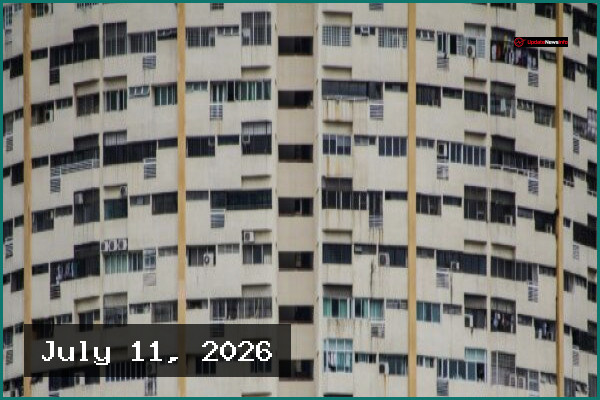
The European Union's substantial investment of tens of billions of euros aimed at enhancing the energy efficiency of homes across its member states is yielding only limited results, according to a new report.
The European Court of Auditors (ECA), which published its findings on July 7, highlights significant shortcomings in how these funds are being utilized, particularly concerning building renovations.
A major component of this funding comes from the Recovery and Resilience Facility (RRF), a massive recovery plan rolled out since the Covid-19 crisis to bolster member state economies. Under RRF rules, at least 37 percent of the funding is earmarked for climate and energy objectives, with energy-efficient building renovations being a core part of this effort.
However, the ECA's report indicates that the RRF money is far from being deployed in the most effective manner.
The primary issue identified is that member states predominantly finance the simplest renovation projects, such as replacing windows, installing solar panels, or upgrading heating systems. In stark contrast, deep renovations—like fully insulating a building, which can slash energy consumption by over 60 percent—receive considerably less support.
Auditors found that projects receiving EU recovery funding are almost never selected based on their actual expected energy savings.
In several audited countries, no system was in place to rank projects according to their potential energy savings. Out of 111 renovation schemes examined by the Court, a mere three included a specific energy-saving target.
Instead, governments largely measure the number of homes renovated or the total square meters refurbished, with very few actually tracking the energy savings achieved.
The report also criticizes the high cost of some renovation programmes. Italy's Superbonus scheme serves as a striking example, reimbursing not just 100 percent of costs, but an additional 10 percent, totaling 110 percent, thanks to Italian state support. This generous approach led to a surge in demand, which the European Court of Auditors deems ultimately counterproductive.
First, because these small-scale renovations can actually make deeper renovations more difficult and more expensive a few years later. Furthermore, they are insufficient to achieve the long-term decarbonization of Europe's existing building stock.
These findings emerge at a critical juncture, as the European Commission intends to continue funding energy-efficient building renovations in the EU's next long-term budget, spanning from 2028 to 2034. Residential buildings currently account for approximately a quarter of Europe's total energy consumption, yet nearly three-quarters of European buildings remain poorly insulated today.
The ECA emphasizes that without a massive wave of effective building renovations, the European Union will struggle to meet its ambitious climate targets. To succeed, future funding must be targeted more effectively, actual energy savings must be rigorously measured, and every euro invested must demonstrably create a real impact.
Production: By Europod, in co-production with Sphera Network.
EUobserver is proud to have an editorial partnership with Europod to co-publish the podcast series “Briefed” hosted by Léa Marchal. The podcast is available on all major platforms.