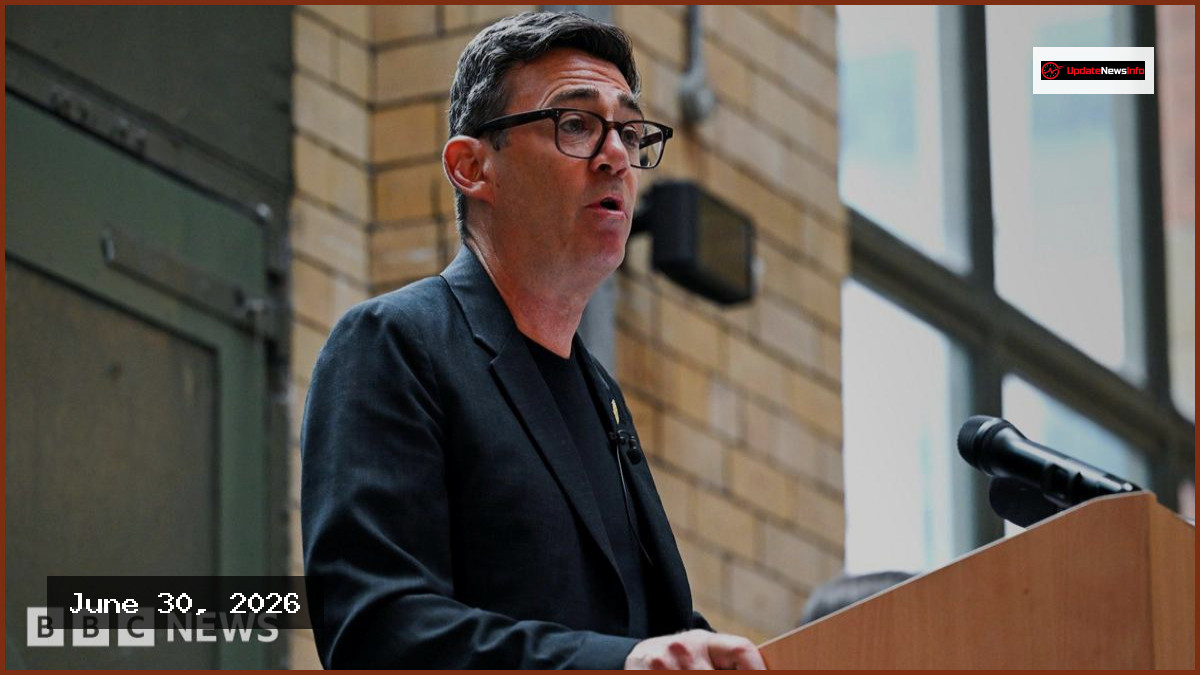
A new Downing Street unit based in Manchester, to be called ‘No 10 North’, will be responsible for overseeing the most significant rebalancing of power in Britain’s history, according to Andy Burnham. In his first speech since entering the race to succeed Sir Keir Starmer as prime minister, Burnham promised to redistribute authority across the UK to foster growth in every local area.
Alongside this structural shift, he committed to a major post-war council house construction initiative, a complete overhaul of the education system, and welfare spending reforms. Burnham announced his candidacy last Monday following his election as MP for Makerfield. As the sole Labour MP to declare his bid, he could potentially assume the role of prime minister by 20 July.
Speaking at the People’s History Museum, he addressed several former mayoral colleagues but notably avoided a detailed policy manifesto and did not participate in a Q&A session. His core message centered on devolving power to local communities, arguing that the Whitehall civil service has long hindered regional progress. He insisted that growth cannot be dictated from the top, but must be nurtured from the bottom up, suggesting regions gain greater control over transport, energy, and water services.
The ‘No 10 North’ team will be tasked with supporting regions in reindustrialization, regeneration, and utility reform. Regarding the welfare bill, Burnham stated he would be prepared to make fair and lasting cuts, while ensuring mental health support is integrated into employment services. He also emphasized a shift away from university-focused schooling toward a greater emphasis on technical education.
Conservative leader Kemi Badenoch criticized the move, suggesting that Burnham is promoting devolution as a way to avoid taking responsibility for difficult decisions. Meanwhile, other political figures, including Sir Ed Davey and Nigel Farage, expressed skepticism, questioning whether the plan would actually change anything or if it might simply create administrative friction. Despite the criticism, Burnham reiterated his commitment to stability in public finances as he prepares for upcoming transition meetings with the civil service.