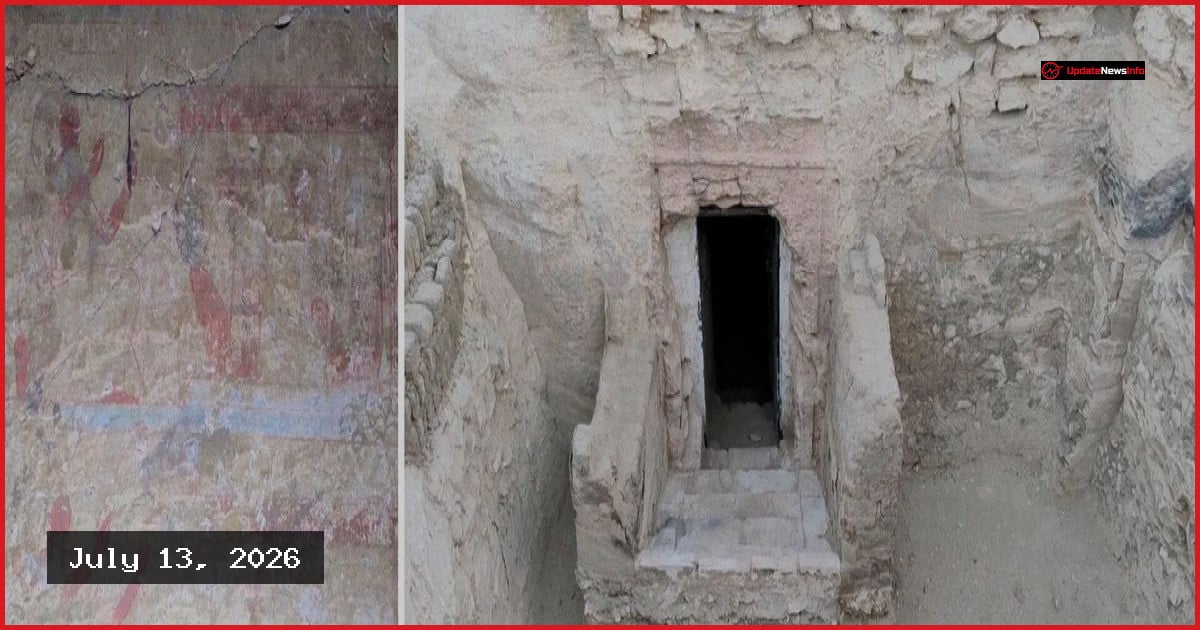
July 12, 2026 / 2:46 PM EDT / CBS/AFP. A Dutch archaeological mission from Leiden University has successfully uncovered a 3,000-year-old tomb in the Sheikh Abd el-Qurna necropolis on the West Bank of Luxor. Egypt’s tourism and antiquities ministry confirmed the discovery, noting that the tomb belonged to a man identified as Paser. The research team intends to conduct further studies to identify the individuals buried within the site and to gain deeper insights into their lives.
Experts have categorized the find as dating back to the Ramesside period, which encompasses Egypt’s 19th and 20th dynasties, based on the specific artistic style observed in the tomb’s inscriptions. Situated to the east of a previously identified burial site, the structure adheres to the traditional architectural layout typical of private Theban tombs from the New Kingdom, spanning 1570 to 1069 BC.
The tomb features an open courtyard that leads into a rock-cut chapel designed in an inverted “T” shape, with burial chambers carved deep beneath the ground level. Within the courtyard, the team discovered several well-preserved elements, including a mudbrick bench intended for a funerary stela and a staircase flanked by sloping ramps that lead to the entrance. Inside, inscriptions bearing Paser’s name depict him worshipping various deities inside shrines, as well as seated with his wife before an offering table.
This excavation is part of an ongoing research project that has been active since 2018. The discovery aligns with Egypt’s broader efforts to promote new archaeological findings as a means to support the national tourism sector, which remains a primary source of foreign currency. Luxor continues to be a focal point for such research, housing some of the world’s most significant ancient monuments. Also this year in Egypt, in the northern Beheira province, near the Mediterranean coast, archaeologists said they’d found artifacts in part of a Greco-Roman cemetery that dates back more than 2,300 years. The artifacts show the evolution of funerary practices over some 300 centuries.
Located east of a previously known burial site, the tomb follows the traditional layout of private Theban tombs from the New Kingdom (1570-1069 BC), they added.
Last year, also near Luxor, a large tomb belonging to a pharaoh was reopened to visitors after more than 20 years of renovation. That tomb features paintings of Amenhotep III, who ruled ancient Egypt between 1390 B.C. and 1350 B.C., along with a group of ancient Egyptian gods.