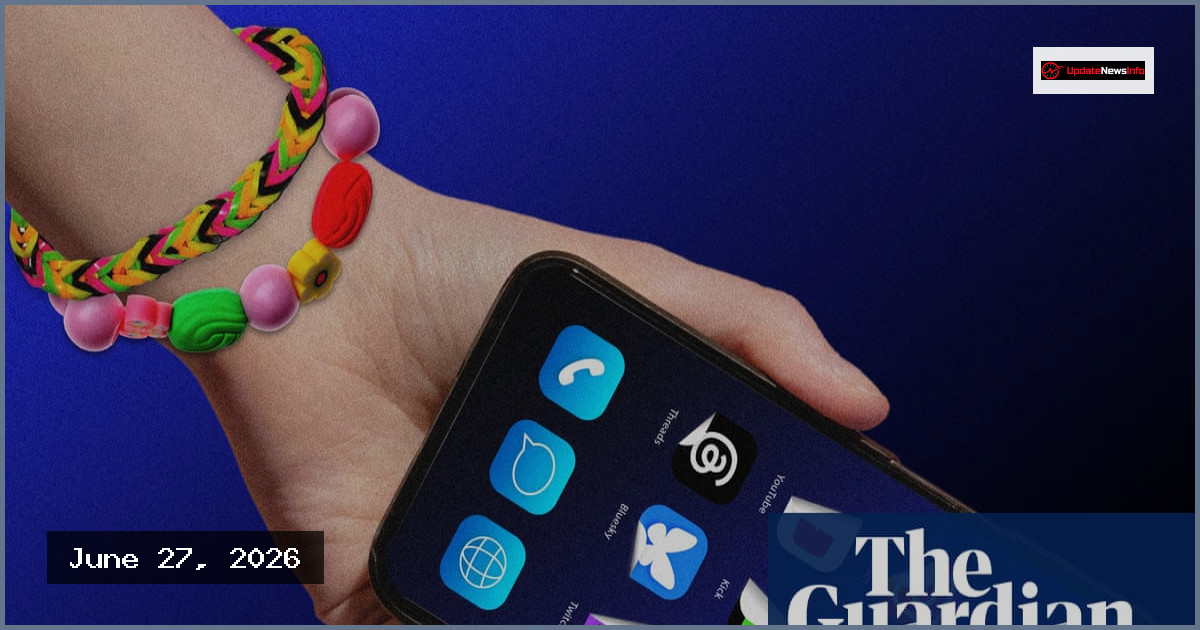
Governments across the globe are increasingly moving to curb social media use by minors, prompting a wider debate over whether this represents technology’s “big tobacco” moment. When Australia introduced its ban on social media for children under 16 in December, the move was met with global attention and a mix of admiration and skepticism regarding the feasibility of enforcement. Months later, it is clear that Australia’s policy has become a bellwether, as Indonesia began blocking access for those under 16 in March, followed by Malaysia this month. Additionally, Britain announced plans to implement its own ban by early 2027.
Justin Hendrix, chief executive of the nonprofit Tech Policy Press, which has been tracking efforts in more than 40 countries, notes that the movement has sparked significant curiosity among regulators. While the science on social media addiction is still maturing, the evidence of potential harm is mounting. Approaches vary by nation: Austria plans to restrict access for those under 14, France has set the age at 15, and Norway is looking to expand its current ban from under-13s to those 16 and under. In countries including Poland, Denmark, and England, these efforts are often coupled with prohibitions on smartphones in schools. Brazil has also banned mobile phones in schools, though it permits social media access for those under 16 if the account is linked to a parent or guardian.
The push for regulation stems from a surge in lawsuits accusing platforms of harming mental health through addictive design choices or failures to protect users from predators and dangerous content. A landmark case in California recently found Meta and YouTube liable for designing addictive products that harmed a young user, with lawyer Mark Lanier describing it as the “engineering of addiction.” This regulatory scrutiny is also extending to AI; Britain plans a minimum age of 18 for romantic chatbots, while Norway has imposed a near-total ban on generative AI in elementary schools. Canada is also requiring companies to implement guardrails against harmful content.
Despite the legislative momentum, effectiveness remains unclear. In Australia, while 5 million accounts were reportedly shut down, a survey of 900 parents indicated that about two-thirds of young people managed to retain access. UK Prime Minister Keir Starmer dismissed such concerns, arguing that the difficulty of enforcement is no reason to abandon the policy, similar to how one might treat alcohol age limits. Conversely, Italian Prime Minister Giorgia Meloni remains unconvinced, noting that bans are easily circumvented. Other notable exceptions include India, where such restrictions remain a fringe issue, and the United States, where state-level efforts in places like Florida, Utah, and Arkansas have frequently stalled in courts due to free speech challenges.
Some advocacy groups, such as Amnesty International, have cautioned that bans may be an “ineffective quick fix” that could drive children toward more dangerous online activities in secret. Instead, they argue for stronger platform design and data protection. Other countries are attempting different approaches; Canada allows exemptions for companies with proven protection policies, while Spain is pursuing legislation to make executives personally accountable for hate speech. China introduced specific restrictions in 2021, limiting weekday gaming for minors and restricting users under 14 on Douyin to 40 minutes a day between 6am and 10pm, with no gaming allowed except on weekends and holidays between 8-9pm. Whether driven by social conservatism or public health concerns, regulators are increasingly united by the consensus that the risks to children must be addressed.