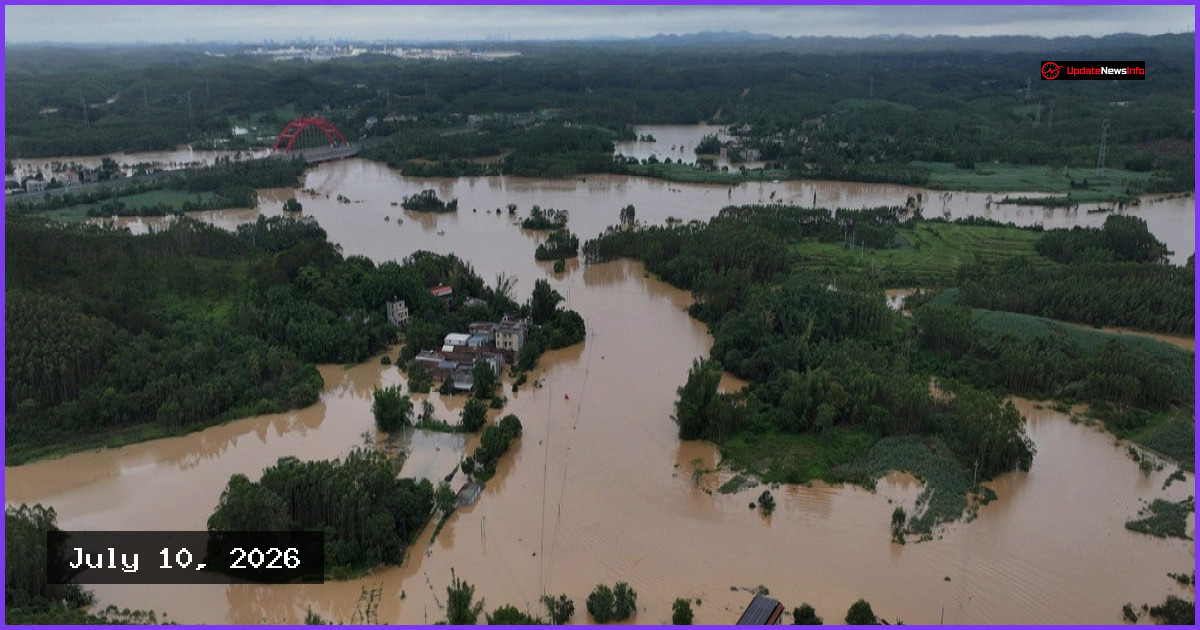
Authorities in southern China reported on Thursday that 39 individuals have died as a result of flooding triggered by heavy rainfall from Tropical Storm Maysak. The region is also bracing for Typhoon Bavi, which is expected to make landfall in the coming days.
The city of Hengzhou experienced the brunt of the disaster, with 26 lives lost due to the partial collapse of a reservoir dam that unleashed torrents of water. Ding Wei, the vice mayor of Nanning city, which oversees the affected area, stated that nine people remain missing in the broader Guangxi region.
Tropical Storm Maysak brought record rainfall to Guangxi starting Saturday, causing reservoirs to breach their banks and leaving residents stranded in their homes and other buildings for days. The death toll had previously been reported as six on Tuesday.
In Guigang city, located about 40 miles northeast of Hengzhou, military rescue teams successfully evacuated over 10,000 students and teachers from a group of schools. State broadcaster CCTV showed footage of students in bright orange life vests boarding boats to escape buildings surrounded by muddy floodwaters.
The floods also impacted local wildlife. A zoo in Guigang reported that more than 100 animals, including two zebras and four porcupines, were missing. In Hengzhou, escaped snakes from a farm prompted authorities to distribute antivenom and provide guidance to residents on snakebite treatment.
An animal shelter operator in Binyang county, approximately 50 miles northwest of Hengzhou, worked to rescue about 200 cats and dozens of dogs, navigating deep water. The animals were brought to safety in small groups.
A large-scale relief and rescue operation involving drones and approximately 5,700 boats has been deployed to deliver essential supplies like drinking water and to evacuate trapped residents. Around 130,000 people have been evacuated from affected areas.
Ding Wei indicated that while floodwaters are receding, some areas are expected to receive more rain in the next two days. Crews are working to clear mud and debris and disinfect several towns in Hengzhou. Road repairs are underway, and electricity has been restored to over 60,000 homes.
The national meteorological center reported that southern Guangxi experienced heavier-than-expected rain for several days, with cumulative rainfall ranging from 4 to 16 inches in some areas and exceeding 35 inches in the most severely impacted locations.
Meanwhile, central China’s Hubei province reported 11 deaths and numerous displacements due to thunderstorms and tornadoes on Monday night. Elsewhere in Asia, monsoon rains caused landslides in Bangladesh, killing at least 13 Rohingya refugees in camps this week, with authorities relocating others to safer grounds.
Separately, Typhoon Bavi, which had previously brought strong winds to U.S. territories, was at sea on a northwest trajectory. It is forecast to pass over remote Japanese islands and north of Taiwan before potentially making landfall in China’s Fujian or Zhejiang provinces on Saturday. Taiwan’s Central Weather Administration reported that Bavi, though downgraded from super-typhoon strength, still had maximum sustained winds of 114 miles per hour. In anticipation of heavy rain, classes were suspended in several Philippine cities, and ships were barred from leaving northern ports as the typhoon moved east of Luzon.