The Texas education board gave its approval on Friday to a mandatory reading list for the state’s more than 5 million public school students, a curriculum that now incorporates Bible stories. This decision further extends conservative initiatives aimed at introducing Christian teachings into educational settings across the United States.
This state-mandated compilation of assigned texts, featuring works like Charles Dickens’ “Great Expectations” alongside passages from the New Testament, is believed to be one of the first of its nature nationwide. It is slated to become effective at the start of the 2030 school year.
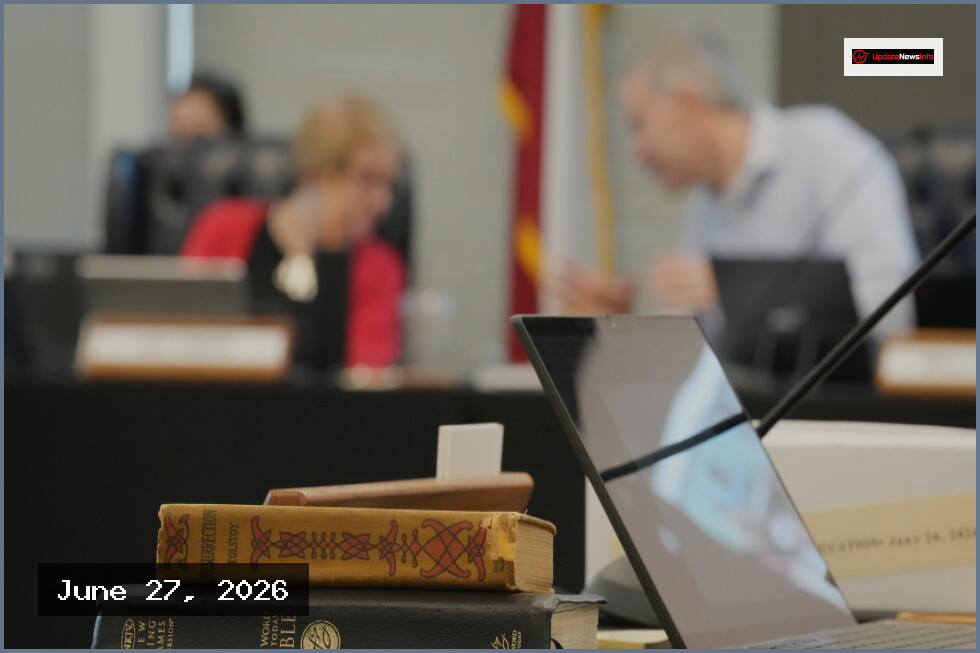
The State Board of Education, where Republicans hold the majority, passed the list with a 9-5 vote. This decision followed several weeks of intense discussion, once again positioning Texas at the forefront of disputes regarding the place of religion within public education. Notably, last year, Texas became the largest state to mandate that teachers display the Ten Commandments in all classrooms.
Earlier this week, the board also reviewed a proposed social studies curriculum designed to establish connections between biblical narratives and American historical events.
In addition to concerns about the inclusion of Bible readings, the new mandate faced criticism from educators who expressed dismay over the diminished autonomy in selecting reading materials for their students. However, teachers retain the option to assign supplementary books throughout the academic year.
Alyse Dent, an English teacher at a high school in the Dallas region, shared her perspective: “I don’t have a problem reading about David and Goliath because I believe in those stories. But if I’m reading to one of my students — they’re Muslim or they’re atheist — I can say all day long, ‘Well, we’re teaching a theme, we’re teaching symbolism,’ but they’re hearing, ‘This is a Bible story. We’re talking about God.’”
Advocates for these curriculum adjustments contend that Judeo-Christian traditions were foundational to the establishment of the nation and, as such, should be represented in public school curricula.
Mandy Drogin, a senior fellow at the conservative Texas Public Policy Foundation think tank, stated, “These timeless works, including biblical passages, have shaped American culture and history, and have influenced generations of thinkers, leaders, and citizens, and they continue to offer valuable lessons about human nature, virtue, liberty, and civic responsibility.”
Texas, responsible for educating approximately one in ten public school students nationwide, has emerged as a leader in conservative efforts to integrate more religious content into classrooms. The state additionally permits public schools to employ chaplains for student counseling and has sanctioned an optional curriculum infused with biblical themes.
Brooke Mazel, a retiree residing in Lubbock, was present among the significant number of attendees at this week’s education board meeting in Austin. She expressed that her children and grandchildren were raised with “strong faith and family values” and voiced her support for the mandated reading selections.
“America should celebrate our 250 years that started as a nation of unwavering Christian values,” Mazel commented.
A state law enacted in 2023 stipulated the creation of a mandatory list requiring at least one literary work to be taught at each grade level. The newly approved list, however, encompasses approximately 200 texts, including biblical passages, essays, and various books, significantly exceeding the initial legal requirement.
Antero Garcia, who serves as president of the National Council of Teachers of English and is a professor at Stanford University, noted that he is unaware of any other state that enforces a mandatory reading list incorporating religious texts. Typically, he explained, educators at the district and individual school levels are responsible for selecting the materials their students will read.
Kasey Meehan, director of PEN America’s Freedom to Read program, concurred, describing the initiative as “unique” to Texas.
For elementary students, the required reading list includes picture-book stories such as “David and Goliath” and “Daniel and the Lion’s Den.” By the fourth grade, students are slated to read passages about Jesus from the New Testament. Additionally, E.B. White’s “Charlotte’s Web” is designated for third-graders.
Middle school students will be expected to engage with passages concerning Jesus, specifically his most renowned sermon and another text where he advises individuals to relinquish worldly anxieties and pursue the kingdom of God.
High school students, meanwhile, are required to read particular Bible passages intended as supplementary material for literary works, including those by Dickens and Jane Austen’s “Pride and Prejudice.”
Texas law does provide for parents to withdraw a child from any class or activity that conflicts with their religious or moral convictions.
The list also stipulates that students studying Shakespeare’s “The Tragedy of Julius Caesar” must concurrently read a eulogy for President Ronald Reagan, penned by the staunch conservative former British Prime Minister Margaret Thatcher.
Chanea Bond, an instructor of college and advanced high school English courses in Fort Worth, acknowledged that a statewide reading list could help standardize learning across different regions. While she described the high school list as “pretty solid” for classical studies, she also characterized it as “very old and very white.”
She further elaborated, “It is very narrow and does not represent what classrooms in Texas look like. Going through most of high school without ever having much value put into voices that sound like yours kind of sends a message that your voices aren’t valuable.”