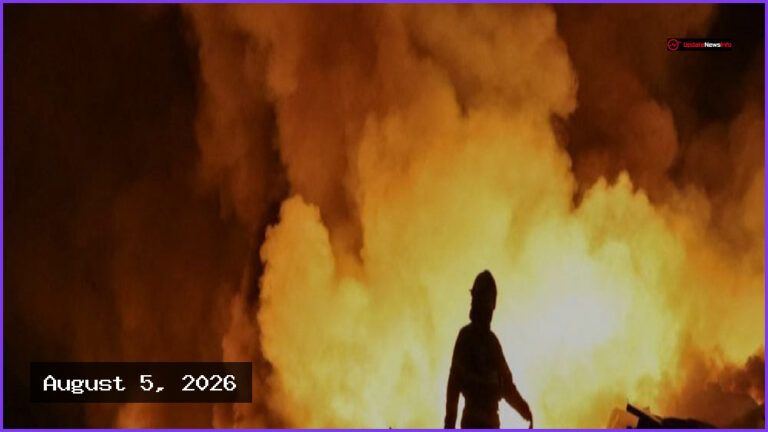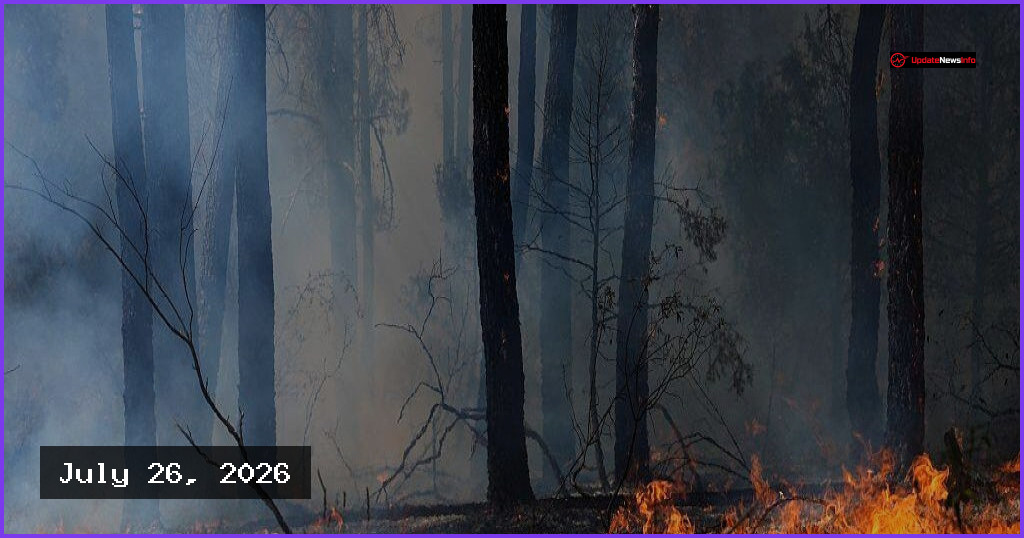
Out-of-control wildfires are sweeping across parts of Western Europe, forcing more than 250,000 people to flee their homes in Spain and France as of Saturday. The blazes, which have been burning for two or three days, have created a dire situation for emergency crews working around the clock to contain the flames. While dozens of French firefighters have sustained injuries, authorities have reported one death in the Spanish town of Manises. The Manises City Council confirmed the fatality in a post on X, stating, "Unfortunately, the fire has claimed the life of one person."
In the Spanish capital, Madrid, thick black ash settled on rooftops in the north of the city, and residents were forced to keep windows closed due to the smell of throat-irritating smoke. Approximately 70,000 people were evacuated from the region. Prime Minister Pedro Sanchez, who visited the fire zone near Madrid, declared a national emergency and stated that the government's primary focus remains on saving lives.
Sanchez noted that Spain has seen 130,000 hectares of forest burned so far this year, exceeding the annual average of 100,000 hectares recorded over the past decade. While cooler temperatures provided a potential "window of opportunity" for containment, he warned that the situation remains complex because the development and strength of the wind are unknown.
Evacuees shared the terror of the advancing fires. Jacqueline Villafranca, a 38-year-old originally from Peru, fled her village of Navalagamella with her husband and two daughters on Friday. Sitting in a gymnasium-turned-shelter, she recalled, "I thought everything was going to burn, the house and everything." She noted that while the air in the shelter was breathable, the conditions in her village had become unbearable.
Similarly, an audiovisual technician named Luis, who had been assisting others in the village of Pelayos de la Presa, was forced to evacuate his own community. "I cried at first because it's where I grew up," he told AFPTV. "But now, it's more a feeling of anger and resignation, because there's nothing we can do as long as we're not allowed to go back and see what we'll find there."
The situation in France is equally critical, with Interior Minister Laurent Nunez describing the damage as a "historic record." Nearly 242,000 acres have been ravaged, a size roughly 10 times that of Paris, resulting in the evacuation of 197,000 people. Nunez stated on Saturday that this was "probably" the largest peacetime evacuation the country has seen. Prime Minister Sébastien Lecornu described the fires as unprecedented, noting that the blaze in the Gironde region had become so intense it was generating its own winds.
"Our priority is clear: protecting human lives," Lecornu posted on social media, adding that evacuation orders "must be respected without delay." President Emmanuel Macron has deployed 1,000 soldiers to assist firefighters near Bordeaux, and the government ordered an experimental A400M military transport aircraft to join the fleet.
This modified aircraft, which can release 20 tons of fire retardant, has only just completed preparations and testing. Additionally, the head of the Paris fire brigade confirmed that around 100 firefighters from the capital were being deployed to the southwest to support the 45 firefighters and six vehicles already sent there.
International cooperation has been vital, with both nations receiving support from across Europe. Italy has deployed two Canadair water-dumping planes to Spain, while Spain's Civil Protection Service expected the arrival of two more from Greece to join aircraft from the Netherlands and Portugal. France is expecting two water-bombers from Croatia, two planes from Portugal, and two heavy-lift Black Hawk helicopters from the Czech Republic and Slovakia.
Laurent Moretti, a resident in the French town of Arès, told the Associated Press, "It's quite impressive and even frightening. An evacuation on this scale has never happened before. All we really hope is that the firefighters can quickly get it under control."
The extreme fire conditions have been exacerbated by tinderbox conditions worsened by successive heat waves since May. Scientists continue to emphasize that Europe is the fastest-warming continent, with climate change driving more frequent and extreme weather emergencies. These conditions have had a broader impact, including a sharp rise in heat-related deaths; French health officials reported earlier this week that at least 5,700 more people than usual died in France last month.
In response to the crisis, organizers of the Tour de France announced they would shorten the final stage of the race from Thoiry to Paris "in a spirit of national solidarity."
Meanwhile, in Italy, thousands of emergency workers are battling scores of fires in Sicily and the Calabria region. A local official in Calabria reported that arsonists had started fires by tying rags soaked in flammable liquid to the tails of stray cats to spread the flames. Emergency shelters have been set up in schools and gymnasiums across southwestern France for displaced residents and tourists, such as 49-year-old Caroline Larrode, who fled her home in Saumos with her three cats, and 75-year-old Irish tourist Nuala Kelly, who said she had never seen anything like this in her travels around the world.