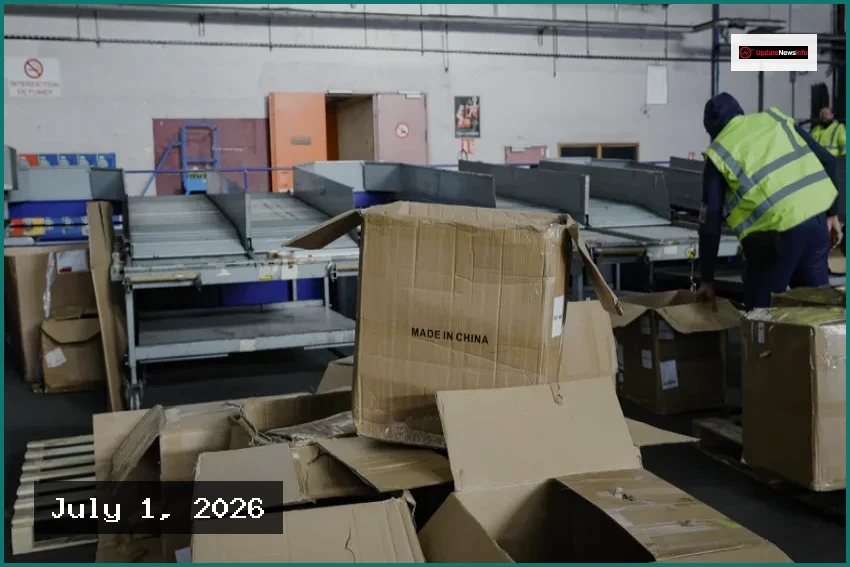
Beginning this Wednesday, the European Union is set to implement a €3 duty on low-value parcels entering the 27-member bloc, a move designed to address the significant increase in inexpensive shipments arriving primarily from China. According to the European Commission, the policy aims to alleviate the mounting administrative pressure on customs authorities and enhance the safety of goods, which have faced scrutiny due to lax inspection protocols.
Statistics reveal that nearly six billion small retail packages arrived in the EU from abroad last year, representing a sharp rise from the 4.6 billion reported in 2024. A substantial portion of these imports originate from China, driven by the popularity of e-commerce platforms such as Shein and Temu. To manage this influx, the EU is removing the previous duty exemption for packages valued under €150 and replacing it with a temporary, flat three-euro levy per item category.
The structure of this fee is based on the type of goods rather than the individual items themselves. For instance, while five identical t-shirts would incur a single €3 charge, an order containing one t-shirt and one watch would attract a €6 fee. While several EU member states had previously introduced individual levies, a senior European official confirmed that these national measures must now be replaced by the unified EU rule, which is scheduled to remain in effect until July 1, 2028.
Brussels has emphasized that this initiative is not specifically targeted at any single nation but is intended to establish a level playing field for European businesses that already adhere to strict regulatory standards. Data from 2025 indicated that over 60 percent of imported toys, electronics, and cosmetics inspected by EU authorities failed to meet safety requirements, often lacking necessary labeling or containing prohibited ingredients. Bernd Lange, head of the EU parliament’s trade committee, noted that the rapid growth in parcel volume—which has more than quadrupled since 2022—has made traditional manual inspections nearly impossible.
Although the cost is technically levied on the importer, officials warned that online retailers might choose to pass this expense directly to the end consumer. To prevent potential circumvention or the rerouting of parcels through third countries like Switzerland, the EU plans to introduce mandatory product reference details starting November 1, 2026. Furthermore, a separate handling fee is planned for late 2026 to help offset the rising operational costs associated with processing the massive volume of international e-commerce deliveries.