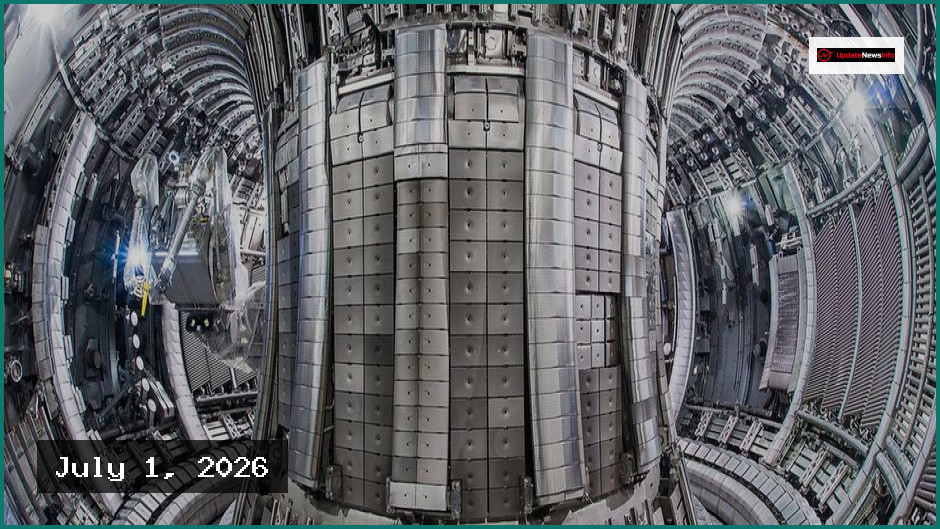
Companies across the globe are currently in a high-stakes competition to construct the world’s first commercially viable nuclear fusion reactor. German startups have entered this race, bolstered by the backing of major corporations and private investors. This drive for new energy sources is largely accelerated by the rapid electrification of the economy, particularly the surging power demands from data centers essential for artificial intelligence. The International Energy Agency projects the fusion sector could reach a valuation exceeding $350 billion by 2050.
Nuclear fusion works by fusing light atomic nuclei to form new elements, releasing significant heat that can generate electricity without reliance on fossil fuels or greenhouse gases. Unlike conventional fission, the process carries minimal accident risks and generates no radioactive waste. While global focus long centered on the large-scale, government-backed ITER project in France—now delayed until at least 2034—a wave of private enterprises has emerged to accelerate development.
According to an EU-based Fusion for Energy report, approximately 77 companies are now attempting to bring fusion to market. While the U.S. and China lead in company numbers and funding, Germany hosts several key players, including Focused Energy, Marvel Fusion, Proxima Fusion, and Gauss Fusion. By the end of 2025, private fusion research had attracted nearly €13 billion in investment, a 30% increase from mid-year, with the majority of capital flowing to U.S. and Chinese firms. European startups secured just over €700 million of that total.
In the U.S., major tech companies like Google and figures such as Sam Altman are heavily backing fusion firms like TAE Technologies, Commonwealth Fusion Systems, and Helion Energy. Despite the funding disparity, Professor Markus Roth of TU Darmstadt and co-founder of Focused Energy remains optimistic. He argues that Germany’s strong ecosystem of research institutions and industrial partners may allow local companies to make faster progress. Focused Energy is specifically utilizing laser-based technology, supported by a €60 million investment from RWE and plans for a prototype plant at the former Biblis nuclear site.
To succeed, Roth emphasizes the need for Germany to transition from high-end research to assembly-line-style manufacturing for complex laser systems. The German government has identified fusion as a key future technology, pledging over €2 billion in public support under its July 2025 High-Tech Agenda. Although Focused Energy expects to complete a commercial prototype by 2037, the path forward remains capital-intensive, requiring substantial ongoing government and private funding for the transition to pilot plants.