Benjamin Netanyahu’s former national security advisor, Jacob Nagel, believes that European Union leaders must recognize their primary challenge is internal rather than any potential diplomatic friction with Israel. His remarks follow a period of cooling ties, highlighted by Israeli Foreign Minister Gideon Sa’ar severing contact with EU foreign policy chief Kaja Kallas over her comparisons of Israel to apartheid-era South Africa. Furthermore, several member states are pushing the European Commission to restrict trade with illegal Israeli settlements.
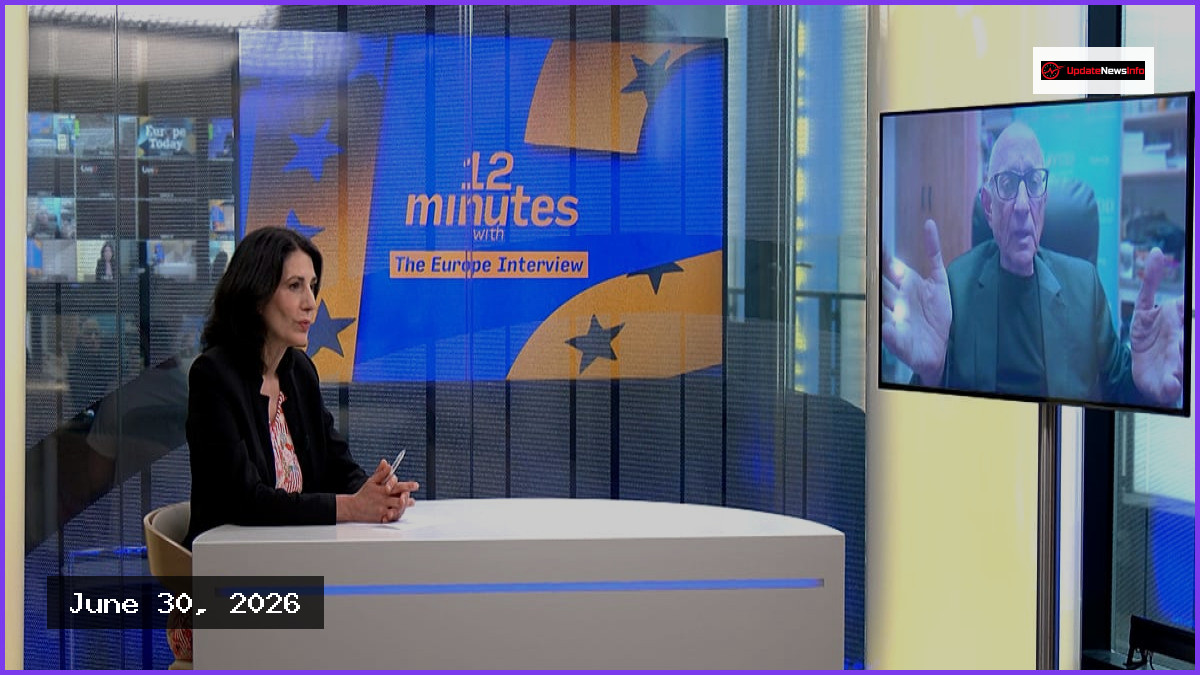
Speaking on the Euronews program 12 Minutes With, Nagel asserted that European countries will eventually recognize who the “good guys” are in the geopolitical landscape. Nagel, who served for over 40 years in the Israeli Defence Ministry and the Prime Minister’s Office and is currently a Senior Fellow at the Foundation for Defence of Democracies, described the EU as irrelevant, echoing previous sentiments from Prime Minister Netanyahu.
Nagel argued that European leadership should redirect its attention to internal instability. He pointed to terrorism and issues with migration as critical, existential problems for the continent, suggesting that some European nations are already struggling to maintain control. He maintained that Europe’s focus should be on solving these domestic issues rather than critiquing Israeli policy.
Regarding Israel’s relationship with the United States following the June 17 ceasefire memorandum of understanding with Iran, Nagel acknowledged some tension but insisted that the two nations remain staunch allies. While some Israeli officials expressed frustration that the US appeared to sideline Israel, Nagel argued that President Trump’s prioritization of economic interests and domestic voter concerns, such as oil prices, was a temporary tactical decision. He estimated that Iran could generate approximately $8 billion in revenue during the initial 60-day window allowed by the current agreement.
Despite this, Nagel remains confident that the US administration will eventually realign its approach. He suggested that once the US achieves its domestic economic objectives, it will recognize the nature of the Iranian regime and resume a more decisive stance, ultimately siding once more with Israel to ensure the conflict is concluded properly.