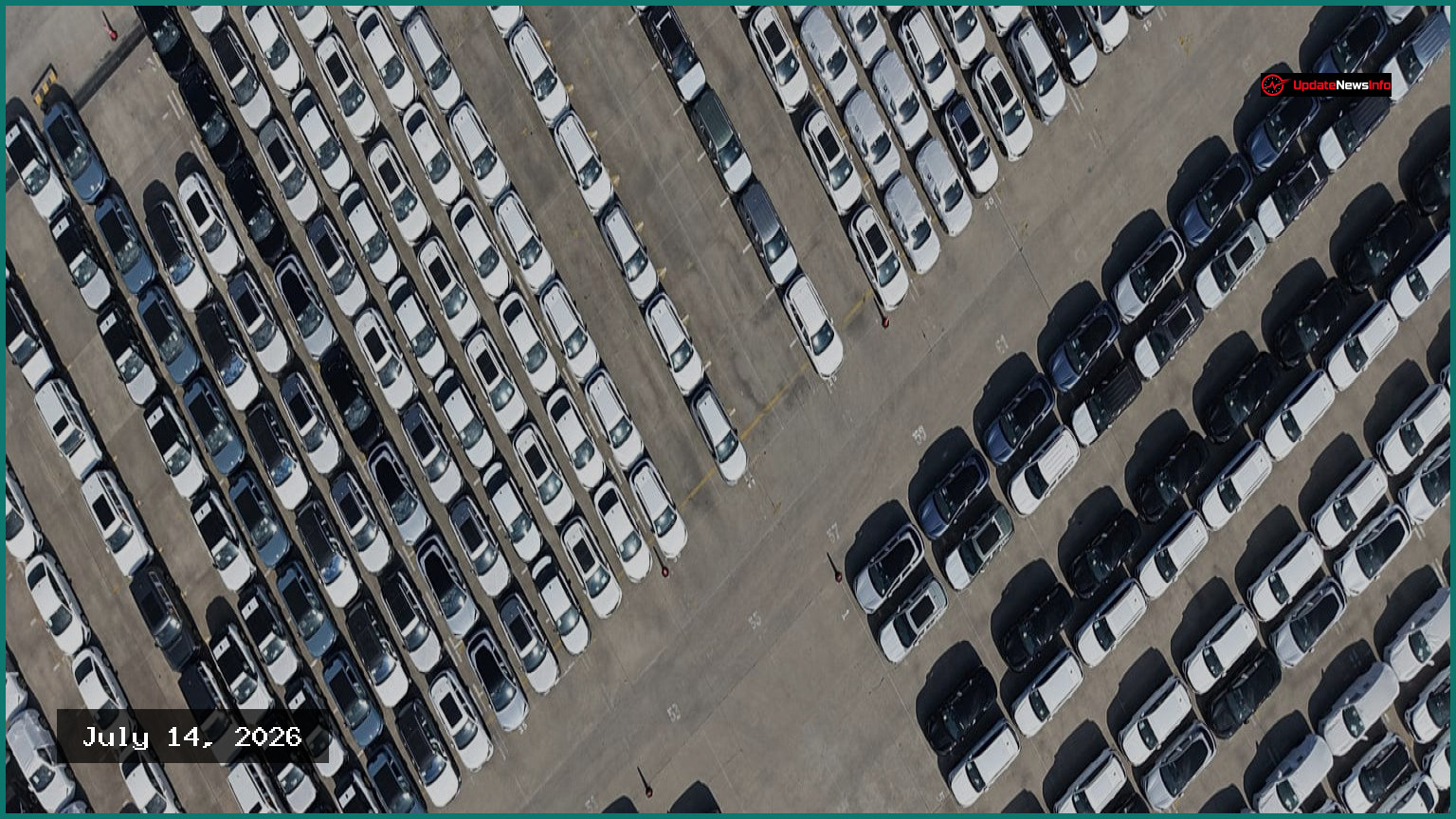
China experienced a significant boost in trade performance during June, with exports surging 27% compared to the same period last year. This increase notably surpassed economist expectations and represents a marked improvement over the 19.4% year-on-year growth recorded in May. Meanwhile, imports also saw a substantial rise, jumping 36% in June, which outperformed the 27.4% growth seen in the previous month. Analysts suggest that the increase in import costs was driven, in part, by the ongoing war in Iran.
The nation recorded a trade surplus of $125.6 billion for the month of June, widening from the $105.4 billion surplus reported in May. Julian Evans-Pritchard, head of China Economics at Capital Economics, noted that trade values experienced a significant increase. According to Evans-Pritchard, this growth predominantly reflects the recent spike in semiconductor prices fueled by the artificial intelligence boom, though he added that foreign demand for Chinese goods remains robust even when excluding that factor.
This strength in the export manufacturing sector has provided a crucial offset to the persistent weakness in domestic investment and consumer spending, which have been hampered by a prolonged downturn in the property industry. Data for the first half of the year indicates that China’s exports climbed 17.6% from a year earlier, while imports jumped 26.6%.
Despite these figures, the country faces international scrutiny. Policymakers in the United States and Europe have expressed concern regarding rising trade deficits with China. In response to barriers such as higher tariffs, some Chinese businesses have begun relocating factories to regions like Europe, while China has also increased its export focus on Southeast Asia, Latin America, and Africa. Specifically, exports to Southeast Asia surged nearly 35% in June, while shipments to the European Union and Latin America increased by more than 18% and 28%, respectively. Exports to the United States climbed nearly 14%, a rise attributed in part to lower shipment volumes a year earlier following President Donald Trump's return to office and his subsequent implementation of higher tariffs.
Looking ahead, China is scheduled to release economic growth data for the April-June quarter on Wednesday. The government has set an annual growth target of 4.5% to 5% for this year, following 5% growth in 2025. While the International Monetary Fund recently raised its annual growth forecast for China by 0.2 percentage points to 4.6%, it projected growth to slow to 4.1% in 2027. Despite government initiatives to stimulate consumer spending, such as trade-in subsidies for automobiles and home appliances, many citizens remain cautious due to economic pressures and are avoiding major purchases.